Old Town Yellowknife and the Bush Pilots
A guide's walk through Old Town Yellowknife, from the Bush Pilots Monument and Ragged Ass Road to gold-rush shacks, floatplanes and houseboat views.
 By Thomas Beaulieu, Yellowknife tour guide & northern lights specialist
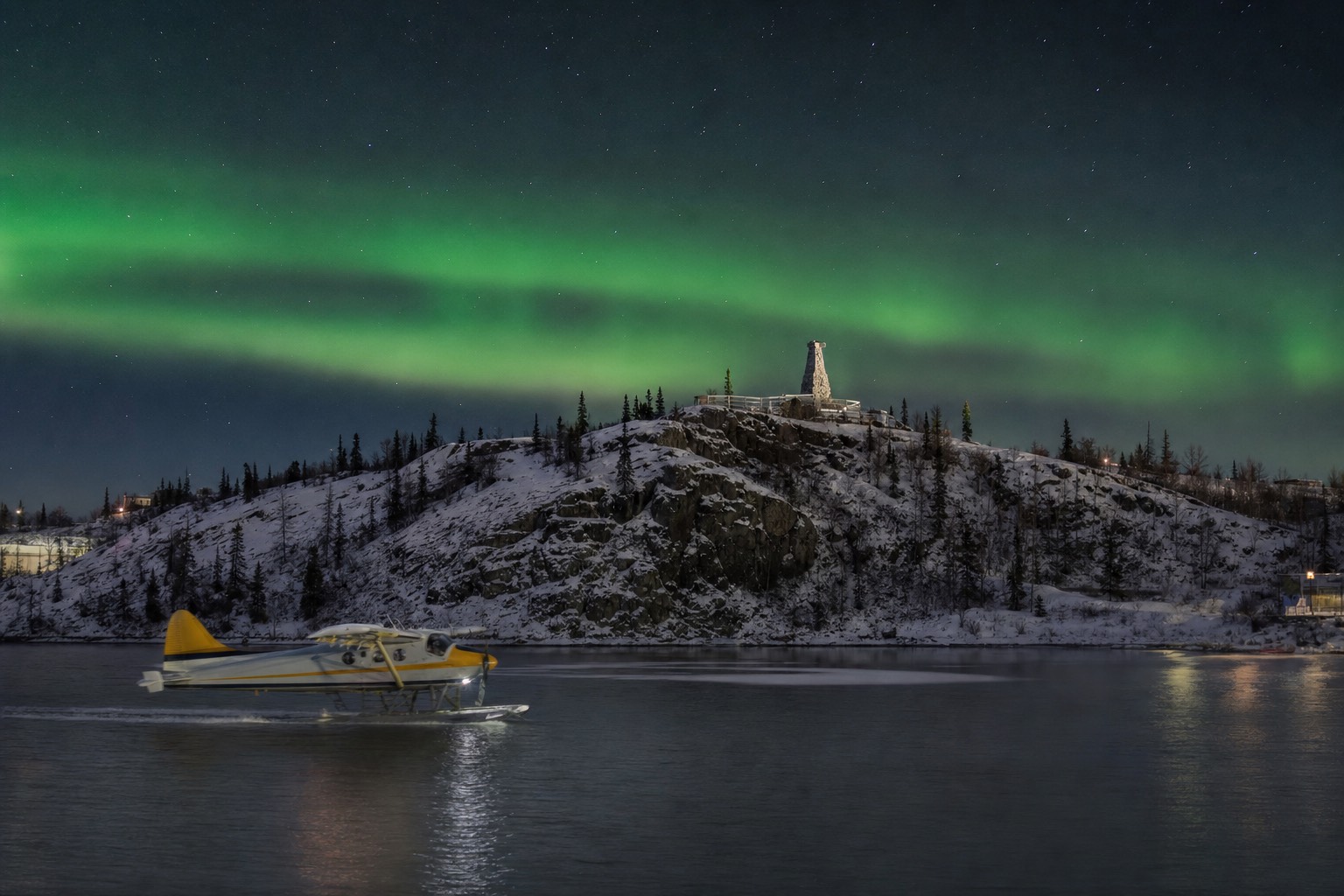
The stairs up to the Bush Pilots Monument are where I lose every group for ten minutes, and by now I just let it happen. You climb the bare rock, the wind picks up, and Yellowknife Bay opens below you all at once: floatplanes tied along the docks, a scatter of houseboats out on the water, and a jumble of gold-rush shacks leaning into each other along the shore. People go quiet up there. I grew up thinking of this view as ordinary. Guiding visitors through it since 2022 has cured me of that.
Why is there a monument to bush pilots above Old Town?
The Bush Pilots Monument sits on the rock outcrop above Old Town to honour the flyers who kept Yellowknife alive when no road reached it. Through the 1930s gold rush, nearly everything and everyone arrived by air, and the monument stands where you can still watch floatplanes work the bay.
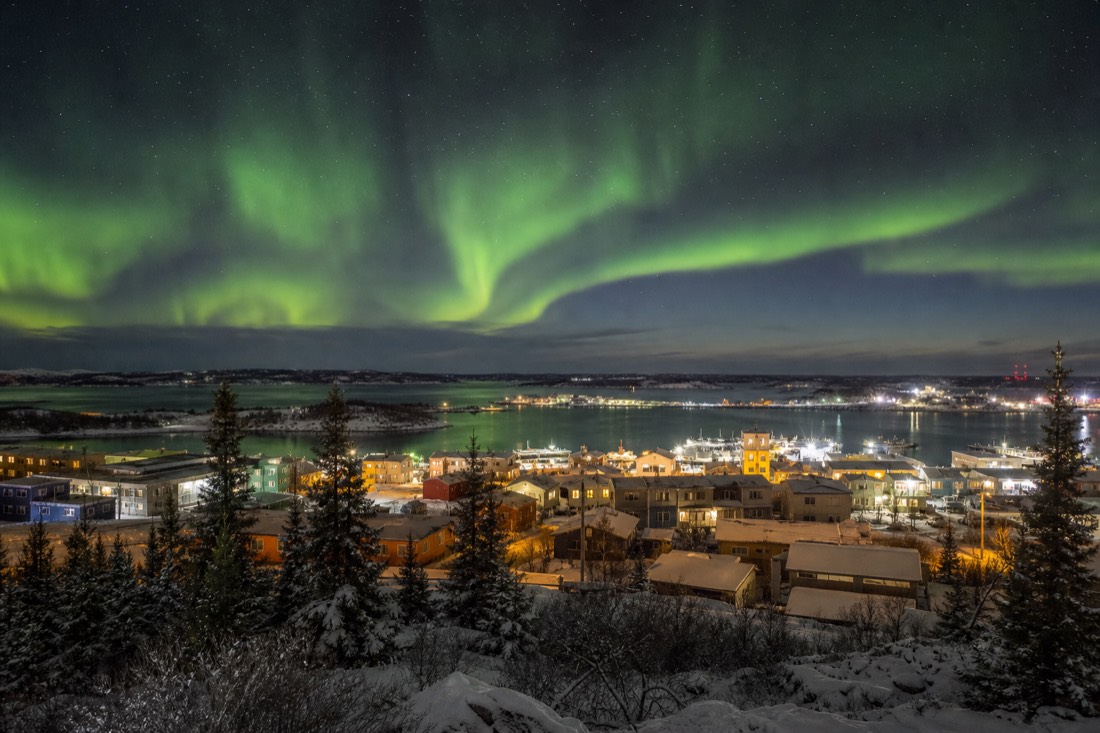
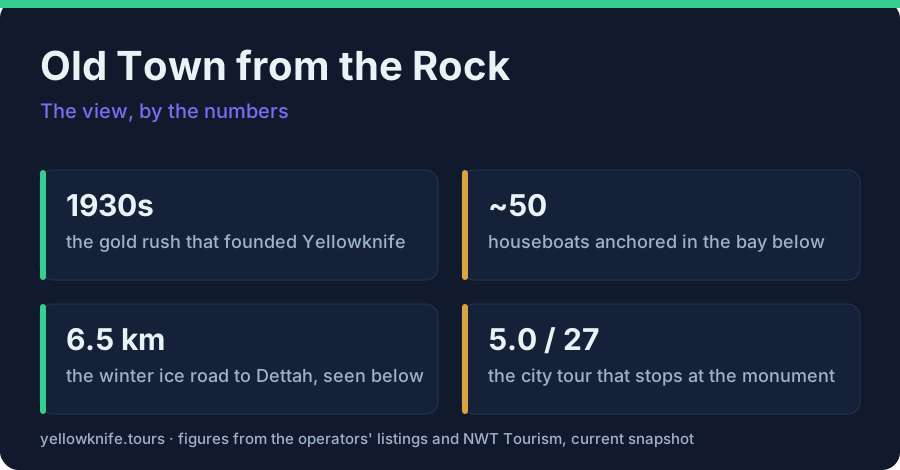
Yellowknife began as a gold-rush town in the 1930s, on the north shore of Great Slave Lake, and in those first years there was no highway to anywhere. Mail, miners, dynamite, groceries, doctors: all of it came in on small planes landing on water in summer and ice in winter. The pilots were not a colourful sideline to the town's story. They were the supply line, and when weather closed in, they were the difference between a working camp and a hungry one.
What I love about the monument is that it is not a museum piece. Stand up there for twenty minutes on a calm day and there is a decent chance you will watch a floatplane taxi out, turn into the wind, and haul itself off the bay, because bush aviation still works this lake every summer. The town it serves has changed, gold gave way to diamonds and Yellowknife became the capital of the Northwest Territories, but the takeoff run looks much the way it always has. These days most visitors arrive on jets instead, with direct flights from Edmonton, Calgary and Vancouver listed on the territory's own air travel pages, which makes the surviving floatplane traffic feel even more like living history.
What is the story behind Ragged Ass Road?
Ragged Ass Road is Old Town's most photographed street sign, and the story locals tell is that broke gold miners named it after their own luck: ragged and broke. The name stuck, the little street kept its character, and replica signs now hang in kitchens and cabins all over the North.
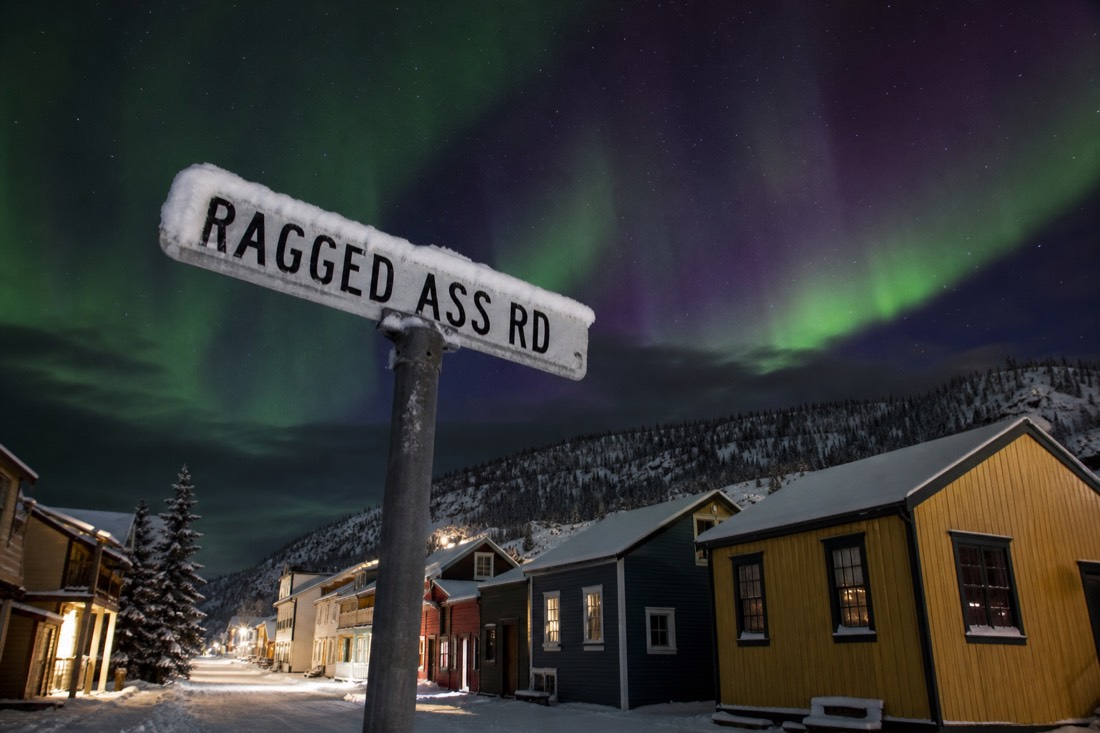
It is a short street, and first-timers sometimes walk right past it, expecting something grander. Do not. The point of Ragged Ass Road is exactly its smallness: modest cabins and shacks from the mining days sitting a few steps from million-dollar water views, which is Old Town's whole personality in one block. Miners came here chasing gold, most of them stayed poor, and the street name is their joke on themselves that outlived them.
Old Town rewards slow walking, so here is the loop I take groups on, in the order that keeps the wind at your back on most days.
| Stop | What it is | Give it |
|---|---|---|
| Bush Pilots Monument | Rock-top viewpoint over the whole bay | 20 to 30 minutes |
| Ragged Ass Road | The famous street name, gold-rush cabins | 10 minutes |
| Shoreline lanes | Shacks, woodpiles, houseboat views | 20 minutes |
| Floatplane docks | Working aviation, best in summer | However long a takeoff takes |
The city and culture tour makes a proper stop here too, with a guide telling the miner stories on the spot. That one runs 3 hours in a group capped at 14 and holds a 4.9 rating across 25 reviews.
What can you actually see from the top of the rock?
From the monument you look straight down on the floatplane docks, across roughly 50 houseboats anchored in the bay, and out over Great Slave Lake, the deepest lake in North America at 614 metres. In winter, the white line crossing the ice below you is a public road.
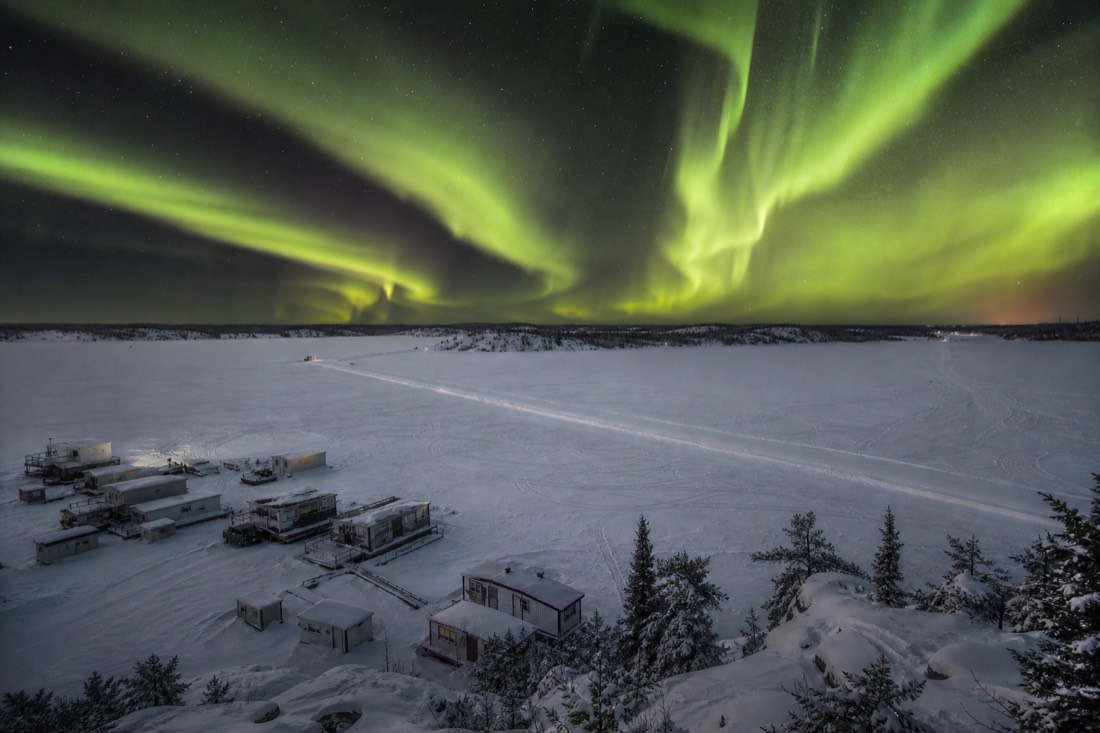
The view changes completely with the season, which is why I bring people up twice on longer visits. In summer the bay is all motion: canoes, floatplanes, houseboaters rowing to shore. In winter it freezes into a single white plain, and the plowed line you see heading for the far shore is the ice road to Dettah, a Yellowknives Dene community about 6.5 km across the bay. I wrote a whole piece on driving the Dettah ice road, because it deserves one.
The floating neighbourhood below gets its own story too, in the houseboats of Yellowknife Bay. And on clear nights in season, this same sky performs: the city's own aurora and weather page is blunt about how often the lights show up over the bay. The monument is one of the few places where the gold-rush town, the working lake and the aurora geography all sit in a single frame.
Do you need a guide for Old Town, or is walking it alone enough?
You can walk Old Town free, any day, and you should. But the buildings do not explain themselves: without the stories, Ragged Ass Road is just a sign and the shacks are just shacks. A guided city loop adds the history, a warm vehicle in winter, and stops a walker would miss.
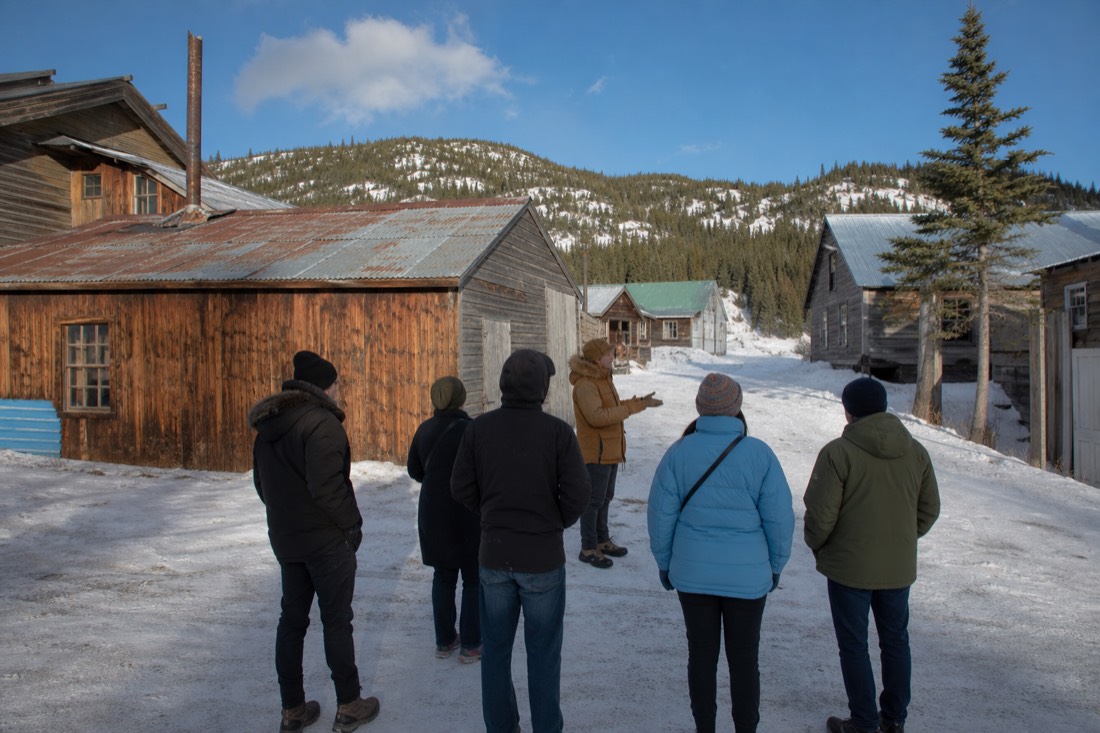
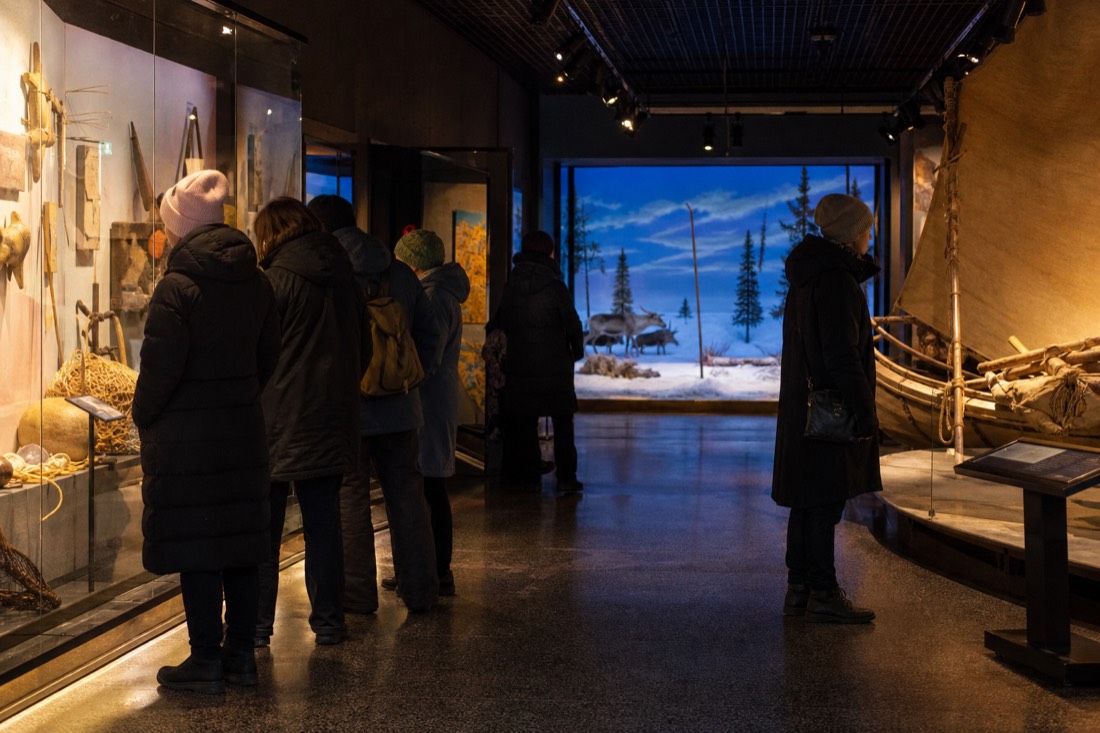
I am biased, obviously, guiding is my trade. So here is the honest version. If you have good weather, decent boots and a curious streak, the self-guided loop above is a fine afternoon. The tour earns its price when it is minus 25, when you want the stories told properly, or when you want the stops beyond walking range folded in: the Legislative Assembly, the Heritage Centre, and a wildlife gallery full of northern taxidermy that kids reliably love.
| Tour | Rating | Length | Group size | Cancellation |
|---|---|---|---|---|
| City tour + wildlife gallery | 5.0 (27 reviews) | 1 to 4 h | Max 23 | Non-refundable, car seats available |
| City and culture tour | 4.9 (25 reviews) | 3 h | Max 14 | Free cancellation up to 24 h |
Both are strong, and the differences matter: the first is the only 5.0-rated tour in town and flexes from 1 to 4 hours but is non-refundable, while the second is smaller and refundable. You can weigh them side by side on the city tours page, or go straight to live availability and prices for the 5.0-rated city tour on Viator if your dates are set.
What else in town is free once you have done the walk?
More than most capitals offer. The Prince of Wales Northern Heritage Centre and the Legislative Assembly both have free admission, the Bush Pilots Monument costs nothing, and the visitors centre is a warm place to plan. Old Town plus these can fill a full day without a single ticket.
Yellowknife is an expensive town to reach and sleep in, so I make a point of telling people how much of it costs nothing at all.
| Sight | Cost | Why go |
|---|---|---|
| Prince of Wales Northern Heritage Centre | Free admission | The North's story, told properly indoors |
| Legislative Assembly | Free | The territory's seat of government |
| Bush Pilots Monument | Free | The best view in the city |
| Visitors centre | Free | Maps, advice, a warm-up stop |
Stack the free indoor stops between outdoor stretches and the cold stays manageable, though if you are coming in deep winter, read what minus 30 actually feels like first and plan around it. For the wider picture of filling two or three days here, the guide to things to do in a Yellowknife winter lays out how Old Town fits alongside the lake, the aurora and the trails.
Give Old Town an unhurried half day. Climb the rock, read the street sign, watch a floatplane go, and you will understand why the pilots got the monument and the rest of us just got the view.