Yellowknife in September, Aurora Over Open Water
A Yellowknife guide on the autumn aurora season: northern lights doubled in mirror-calm lakes, jacket weather instead of parkas, and tundra colors by day.
 By Thomas Beaulieu, Yellowknife tour guide & northern lights specialist
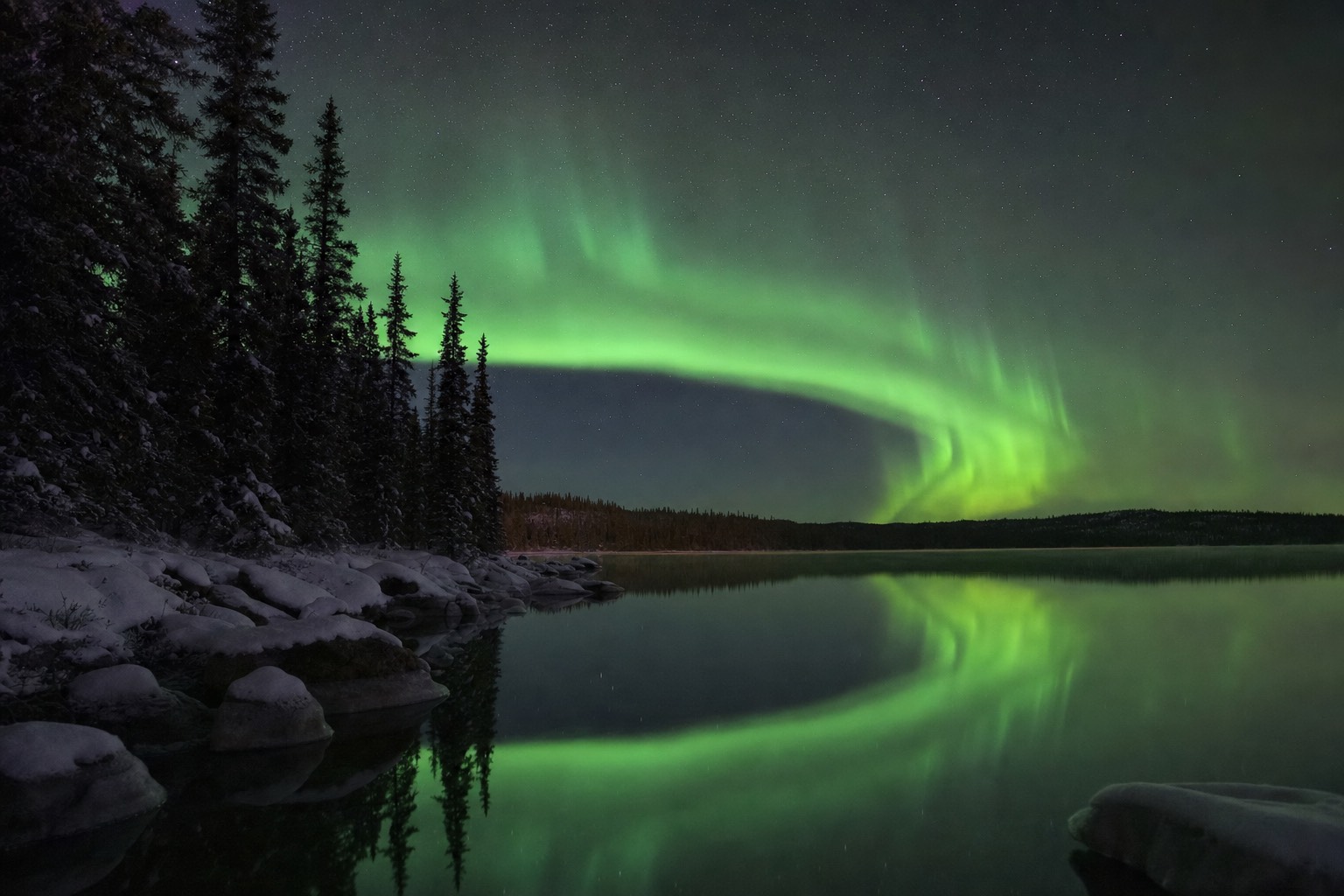
The first time a guest sees the aurora doubled in a lake, they usually stop talking mid-sentence. It happens in September, before freeze-up, on those windless nights when the water goes to black glass. The curtains ripple overhead and the lake plays them back, upside down and perfect, so the light seems to pour from two skies at once. I guide all winter and I love the deep-cold season, but if you ask me for the single most beautiful sight this job has shown me, it happened in jacket weather, standing on a gravel shore with open water at my feet.
Can you really see the northern lights in September?
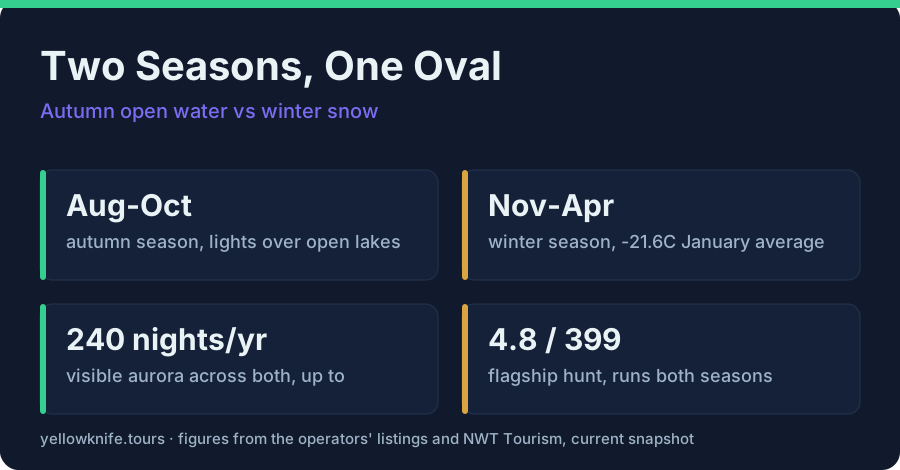
Yes, and well. Yellowknife's aurora runs two seasons: mid-August to early October and mid-November to early April. September sits squarely inside the first one, with dark nights back, lakes still open, and the same overhead auroral oval working. The lights do not wait for winter; only the visitors do.
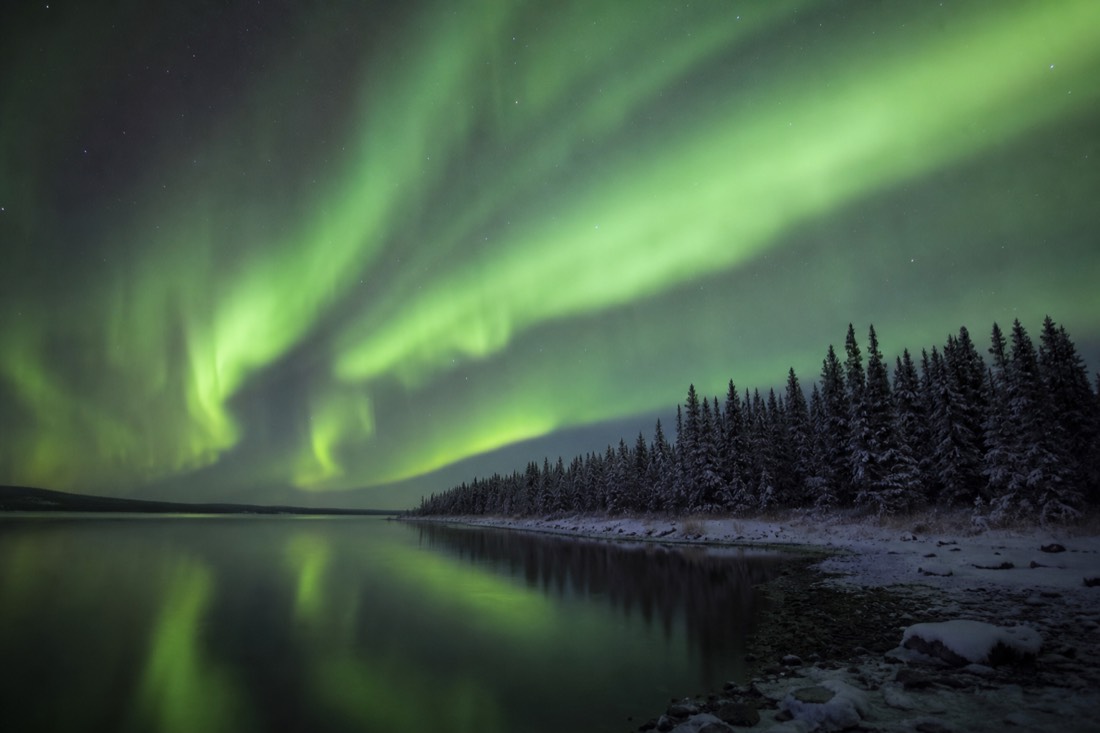
The confusion is understandable. Every aurora photo in every brochure shows snow, parkas, and frozen breath, so people assume the lights are a winter phenomenon. They are a darkness phenomenon. Yellowknife loses its aurora from roughly mid-April to late July only because the midnight sun refuses to leave, with about 20 hours of daylight around the June solstice, with twilight through the rest of the night. Once real night returns in mid-August, the show resumes, and NWT Tourism's own season guide draws exactly that line: autumn lights over open water, then winter lights over snow.
The odds do not care which season you pick either. Aurora is visible here up to 240 nights a year, and the famous three-night figure, a 98% chance of seeing the lights at least once across a three-night stay in season, covers September as fully as January.
| The two seasons | Autumn | Winter |
|---|---|---|
| Window | Mid-August to early October | Mid-November to early April |
| Lakes | Open, reflective | Frozen, walkable |
| Typical wear | Jacket and toque | Full parka kit |
| Signature sight | Aurora doubled in calm water | Aurora over endless snow |
| Crowds | Light | The famous season |
What does aurora over open water actually look like?
Doubled. On a calm September night the lake surface holds a full mirror image of the display, so curtains ripple above the horizon and below it at once. Photographers chase this shot for years; in Yellowknife's autumn it is simply what a good night looks like from any quiet shoreline.
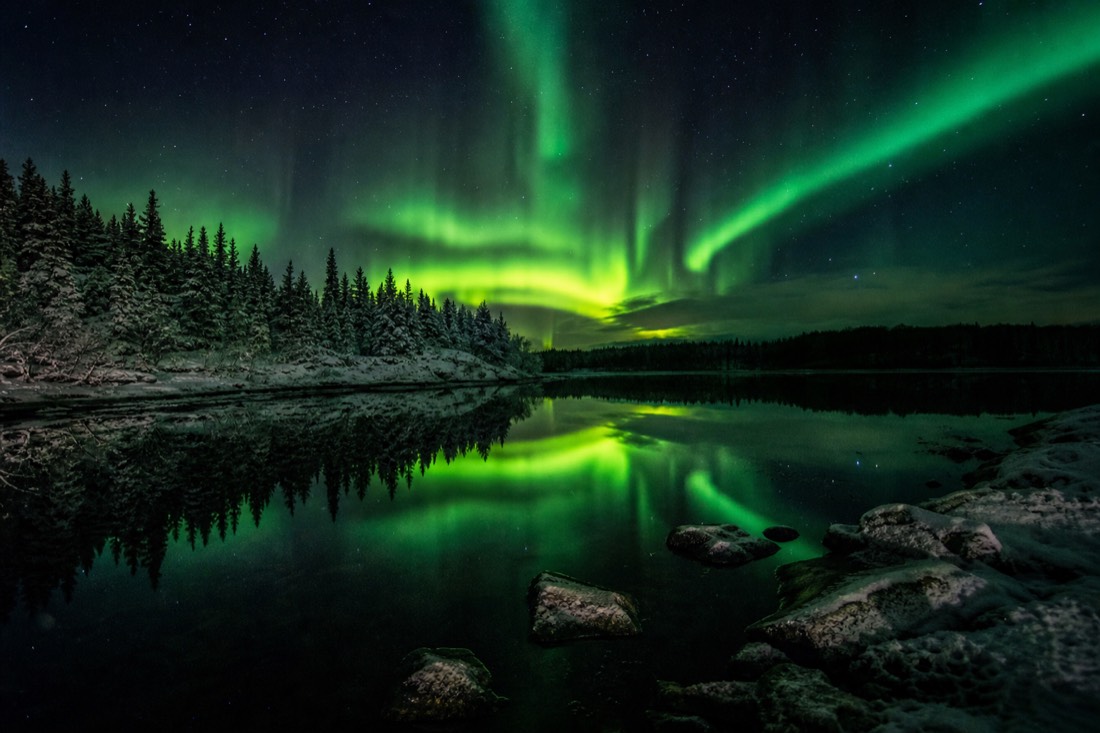
Winter aurora fills the sky. Autumn aurora fills the world. That is the cleanest way I can put the difference, because the reflection genuinely changes the geometry of the experience: you look down and the lights are there too, sliding across the water between the stones at your feet. On the best nights the lake is so still that guests cannot tell where the shoreline ends in their photos, and the horizon becomes a fold in the middle of a single sheet of light.
The mechanics of the night are otherwise the ones I described in what an aurora hunt is really like: pickup between 9:30 and 10:30pm, lake-hopping along the Ingraham Trail toward clear sky, peak activity near local midnight, drop-off by about 2:30am. The van still carries hot drinks and a photographer. The difference is that you wait for the show in a light jacket, listening to water lap against the shore instead of your own boots squeaking.
How warm is Yellowknife in September, honestly?
Jacket weather, not parka weather. Days can still be genuinely mild, the tail end of a summer that brings t-shirt afternoons, while nights by the lake ask for a warm layer, a toque, and gloves. Nobody rents an arctic kit in September. Winter's minus 29 January nights are months away.
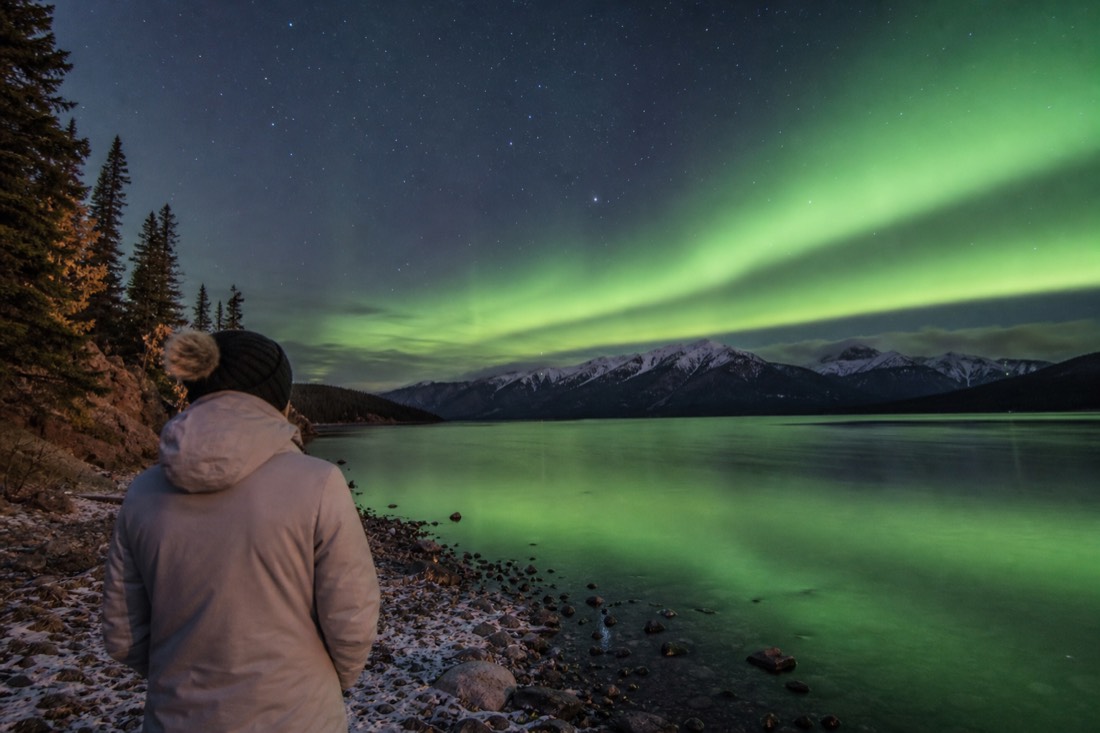
This is the season's quiet superpower. A four-hour night hunt in January is a gear operation, layered and managed, warm van always within retreat distance. The same hunt in September is closer to a long evening at a cottage. You stand at the water for an hour because you want to, not because you are rationing exposure. For travelers who are nervous about deep cold, or bringing kids, or simply do not want to buy boots for one trip, autumn removes the single biggest obstacle between them and the lights. Later, if the cold itself starts to intrigue you, I wrote about what minus 30 feels like so you can meet it on paper first.
| September night kit | January night kit |
|---|---|
| Warm jacket | Rented arctic parka and pants |
| Toque and light gloves | Insulated boots, mitts over gloves |
| Ordinary footwear | Face cover for moving air |
| Thermos, optional | Thermos, non-negotiable |
What is there to do in Yellowknife by day in autumn?
More than the brochures admit. The tundra and taiga turn gold and rust in September, Cameron Falls is a 45-minute drive and a short hike away, Old Town and the Bush Pilots Monument earn a slow afternoon, and the houseboats are still floating free in the bay rather than frozen into it.
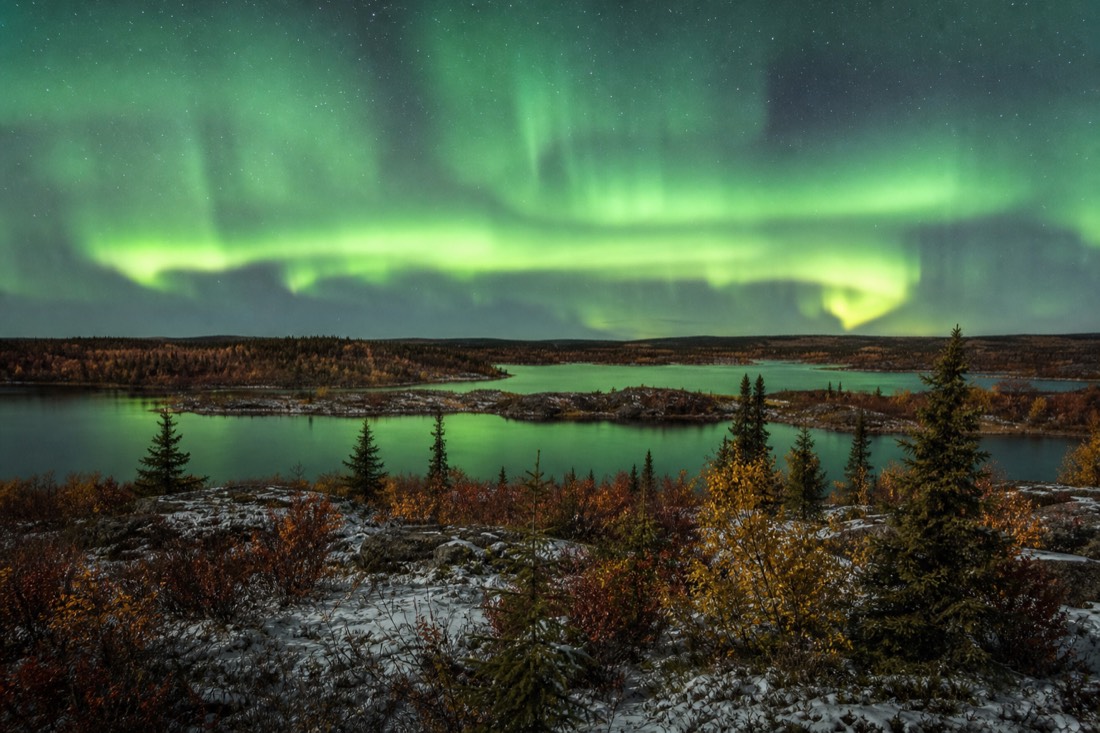
Autumn is the only season when the aurora trip doubles as a fall-colors trip. The land around town goes amber and red in September, and the drive out the Ingraham Trail, the same road we hunt at night, becomes a daytime destination of its own. Cameron Falls sits about 46 km out in Hidden Lake Territorial Park, roughly 45 minutes from town, and the water is still thundering rather than frozen.
| Daytime hours well spent | Getting there | Cost |
|---|---|---|
| Cameron Falls hike | ~46 km, about 45 min up the Ingraham Trail | Territorial park, bring nothing but shoes |
| Old Town and Bush Pilots Monument | In town, walkable | Free |
| Prince of Wales Northern Heritage Centre | In town | Free admission |
| Legislative Assembly | In town | Free |
| Houseboat viewing, Yellowknife Bay | Old Town shoreline | Free, about 50 boats out there |
Those houseboats deserve a slow look while the water is open; the whole floating neighbourhood and its history get their own story in the houseboats of Yellowknife Bay.
Why does nobody talk about the autumn season?
Because winter photographs sell winter. The parka-and-snow image is the industry's default, so autumn stays a local secret even though the oval overhead performs identically. Solar activity is also still strong: cycle 25 peaked around October 2024, and the years right after a peak keep delivering.
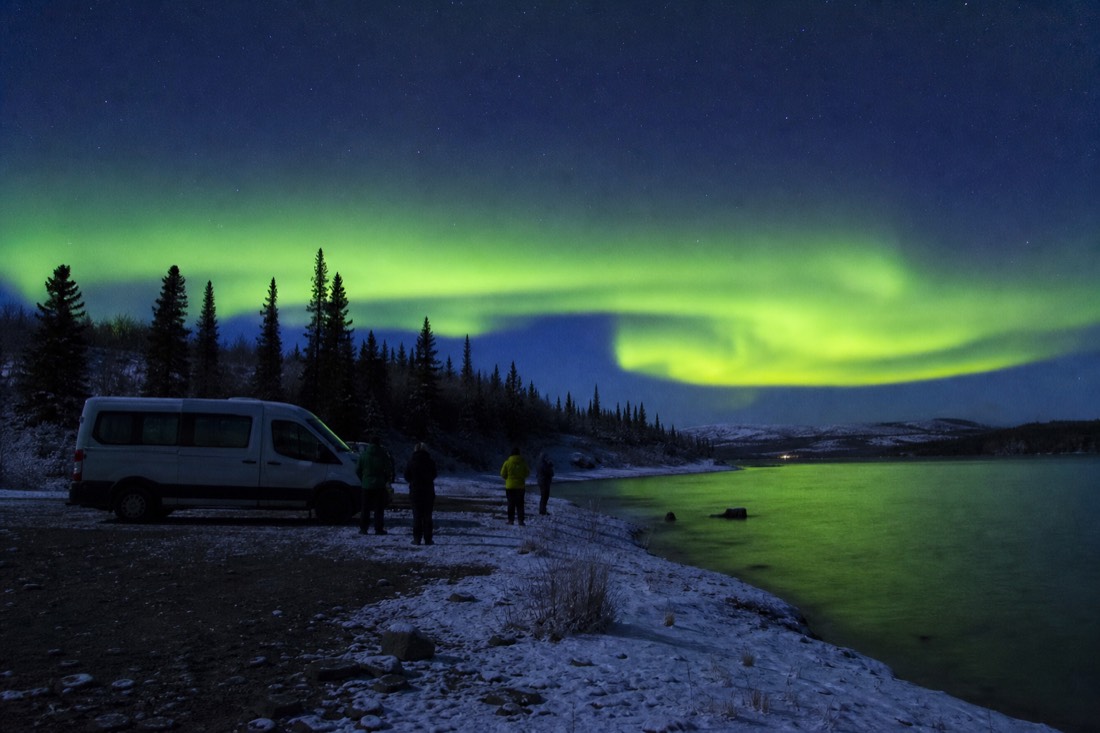
I will not oversell the sun: 2026 is not the maximum itself. The peak most likely landed around October 2024, and space.com's read of recent solar activity is that the early declining phase still sits inside the high-activity years, which matches what my camera has been catching. Add Yellowknife's flat horizons and low light pollution, the same geography that has travel press calling this one of the world's great aurora towns, and September becomes a genuinely underpriced month to be here.
The hunt itself does not hibernate either. The flagship trip, 4.8 across 399 Viator reviews, hotel pickup, photographer on board, runs right through the autumn window with free cancellation up to 24 hours. Browse the whole northern lights lineup to compare options, or check live availability and prices on Viator for your September dates.
This piece is the postcard; the spreadsheet exists too. When you are ready to pick dates, book nights, and time the moon, the full planning version lives in the Yellowknife northern lights in August and September guide, with the broader calendar in the best time to see the lights here. My own bias is on the record now. Come while the water is still open. Bring a jacket, not a parka, and stand somewhere quiet when the lake starts playing the sky back at you.