Best Time to See the Northern Lights in Yellowknife 2026-2027 (Month by Month)
Yellowknife sits directly under the auroral oval, so the question is not whether the lights come out here. It is which month puts you under them in the conditions you want.
 Written with Thomas Beaulieu, Yellowknife tour guide & northern lights specialist
Short answer
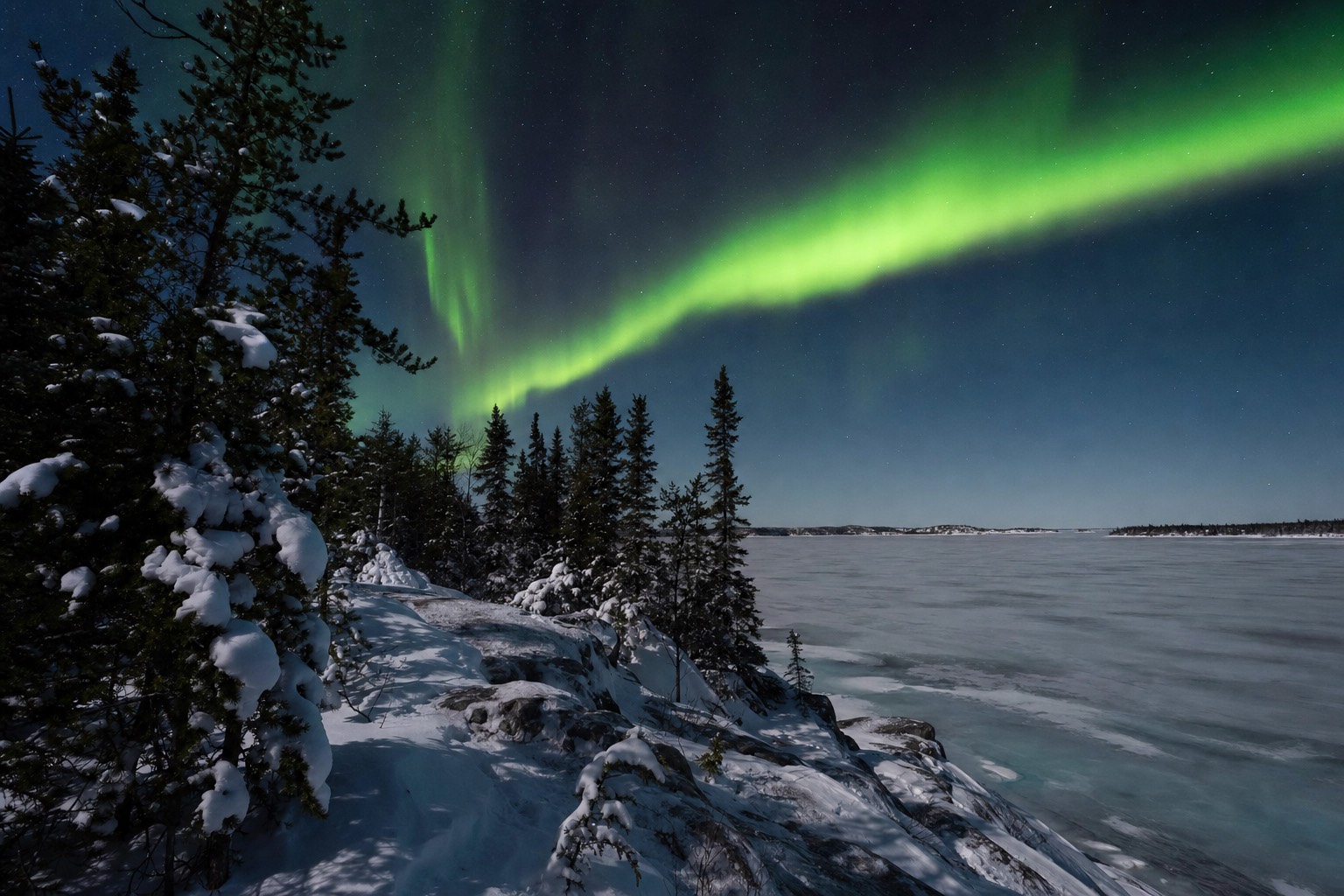
The aurora runs in two seasons, mid-August to early October and mid-November to early April. Any month inside those windows works. If I had to pick one, March wins, with strong aurora odds, easing cold, longer days, and the SnowKing festival on the frozen bay.
I have stood on lake ice at midnight in February with my eyelashes frozen together, and I have watched the same green curtains from a t-shirt-warm dock in late August. Same sky, same city, completely different trip. Guests ask me one question more than any other, and it is the right one: when should I come? The honest answer has more moving parts than most articles admit, so here is the whole picture, month by month.
What is the best month to see the Northern Lights in Yellowknife?
March is my pick for most visitors. Aurora activity stays strong, the brutal January cold has eased, days are long enough to enjoy the town, and the SnowKing festival fills the frozen bay. September is the runner-up for anyone who wants the lights without deep winter. Every month from mid-August to early October and mid-November to early April can deliver.
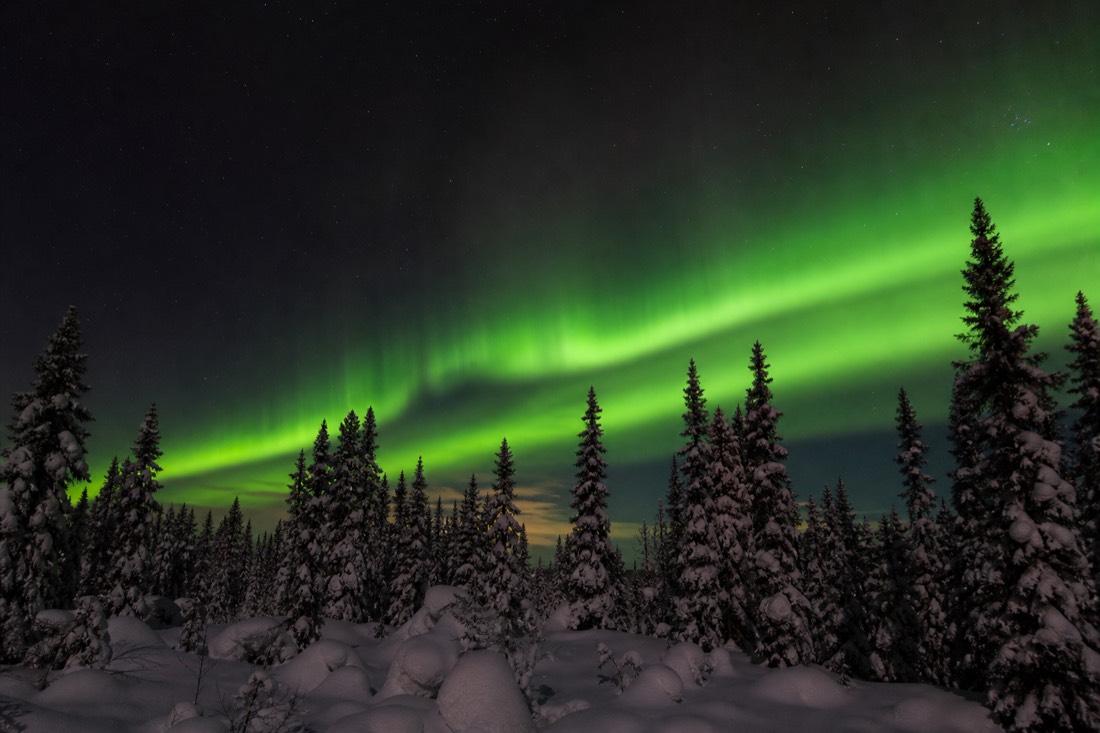
The reason any of those months work is geography. Yellowknife sits directly under the auroral oval, the ring where aurora activity concentrates, and NWT Tourism puts the aurora at up to 240 nights a year here. Compare that with roughly 50 nights a year in the high arctic further north and you see why this small city outperforms places that look better on a map. Flat horizons, relatively low precipitation, and almost no light pollution once you leave town do the rest.
So the month you choose is less about odds and more about everything around the odds: how cold you are willing to get, what daytime activities you want, and what kind of landscape you want under the lights. I break down how those choices stack into a trip in the Yellowknife aurora itinerary guide.
When are the two aurora seasons in Yellowknife?
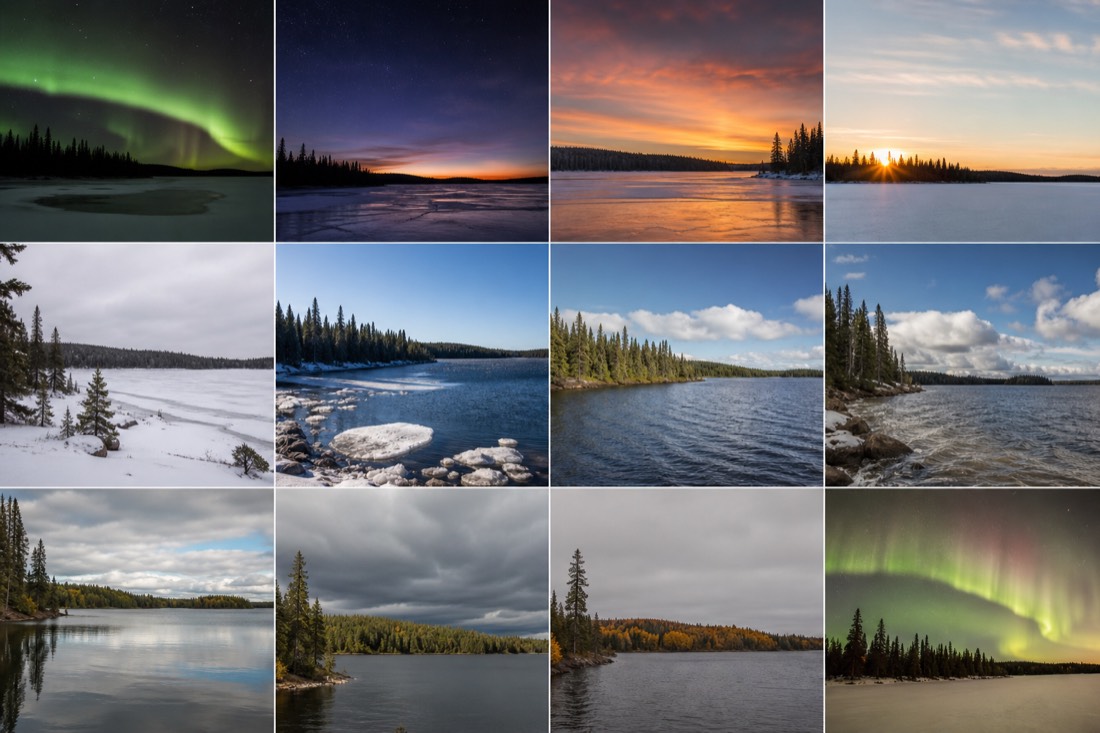
Autumn season runs mid-August to early October, with mild nights and aurora reflected in still-open lakes. Winter season runs mid-November to early April, with the longest darkness and the classic snowscape. Between them sits a short freeze-up gap, and from mid-April to late July the midnight sun cancels the show entirely.
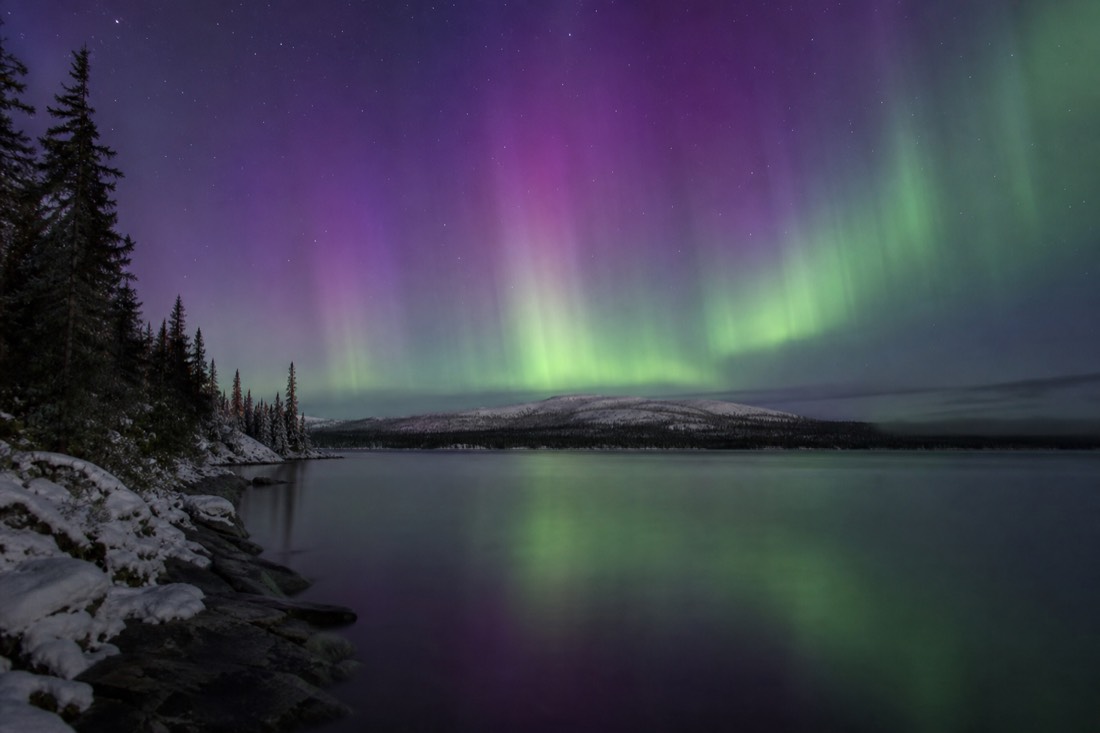
Those two windows come straight from how NWT Tourism describes the viewing seasons, and they behave like two different destinations. Autumn means jackets instead of parkas, water instead of ice, and doubled auroras mirrored on the lake surface. Winter means -20 nights, snow squeaking underfoot, and dog teams running in the daytime. Neither is better. They are different products, and I have guests who swear by each.
| Season | Dates | Nights feel like | Signature sight |
|---|---|---|---|
| Autumn aurora | Mid-August to early October | Cool, jacket weather | Lights doubled in open lakes |
| Freeze-up gap | Roughly October into November | Cold, unsettled | Lakes turning to ice, short season pause |
| Winter aurora | Mid-November to early April | Deep cold, -20 and below at night | Aurora over snow, longest dark hours |
| Midnight sun | Mid-April to late July | Mild to warm, barely dark | No aurora, near-22-hour daylight |
If autumn tempts you, the August and September aurora guide covers that season in detail, including which tours pause until the ice returns.
Why is there no aurora from mid-April to late July?
The aurora itself never stops. What stops is darkness. Around the June solstice Yellowknife gets about 20 hours of daylight, and even the remaining hours stay twilight-bright. You cannot see a light show through a lit sky, so viewing shuts down from roughly mid-April until the nights return in late July.
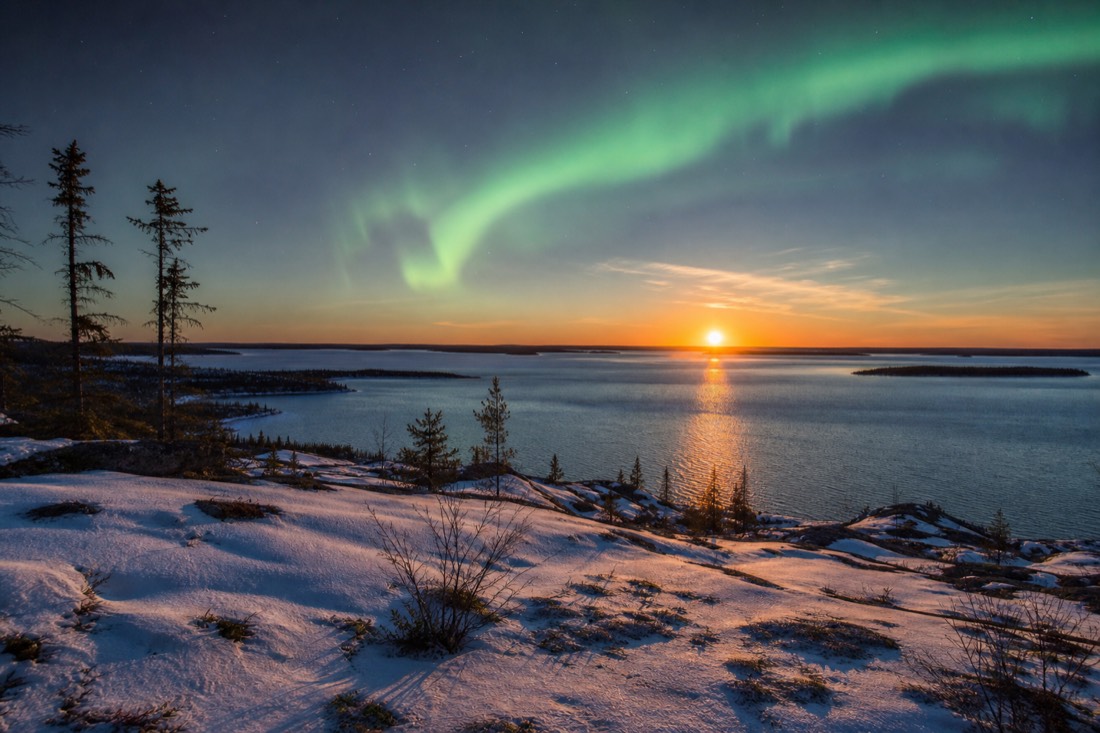
This is the single most common planning mistake I see. Someone books a June trip expecting aurora because a search result said Yellowknife is the aurora capital, then lands in a city where the sun barely sets. Summer here is genuinely lovely, mild afternoons and endless golden light over the houseboats, but it is a hiking-and-paddling trip, not a lights trip. If the aurora is the point, the earliest sensible arrival is mid-August, when true darkness comes back for a few hours around midnight and the hunts start rolling again.
What does each month look like for aurora in Yellowknife?
Every month from August to April has a role, and four months have none. Use the table below to match aurora status, cold level, and which tours actually run. The short version: September for mild nights, December to February for full winter atmosphere at real cost in cold, March for the best overall balance.
| Month | Aurora? | Cold | What runs | Verdict |
|---|---|---|---|---|
| January | Yes | Brutal, highs about -21.6C, mean -25.5C, lows near -29C | Aurora hunts, lodge, dog sledding, ice fishing, snowmobile | For the hardy, full winter |
| February | Yes | Deep cold continues | Everything winter | Classic, bring real gear |
| March | Yes | Cold but easing, brighter days | Everything winter, plus SnowKing festival | The sweet spot |
| April | First week or so, then done | Late-winter cold, fading | Winter tours wind down | Go early April only |
| May | No, midnight sun building | Mild | Summer sightseeing | Skip for aurora |
| June | No, near 22h daylight | Mild to warm | Summer only | Skip for aurora |
| July | No until the very end | Warm | Summer only | Skip for aurora |
| August | Yes from mid-month | Mild, jacket nights | Aurora hunts, lodge, cabin, city tours | Underrated opener |
| September | Yes | Cool, crisp nights | Aurora hunts, lodge, cabin, city tours | Best mild-weather month |
| October | Early days only, then freeze-up | Cold arriving | Aurora season pauses | Awkward, avoid late October |
| November | Yes from mid-month | Winter arriving in force | Winter season opens | Good if you want early winter |
| December | Yes | Deep cold, shortest days | Everything winter, ice road opens | Atmospheric, very cold |
Two notes on that table. The January figures are the real Environment Canada normals, and the record without wind chill is -51.2C, set in 1947, which Cabin Radio dug out of the archive data. Cold that severe is rare, but January and February demand serious clothing, and the what to wear in Yellowknife winter guide covers exactly what works, including where to rent it.
What is the best time to visit Yellowknife?
For most travelers, the best time to visit Yellowknife is late winter, February through March, when the aurora, dog sledding, ice fishing, and the ice road are all running at once. If cold is a dealbreaker, come in late August or September for mild aurora nights. Come in summer only if the midnight sun, not the aurora, is your goal.
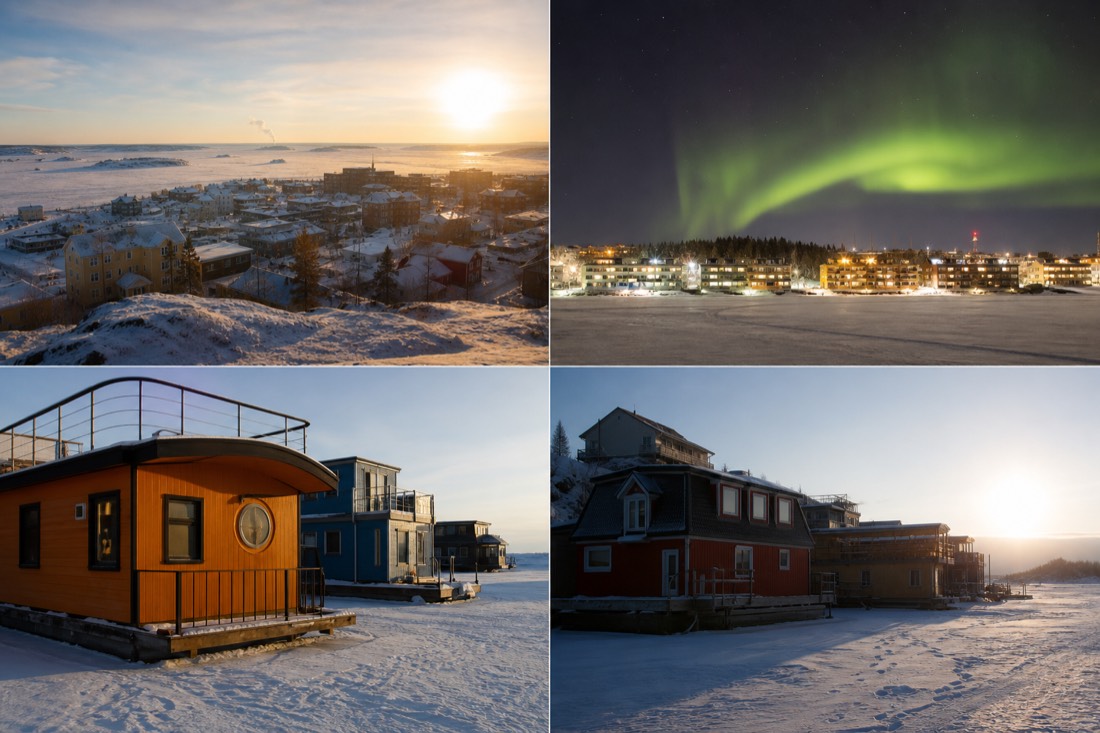
The aurora question and the trip question are not quite the same. A February visit gives you the full northern package: aurora at night, then daytime on the ice with dog teams or a fishing hut on Great Slave Lake, the deepest lake in North America at 614 metres. An autumn visit trades all of that ice-borne daytime activity for warmth and reflections, and I wrote about what a September night on the water actually feels like in aurora over open water.
Whenever you come inside a season, the hunting method is the same. Guides drive out of the city glow, read the cloud, and move between viewpoints until the sky opens. If you want that handled for you, compare the northern lights tours side by side, or go straight to the flagship hunt and check live availability and prices on Viator. It runs small groups, three viewpoints a night, and a photographer whose shots you keep.
Is March really the underrated sweet spot?
Yes, and locals quietly know it. March keeps strong aurora activity and reliable snow while the deep cold releases its grip. Days stretch long enough for real daytime plans, every winter tour still runs, and the SnowKing Winter Festival builds its snow castle on the frozen bay for the whole month.
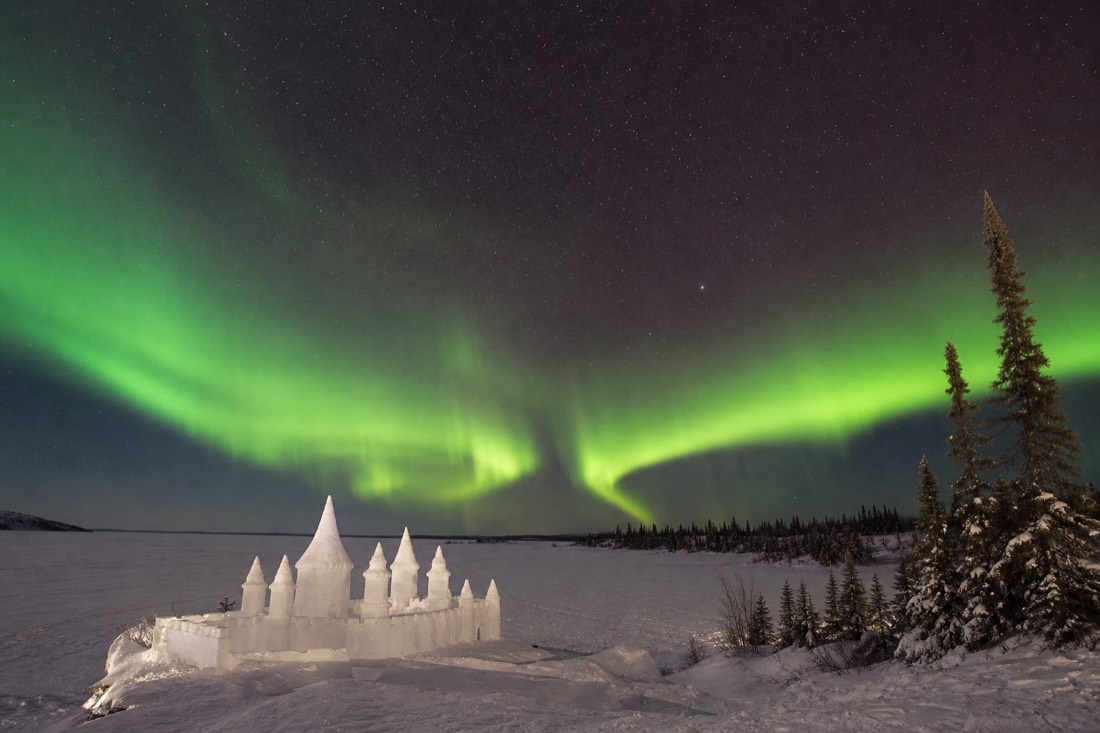
January sells the fantasy of the frozen north and delivers it at -29C at night. March delivers almost the same sky with a fraction of the suffering. You get bright afternoons for the SnowKing festival, which runs March 1 to 28 in 2026 with 2027 dates already announced, and you still get full darkness by mid-evening for the hunt. The festival deserves its own writeup, and I gave it one in the SnowKing festival post.
March is also when I see the happiest reviews come back from guests, because the trip stops being an endurance test. You can stand outside watching an overhead corona for forty minutes without doing the frozen-toes dance. That comfort translates directly into how long you stay out, and staying out is how you catch the best displays.
Do you need a high Kp number to see the aurora in Yellowknife?
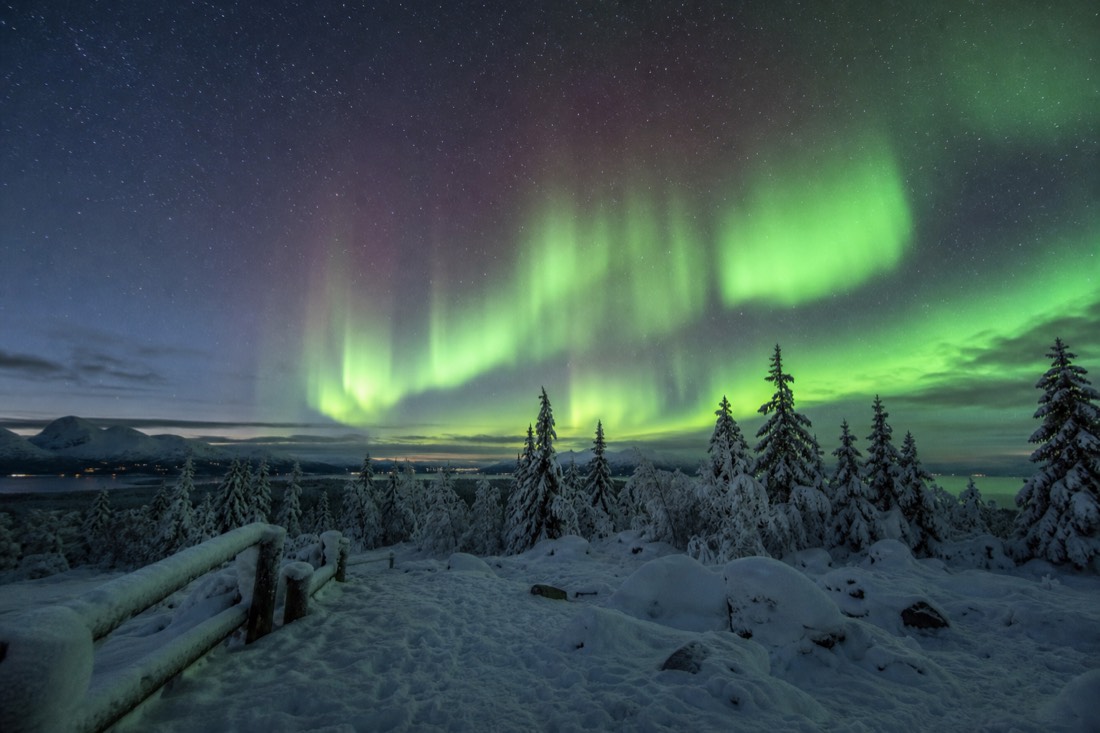
No, and this is the most damaging myth in aurora planning. Kp measures how far south the oval stretches. Yellowknife sits under the oval already, so low-Kp nights routinely produce good shows here. One review of our flagship hunt describes a strong display on a night forecast at Kp 0.0.
Travelers watch a Kp app show 1 or 2, panic, and think their trip is doomed. In Iceland or Scotland, fair enough, those places need the oval pushed toward them. Here the logic flips. A big Kp storm actually shoves the oval south of us as often as it helps. What matters on any given Yellowknife night is cloud cover, darkness, and patience, in that order. That is also why chasing by van beats a fixed camp on marginal nights, a trade-off I unpack in Aurora Village versus aurora hunting tours.
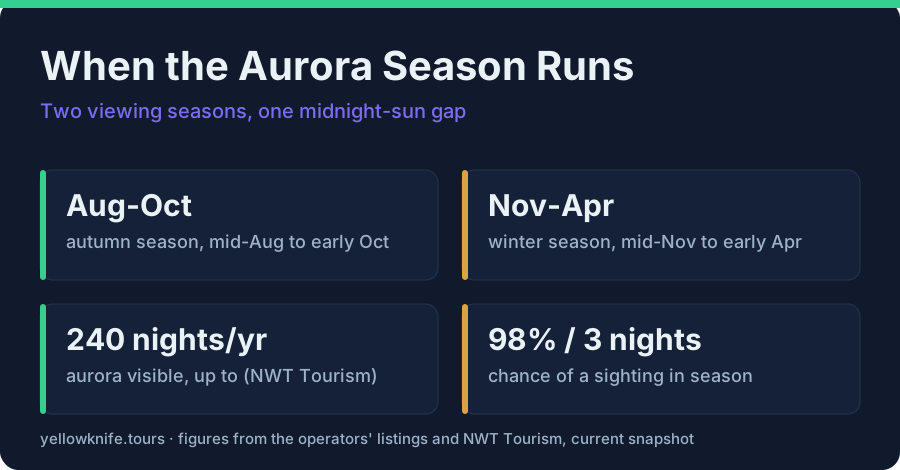
The numbers behind all this are unusually good for a travel claim. Up to 240 aurora-visible nights a year, and a 98% chance of seeing the lights at least once over a three-night stay in season. I look hard at odds like that in your real chances of seeing the northern lights, because they shape how many nights you should book far more than any Kp forecast does.
Which in-season month scores best on darkness, cold and demand?
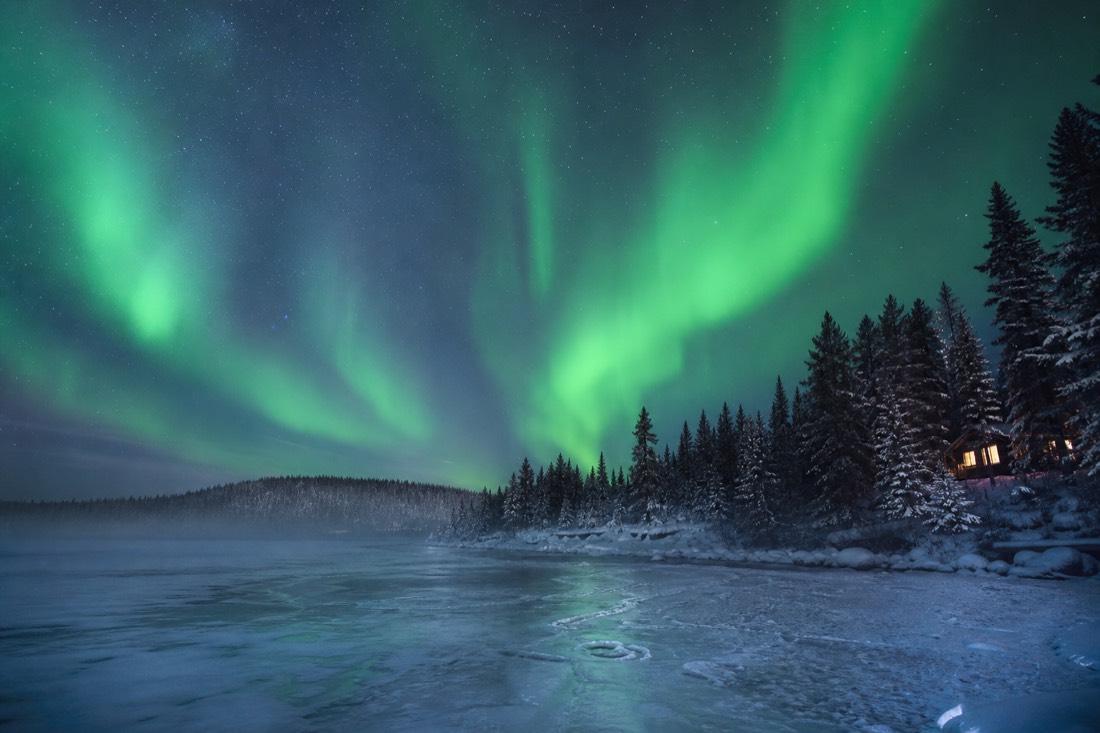
December and January hand you the most true darkness, close to twelve hours a night. September gives the mildest air with about five hours and twenty minutes of dark. March lands between them: roughly seven hours of darkness, a monthly mean near -16.6C, every winter tour running, and SnowKing out on the bay.
The month table above answers what is possible. This one answers what it costs. All figures are for the fifteenth of each month, so the edge weeks behave a little differently, and the temperature columns are the Environment Canada normals rather than what any single night will hand you.
| Month (15th) | True darkness | Daylight | Mean / avg low | Demand and events |
|---|---|---|---|---|
| August | None yet at mid-month, returns about the 27th | 16h08m | 14.5C / 10.5C | Autumn hunts open mid-month, Old Town Ramble & Ride on the long weekend |
| September | About 5h20m, growing fast | 13h02m | 7.6C / 4.2C | Open water still, no snow yet, mildest aurora nights of the year |
| October | About 9h | 10h02m | -1.0C / -3.6C | Autumn season closes early in the month, then the freeze-up pause |
| November | About 11h30m | 7h03m | -12.6C / -16.2C | Winter season opens mid-month, ice road still closed |
| December | About 12h45m, the year's maximum | 5h09m | -21.8C / -25.6C | Dettah ice road usually opens late in the month |
| January | About 12h | 6h10m | -25.5C / -29.4C | Coldest month on the normals, everything winter running |
| February | About 10h | 9h00m | -22.7C / -27.4C | Deep cold holding, daylight climbing fast |
| March | About 7h | 11h50m | -16.6C / -22.5C | SnowKing March 1 to 28 in 2026 and 2027, heaviest booking pressure |
| April | None by mid-month | 14h58m | -5.5C / -11.3C | Season ends around the 12th to 14th, ice road closes mid-month |
Read down the darkness column and the shape of the season jumps out. December and January are the champions, near twelve hours of true astronomical dark every night, which sounds decisive until your eye slides one column right. December pays for that darkness with five hours and nine minutes of daylight and nights averaging -25.6C. January is colder still. You are buying darkness with everything else in the trip.
March sits at the opposite end of the same trade, and I would rather be honest about what it costs than pretend it is free. Seven hours is the least true darkness of any full winter month, and because sunset is not until about 7:40pm by mid-March, the sky is not properly black until somewhere near 10pm. A van that leaves at 9:30 spends its first stretch driving rather than watching. What comes back the other way is close to twelve hours of daylight, a monthly mean of -16.6C instead of -25.5C, and a town you can actually enjoy between tours. If you are leaning that direction, March gets its own breakdown.
The second cost of March is competition. SnowKing runs the whole month, the ice road is open, and every winter product is at full tilt, so the small vans fill earlier in March than in any other month I work. Book further ahead than feels necessary. If you want the reverse trade, deepest dark and a quiet town, January is where it lives, and the clothing question stops being optional.
Which weeks at the edges of the season catch planners out?
Three of them. True astronomical darkness only returns to Yellowknife around August 27th, so early-August aurora nights are not physically available. It vanishes again around April 12th to 14th. Between the two seasons sits freeze-up, roughly mid-October into mid-November, when the lakes are turning and the ice road is still closed.
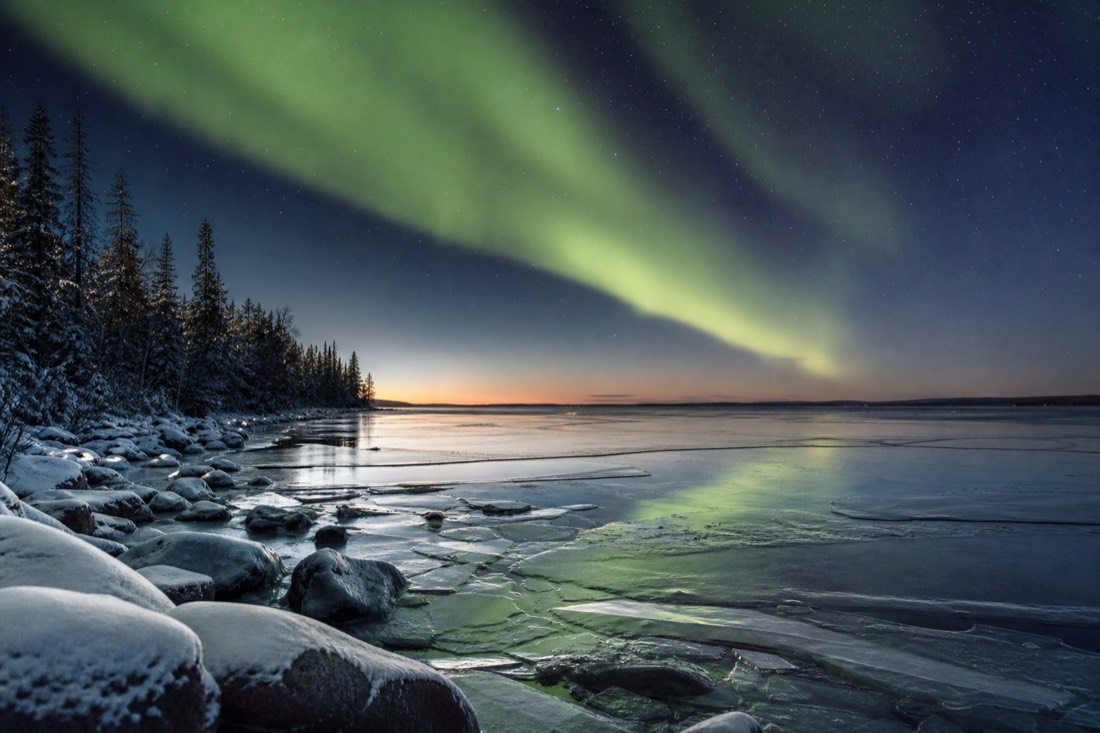
Nothing about the aurora itself changes at these edges. The particles keep arriving. What changes is whether the sky above you is dark enough to show them, and at 62.45N that flips faster than most visitors expect. Yellowknife sits roughly 400 km south of the Arctic Circle, so it gets neither true midnight sun nor polar night, but the swing between the two extremes is violent enough to open and shut the season inside a fortnight.
| Edge window | What is really happening | The booking risk | Better move |
|---|---|---|---|
| August 1 to 26 | No true astronomical darkness yet | Nights the sky cannot deliver, whatever the activity | Shift the trip to the end of the month |
| August 27 to 31 | Darkness returns, minutes at first, growing nightly | A very short viewing window each night | Workable if you stay three nights or more |
| All of September | Darkness reaches about 5h20m, lakes still open | Little, this is the safest autumn bet | Take it if you want mild nights |
| October 1 to about 10 | Autumn season closing out | Tours winding down around you | Come earlier in the season |
| Mid-October to mid-November | Freeze-up: ice forming, no snow base, no ice road | The thinnest tour lineup of any in-season stretch | Avoid, or accept a town-plus-aurora trip |
| Mid-November to late December | Winter season open, ice thickening | The Dettah ice road is not open until late December | Fine for early winter, wrong for ice-road plans |
| April 1 to 11 | The last true darkness of the season, shrinking nightly | A window that closes while you are in town | Book the earliest dates you can get |
| April 12 to 14 onward | Astronomical darkness gone until late August | No aurora is visible at any Kp | Wait for the end of August |
Freeze-up is the one that stings, because it looks fine on a calendar. Late October reads as northern and wintry, and it is cold, with the mean already below zero. What it lacks is a working landscape. The lakes are neither open water nor safe ice, so the boat side of the autumn product is done and the ice side has not begun, and the Dettah ice road does not open until roughly late December. Dog teams need a snow base that is not reliably down yet either. You can still see aurora on a clear night in that stretch, but the trip around it is thin, and I would rather send someone to November once winter is properly open.
The April edge catches a different kind of planner: the one who found a cheap late-season flight. A trip landing on April 10th has a genuine, if brief, dark window. A trip landing on April 16th has none, and no forecast, guide or storm changes that. The math is fixed by latitude, and April is worth reading before you commit to spring dates.
How should you pick exact dates once the month is settled?
Aim for a stretch with a dim moon, book at least three nights, and put your first hunt on the very first night you are in town. That last choice costs nothing and buys retry nights. A guide can chase a hole in the cloud, but nobody can add a night to a trip that has already ended.
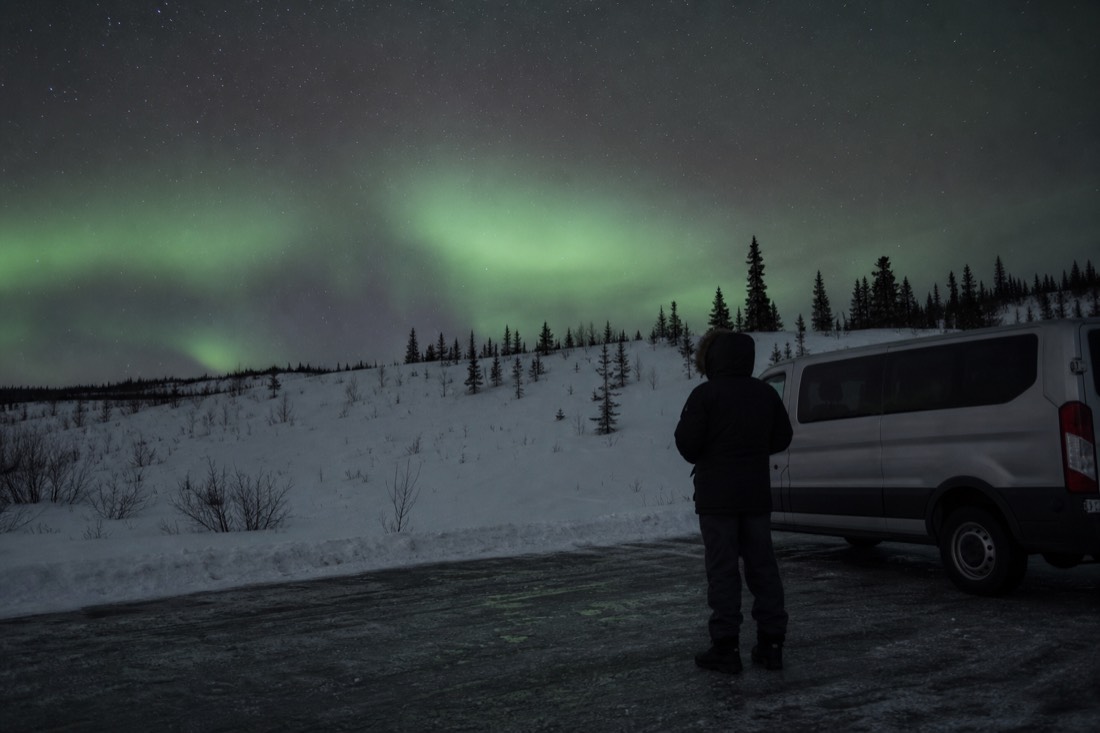
I have been guiding here since 2022 and have taken over a thousand travellers out under this sky, and the difference between the ones who go home glowing and the ones who go home flat is almost never the month. It is the shape of the booking. Same week, same weather, two different plans, two different outcomes.
| Date decision | What to aim for | Why it decides the trip |
|---|---|---|
| Moon phase | Nights near new moon, or accept the moon on a strong display | A bright moon washes out faint aurora and hurts photography most of all |
| Nights in town | Three at minimum, four if the budget stretches | The published 98% figure is built on a three-night stay in season |
| First hunt | Night one, every time | Every remaining night becomes a free retry |
| Arrival timing | Land in daylight where the schedule allows | A late arrival plus a 9:30pm pickup makes a brutal first day |
| Daytime plan | Keep it flexible and indoor-friendly | Vans return 1:30 to 2:30am, so mornings tend to vanish |
The moon is the one people skip. It never cancels a good night, and a strong overhead display will outshine anything the moon does, but on the quiet nights that make up most of a season a full moon flattens a soft arc into something your camera sees better than your eyes do. If your dates are flexible by a week, spend that flexibility on moon phase rather than on chasing a forecast.
Then there is the temptation to save the tour for later in the stay. Do not. Cloud is the single factor that most often decides whether a visitor here sees the lights, and cloud moves on a scale of hours, not weeks. Booking the hunt on night one means a clouded-out first attempt is an inconvenience rather than the end of the story.
| Nights in Yellowknife | Book the first hunt on | Retry nights left | What that means |
|---|---|---|---|
| 2 nights | Night 1 | 1 | Under the three-night window the 98% figure describes |
| 3 nights | Night 1 | 2 | The stay length that figure is actually built on |
| 4 nights | Night 1 | 3 | Real margin if a cloudy system parks over town |
| 5 or more | Night 1 | 4 or more | Diminishing aurora returns, so spend the extra days on the ice |
One planning myth to drop before you start pinning dates. There is no usable week-ahead aurora forecast for anywhere on earth. The dependable tool is NOAA's 30-minute aurora nowcast, one-to-three-day solar wind outlooks are moderate at best, and the 27-day recurrence outlook shows patterns rather than specific nights. That is exactly why you plan nights rather than evenings, and why three of them beats one perfectly chosen one.
How do you check the forecast once you are here?
Check cloud first, aurora second. The City of Yellowknife runs a weather and aurora page that gathers current conditions and viewing links in one place, and Astronomy North's AuroraMAX live feed and forecast comes back online on August 10, 2026 for the new season. Then trust your guide's read of the sky.
Bookmark the city's weather and aurora page before you fly, and if you would rather have it on your phone, I compared the aurora forecast apps that are actually worth installing, along with the reason most of them oversell the Kp number up here. Reading the numbers themselves, cloud, moon and the real forecast horizons, is walked through in the Yellowknife aurora forecast guide. On tour nights the rhythm is fixed, and it looks like this:
| Time | What happens |
|---|---|
| 9:30 to 10:30pm | Hotel pickups, drive out of the city glow |
| 11pm onward | Guides move between viewpoints, chasing clear sky |
| Near local midnight | Aurora activity tends to peak |
| 1:30 to 2:30am | Vans roll back into town |
Plan slow mornings around that, and give yourself enough nights for the odds to work. That, more than any month choice, is the real secret, and it is where the itinerary guide picks up. If you want a preview of how a hunt night actually unfolds, hour by hour, I walked through one in what an aurora hunt is really like.
One last thing on timing your year. The sun runs on an 11-year activity cycle, and the current one most likely peaked around October 2024. That does not switch the lights off. Space.com's analysis of the cycle shows the years right after a peak stay strong, so 2026 remains firmly inside the good years. Pick your season, book three or four nights, and let the oval do what it does over this town 240 nights a year.