Yellowknife Aurora Itinerary: How Many Nights Do You Really Need?
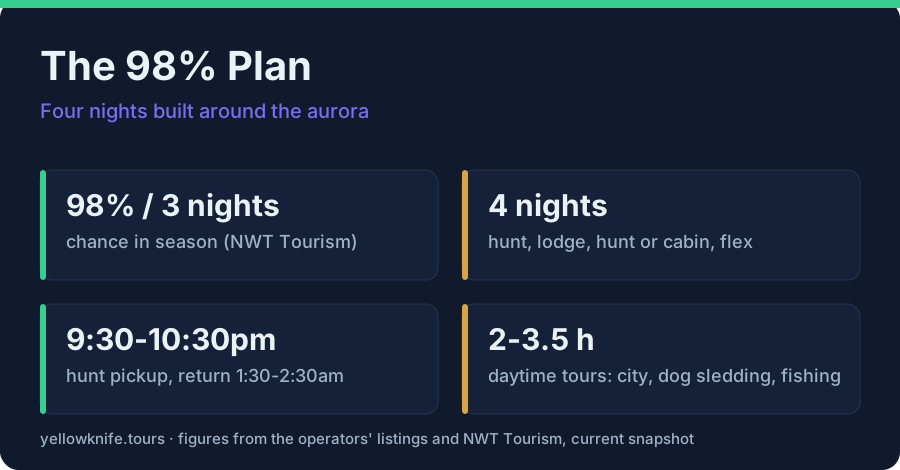
One night in Yellowknife is a bet on the weather. Three or four nights is a plan. Here is how to stack the nights so the published odds do the work for you.
 Written with Thomas Beaulieu, Yellowknife tour guide & northern lights specialist
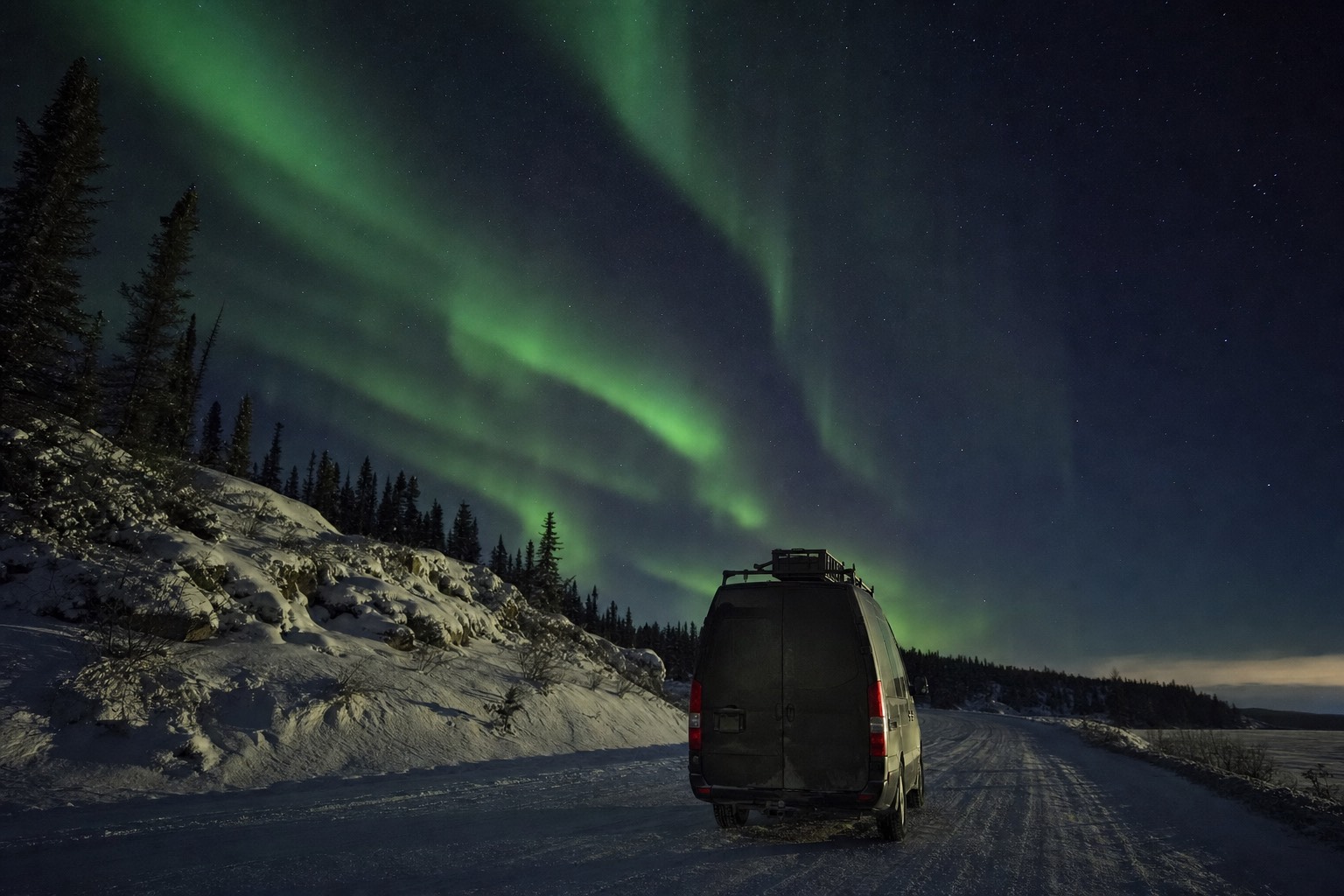
Short answer
Book 3 to 4 nights minimum. NWT Tourism puts the chance of seeing the aurora at least once over a three-night stay in season at 98%, and a fourth night buys insurance against one fully clouded evening. Fill the days with dog sledding, ice fishing, and the town itself.
The saddest people I meet in this job are the one-night visitors. They land, the cloud rolls in, the sky stays grey until 2am, and they fly home the next day having seen the inside of a van and a thermos of hot chocolate. The lights were there, above the cloud, doing their thing. The traveler just did not give the weather room to move. This guide exists so that never happens to you.
How long should I spend in Yellowknife?
Three nights minimum, four if you can manage it. NWT Tourism's published figure gives a 98% chance of seeing the aurora at least once over a three-night stay in season. A fourth night absorbs a fully clouded evening and opens room for a lodge or cabin night without giving up a chase.
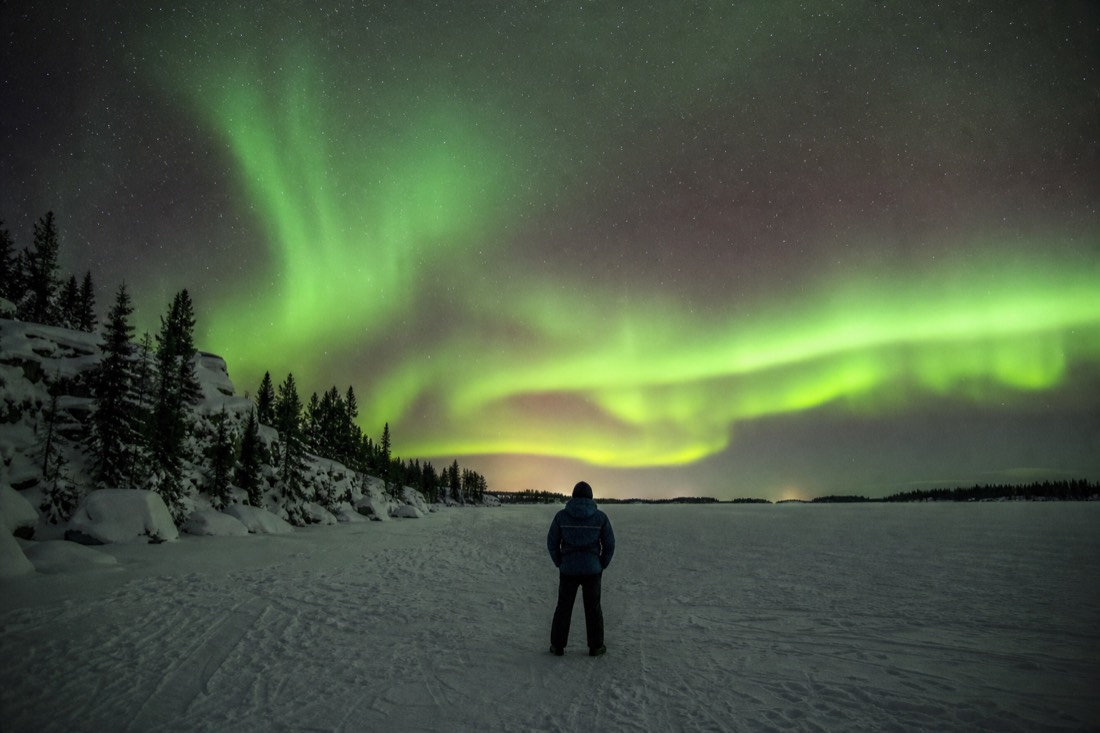
That 98% is the single most useful number in Yellowknife trip planning, and it comes from NWT Tourism's own aurora numbers, built on a place where the lights appear up to 240 nights a year. The aurora is close to a nightly event here in season. The variable is cloud, and cloud changes night to night. Stack three or four nights and you are no longer gambling, you are letting the average arrive.
Notice what the number is not. It is not a per-night guarantee, and nobody publishes honest per-night odds because a clear March night and a socked-in one are different universes. The strategy is simple: buy enough nights that one bad sky cannot sink the trip. I dig into the probability side properly in your real chances of seeing the lights.
How many nights do you need to see the northern lights?
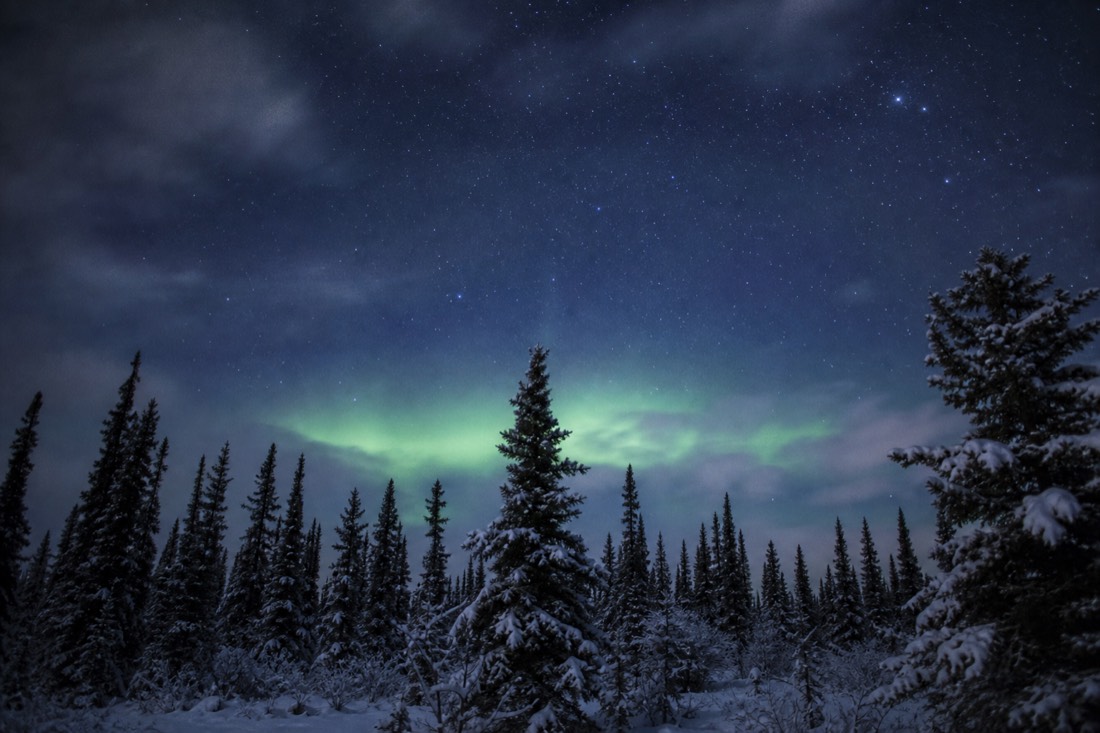
One night is a coin flip on cloud cover. Two nights is better but still exposed to a bad stretch of weather. Three nights reaches the published 98% figure, which is as close to certainty as honest travel math gets. Four nights adds comfort, variety, and a margin for the weather to be rude once.
Here is the framing I sketch on napkins for guests, with the only percentage being the one actually published:
| Nights booked | What you are really buying | Risk left on the table |
|---|---|---|
| 1 night | A single roll on that night's cloud | High: one overcast sky ends the trip |
| 2 nights | A second chance at clear sky | Real: weather systems often sit for two days |
| 3 nights | The published 98% at-least-once figure | Small: needs three straight bad skies to fail |
| 4 nights | The 98% plus a spare night and a slower pace | Minimal: room for one write-off and a lodge night |
Yellowknife helps you more than most aurora towns would. The region's flat horizon and relatively low precipitation mean clear skies are common, which is exactly why operators run here instead of somewhere prettier on a postcard. Season matters too: all of this assumes you have picked dates inside the viewing windows, which the best time to see the northern lights guide lays out month by month.
What does a 4-night Yellowknife itinerary look like?
Hunt on night one, because you never waste your freshest energy. Fill days with dog sledding, the town, and ice fishing, none of which compete with your evenings. Mix in a lodge or cabin night for variety, and keep the final night flexible as your weather insurance.
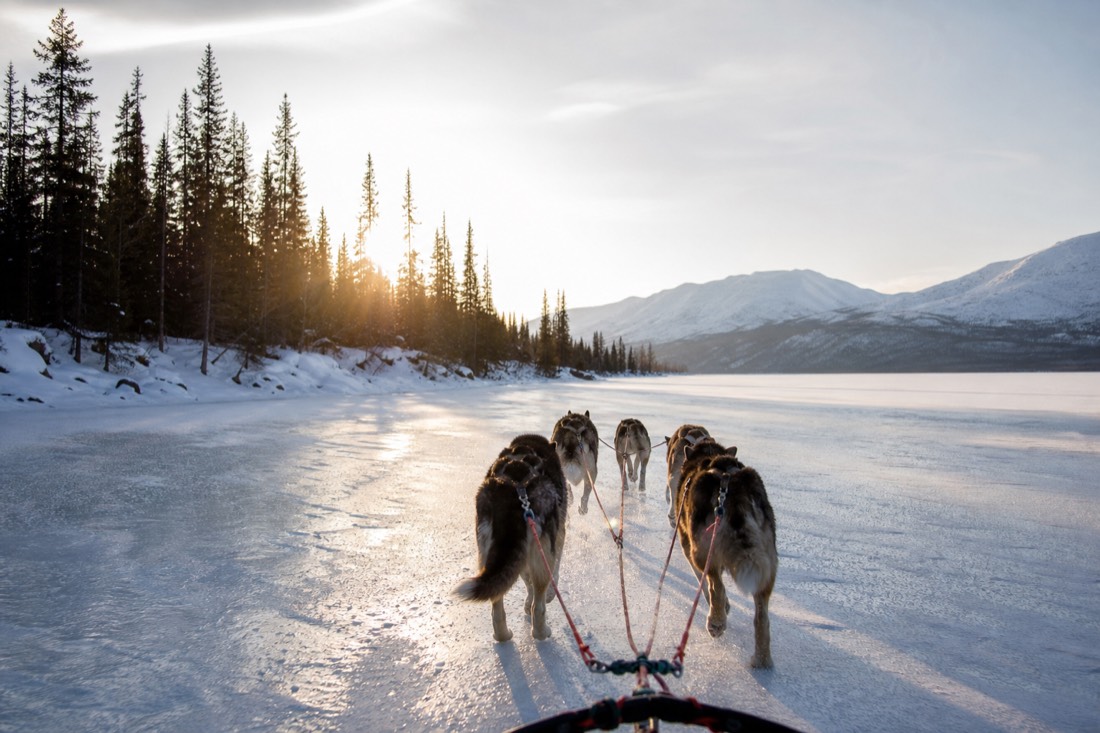
This is the shape I recommend most often for a winter trip, built entirely from tours that really run here:
| Day | Daytime | Evening and night |
|---|---|---|
| Day 1 | Arrive, settle in, easy walk around Old Town | Flagship aurora hunt, pickup 9:30 to 10:30pm |
| Day 2 | Late morning, then afternoon city and culture tour | Aurora lodge night: heated base near Madeline Lake, chase option if the sky moves |
| Day 3 | Dog sledding on the ice, 2 to 3 hours | Second hunt night, or start the 2-night cabin package |
| Day 4 | Ice fishing in a heated hut on Great Slave Lake, catch cooked for lunch | Flex night: rebook a hunt if the weather owed you one, or watch from the cabin |
A few notes on the pieces. The city tour slots neatly into an afternoon and covers Old Town, the Bush Pilots Monument, and the free-admission Legislative Assembly and Prince of Wales Northern Heritage Centre, so browse the city tours for the version that fits your day. Dog sledding is the classic daytime counterweight to late aurora nights, and I wrote up the full experience in what dog sledding here is really like. The fishing option puts you in a heated hut over the deepest lake in North America, 614 metres at its deepest point, with your catch cooked on the ice; compare the ice fishing tours and budget about CA$15 extra for the mandatory NWT fishing licence.
For the sleeping-under-the-sky option on nights three and four, the cabin package is the one to look at. It bundles two nights in a cabin or glass tipi with aurora hunting and viewing, airport and hotel transfers included, so check live availability and prices on GetYourGuide alongside the nightly northern lights tours before you lock the order of your nights. Note the package covers the cabin nights only, your town hotel is separate.
How do you budget your time around the late tour nights?
Aurora tours own your late nights, so build the days backward from that. Vans return between 1:30 and 2:30am, which makes 8am activities a mistake. Plan late mornings, put daytime tours after lunch where you can, and treat the hours before pickup as rest, not sightseeing.
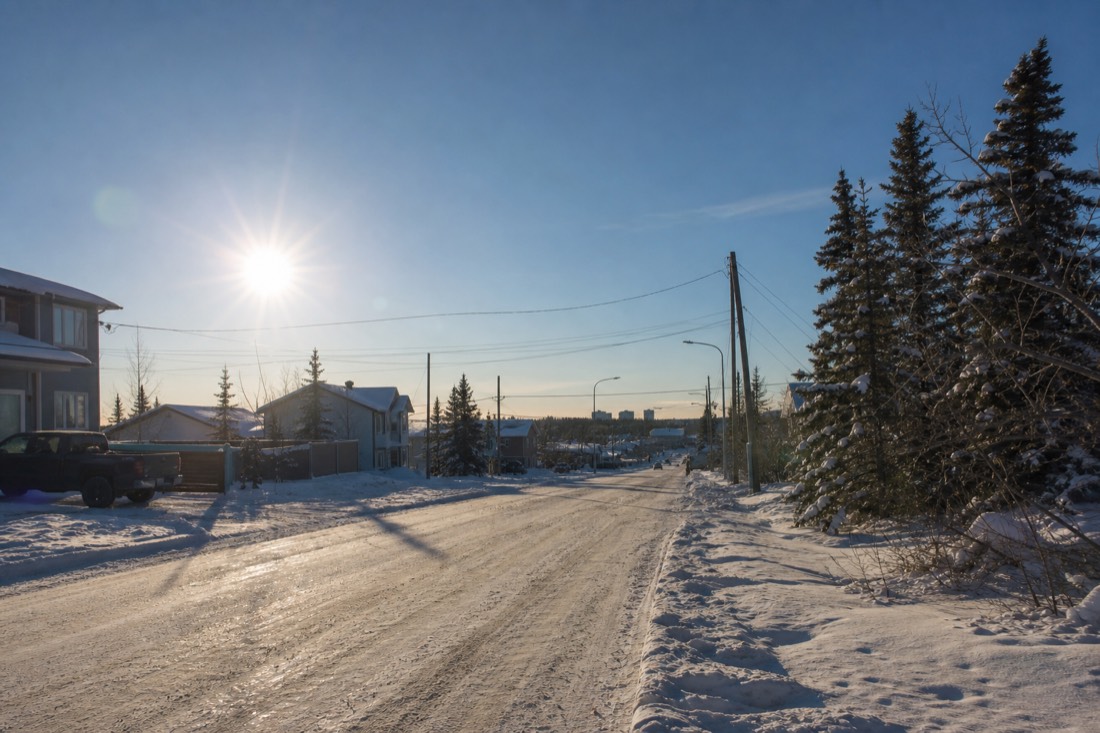
The rhythm of an aurora trip is closer to a nightshift schedule than a normal vacation, and fighting it is how people end up asleep in the van at the exact moment the sky opens. Pickups run about 9:30 to 10:30pm, activity tends to peak near local midnight, and you are in bed by 3am. Every experienced guest I know sleeps until 10, takes a slow breakfast, and starts the day at noon.
The daytime tours fit that pattern better than most people expect:
| Daytime activity | Duration | Why it fits an aurora schedule |
|---|---|---|
| City and culture tour | About 3 hours | Afternoon slots, warm vehicle, zero physical drain |
| Dog sledding | 2 to 3 hours depending on operator | Midday light on the ice, done well before pickup |
| Ice fishing with lunch | About 3.5 hours | Heated hut, lunch included, gentle pace |
| Snowmobile ride | 2 hours | Short, energizing, heated handlebars |
None of those collide with a 9:30pm pickup. What does collide is ambition: trying to stack two daytime tours plus a hunt on the same day. Leave that to the 20-year-olds, and even they regret it by night three.
Should one of your nights be a lodge instead of a chase?
Yes, if you have four nights to play with. A chase maximizes your odds on a marginal sky. A heated lodge maximizes comfort on a clear one, with games, WiFi, and hot drinks while you wait. Mixing one lodge or cabin night into three or four keeps the trip from becoming four identical van rides.
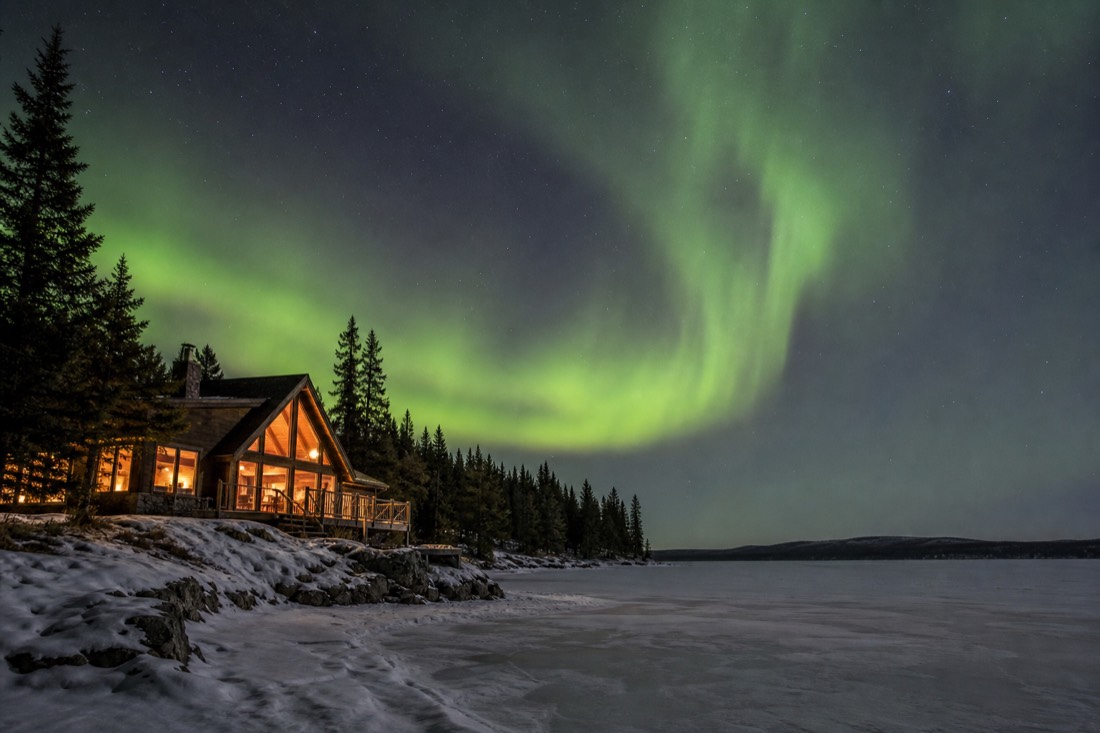
The hunt-versus-base question is the great debate of Yellowknife aurora planning, and the honest answer is that each wins on different nights. The lodge option here sits by Madeline Lake with a heated building to retreat into and a chase option if the sky demands movement, which softens the downside. On a fully clear night, a fixed base with a wide horizon is a lovely way to watch. On a patchy night, the van wins, full stop. I compare the fixed-camp model against hunting in detail in Aurora Village versus aurora hunting tours, and what a chase feels like hour by hour in what an aurora hunt is really like.
What does an aurora day look like hour by hour?
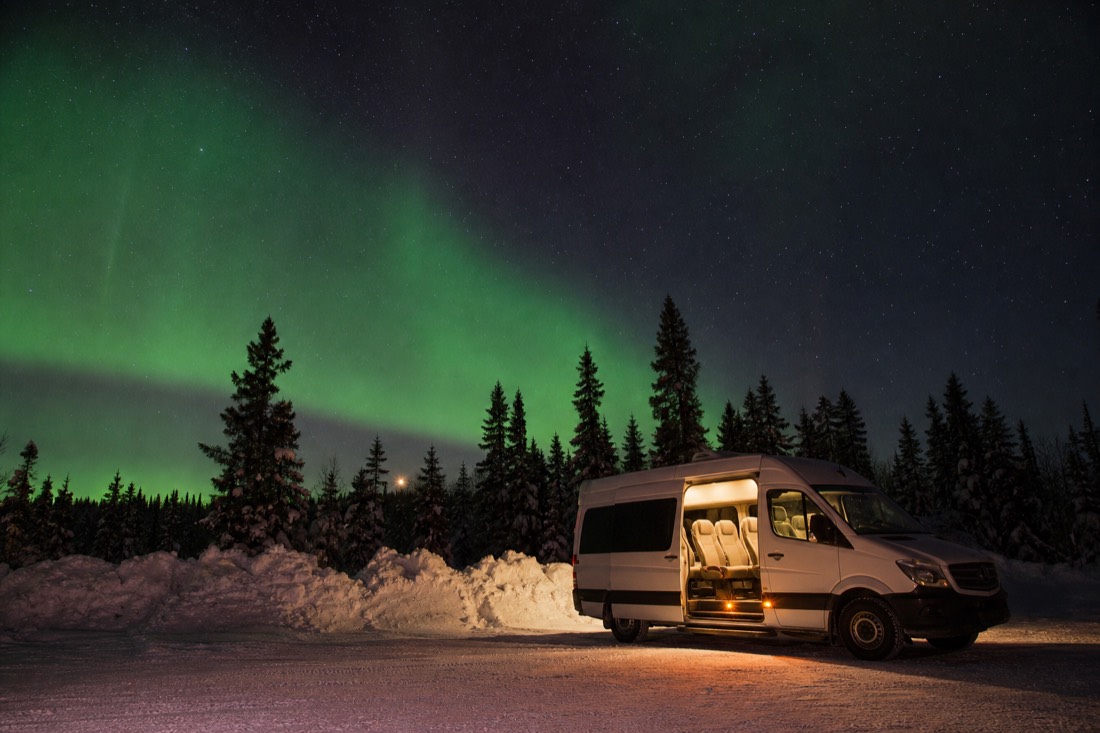
Sleep until ten, spend the short daylight on one activity and nothing more, eat a real dinner around six, and be layered up by nine. Pickup lands between 9:30 and 10:30pm, the sky tends to do its best work near local midnight, and the van returns you between 1:30 and 2:30am.
Here is a real December day laid out on the clock, using the sunrise and sunset Yellowknife actually gets in mid-December, about 9:57am and 3:07pm, five hours and nine minutes of daylight in total:
| Clock | What you are doing | Why it sits there |
|---|---|---|
| 10:00am | Wake up, slow breakfast | You were in bed at 3am; the sun only cleared the horizon at about 9:57 anyway |
| 11:30am | Your one daytime tour, 2 to 3.5 hours depending on which | The whole usable light window is roughly 10am to 3pm in December |
| 3:10pm | Light gone, sunset around 3:07pm | Nothing outdoors is worth doing in the dark before the aurora |
| 3:30pm | Free indoor stop: Heritage Centre galleries, free admission, open Tue to Sun to 5pm | Warm, free, and it closes before your evening starts |
| 5:00pm | Nap, charge camera batteries, warm the spares | Cold drains batteries fast, so spares live in an inside pocket |
| 6:30pm | Dinner in town, mains commonly CA$15 to $30 | Eating after the tour means eating at 3am |
| 8:45pm | Layer up, check the cloud forecast and the 30-minute nowcast | Cloud, not geomagnetic activity, decides most Yellowknife nights |
| 9:30 to 10:30pm | Hotel pickup, drive out to the viewing spots | Standard window across the aurora tours here |
| 11pm to 1am | The statistically strongest hours | Activity peaks near local midnight at this latitude |
| 1:30 to 2:30am | Back at the hotel | Which is exactly why the next morning starts at ten |
Two things surprise first-timers about that shape. The first is how little daylight there is to fill in midwinter, which is a relief rather than a problem: one tour genuinely is the day. The second is the forecasting. People arrive glued to week-ahead aurora predictions, and those simply do not work. The dependable tool is the NOAA 30-minute aurora nowcast, which tells you what is happening in the next half hour. One-to-three-day solar wind outlooks are moderate at best, and the 27-day recurrence outlook shows patterns only.
The other correction I make almost nightly: you do not need a big geomagnetic storm here. Yellowknife already sits under the auroral oval, so a low Kp reading of roughly 1 to 3 with a clear sky is often plenty. Southern Canada needs Kp 5 and up. Here, the number you should be watching is the cloud forecast.
Dress for the pickup, not for the walk to dinner. Standing still on a frozen lake for four hours is a different problem from walking two blocks, and several operators in town rent full arctic kit, parka, pants, boots and mitts, if you would rather not buy it. The full layering system is in what to wear in a Yellowknife winter.
How do you sequence three or four nights across different tour styles?
Put the mobile hunt on night one, the heated lodge on night two, and the two-night cabin package where it can own two nights back to back. The hunt chases holes in the cloud, the lodge trades mobility for warmth and space, and the cabin puts the sky outside your door instead of behind a pickup time.
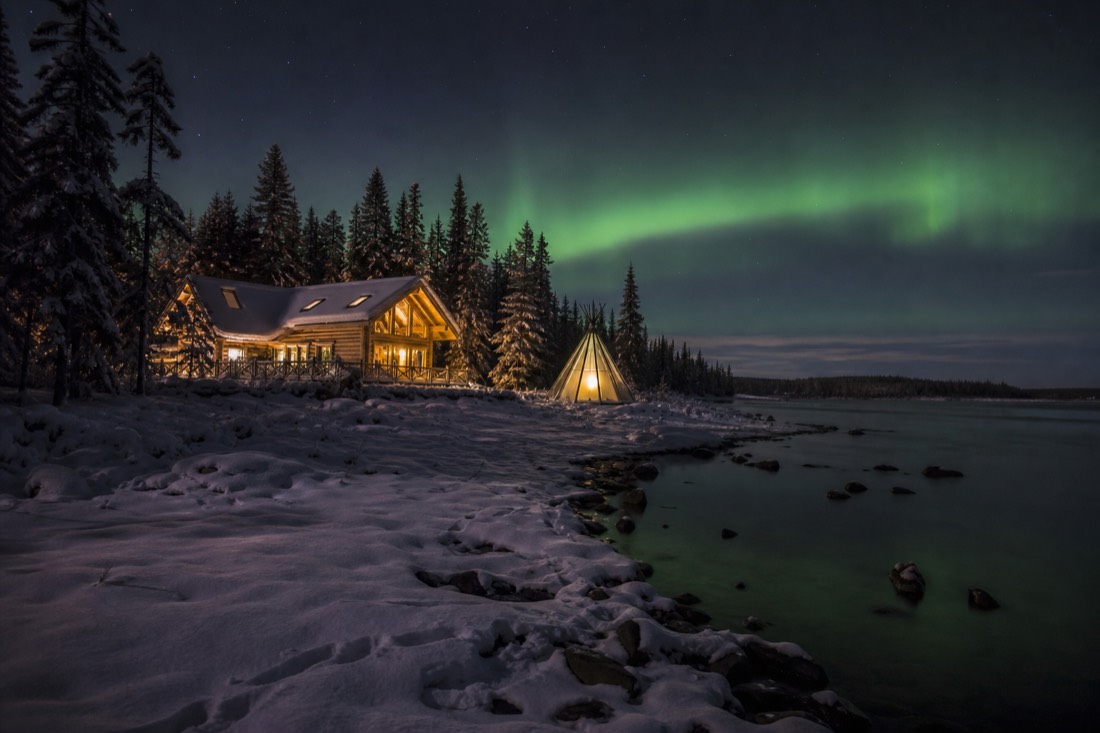
The three aurora products sold here are not three versions of the same night. They are three different bets, and the order you take them in matters:
| Night slot | Style | Rating and reviews | What it actually gives you |
|---|---|---|---|
| Night 1 | Mobile hunt, flagship | 4.8 from 399 reviews | About 4 hours, max 16 people, hotel pickup, three viewpoints, a photographer and free photos, hot drinks and cookies, free cancellation 24 h |
| Night 2 | Heated lodge near Madeline Lake | 4.7 from 130 reviews | About 4 hours, max 38, a heated building with games and WiFi, a chase option if the sky moves, photographer, free cancellation 24 h |
| Nights 2 to 3, or 3 to 4 | Two-night cabin package | 4.6 from 7 reviews | 2 nights and 3 days, cabin or glass tipi, airport and hotel transfers, soup on the ice, 2 digital photos, town hotel not included, free cancellation 24 h |
Four seasons of guiding here, somewhere past a thousand visitors by my own count, and the sequencing error is always the same one: people buy three identical van nights and then feel it. Night one in a small group with a photographer is the right introduction because you learn what the sky looks like when it is only faintly on, which is most of the time. By night two you know what you are looking at, so a lodge with a heated room to duck into stops feeling like a compromise and starts feeling like the sensible choice. The cabin package earns its place when you can give it two consecutive nights, since it carries its own transfers and its own rhythm.
Cancellation terms should shape the order too. The three aurora products above all carry free cancellation 24 hours out, so they are the flexible pieces. Two of the daytime options, the Old Town city tour and the husky sledding at the kennel, are non-refundable, which is a good argument for booking those only once your flights and your first aurora night are locked. There is a fuller breakdown of how the products stack in the Yellowknife tour packages guide.
Now the cut list, for the trip that is only two nights long. This is my planning judgement, not a promise from any operator, and every listing sets its own times and terms:
| On a two-night trip | My call | Why |
|---|---|---|
| Both nights on aurora | Keep | Two nights is the floor; three is where the 98% figure lives |
| A second daytime tour | Cut | One activity per short day, or you sleep through the good hour |
| The two-night cabin package | Cut | It wants two consecutive nights and its own transfers; it fits a four-night trip, not a two |
| Free town sights: Legislative Assembly, Heritage Centre, Pilot's Monument | Keep | No booking, no cost, and they fill the hours the aurora cannot |
| Anything starting before 10am | Cut | You will be back at 2:30am the night before |
| A non-refundable daytime booking made before arrival | Rethink | Flexibility is worth more than a saved slot on a two-night window |
How does the same itinerary change in autumn versus deep winter?
The shape of the plan holds and the clock changes. In late August and September the darkness window is only a few hours long and nights are mild, so everything starts later and ends sooner. From December to March you get ten to nearly thirteen hours of true darkness and nights near minus thirty, which changes what you pack far more than what you book.
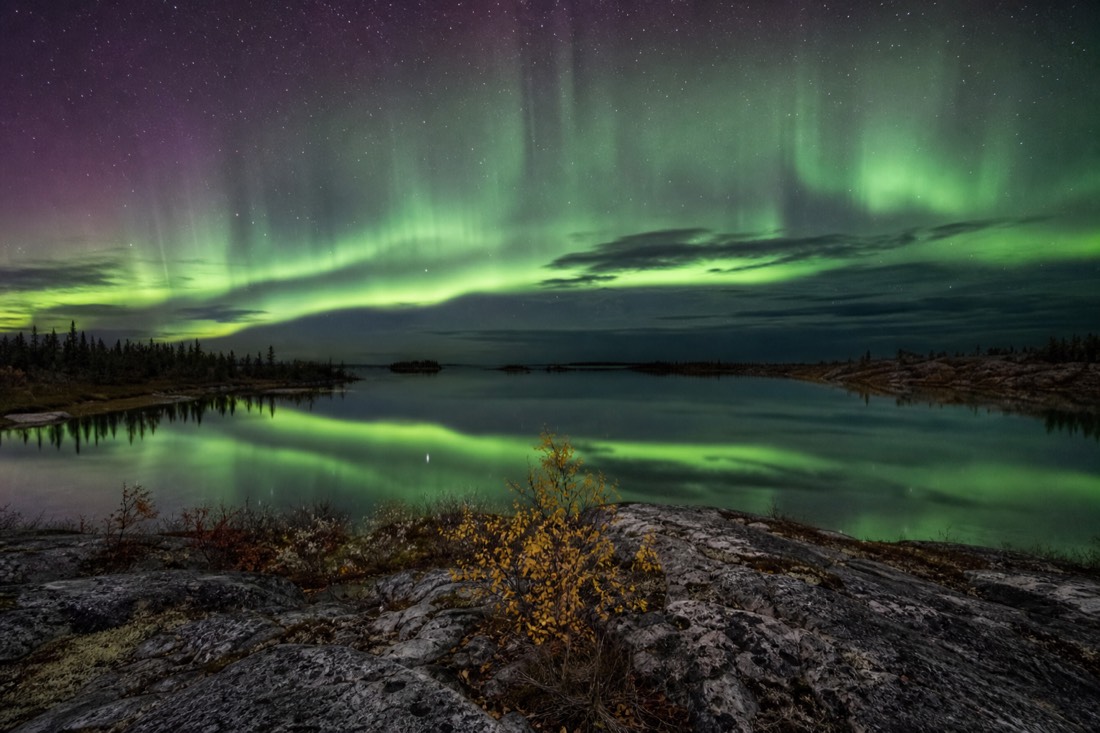
True astronomical darkness returns to Yellowknife in the last days of August, around the 27th or 28th, at first only for minutes. It grows quickly through September, peaks in midwinter, then vanishes again around the 12th to 14th of April. That single fact explains the two aurora seasons better than anything else: mid-August to early October, then mid-November to early April.
| Month (15th) | Sunset | True darkness | Average night low | What it does to the plan |
|---|---|---|---|---|
| September | 8:03pm | About 5h20m | 4.2C | Late, short window; lakes still open, so reflections are on the table |
| October | 6:24pm | About 9h | -3.6C | Shoulder period, freeze-up under way, snow tours not running yet |
| November | 3:53pm | About 11h30m | -16.2C | Winter season opens mid-month; long dark, cold arriving properly |
| December | 3:07pm | About 12h45m | -25.6C | Longest darkness of the year, and the Dettah ice road usually opens |
| January | 3:52pm | About 12h | -29.4C | Coldest month; heated vans, huts and lodges do the heavy lifting |
| February | 5:21pm | About 10h | -27.4C | Still deep cold, noticeably more daylight for daytime tours |
| March | 7:41pm | About 7h | -22.5C | Warming, roughly 12 hours of daylight at equinox, SnowKing all month |
Autumn nights barely need a schedule change on paper: pickup is still in that 9:30 to 10:30pm band, because the sky has to actually get dark first. What changes is everything around it. There is no snow, so dog sledding, ice fishing huts and the snowmobile ride are not options, and the daytime fills with hiking, the Ingraham Trail and open water instead. The compensation is real: the lights come up over unfrozen lakes and double themselves in the surface. I wrote that window up properly in the August and September aurora guide and in the September aurora over open water piece.
Deep winter is the opposite trade. Nights are long enough that a tour can wait out a cloud band and still have hours left, and the whole snow-based daytime menu is running. The price is the cold, with January nights averaging around minus twenty-nine and highs near minus twenty-two. Nobody stands out in that unprotected, which is why every operator here runs heated vehicles, huts or buildings, and why rented arctic gear is normal rather than soft. March is the quiet favourite: still strong aurora, roughly twelve hours of daylight at the equinox, and temperatures that let you enjoy a daytime tour instead of enduring it.
One thing that does not change between seasons is the fourth-night logic. Cloud is cloud in September and in January. If you are choosing between a shorter autumn trip and a longer winter one, the extra night beats the milder weather every time.
What about getting in, and where should you sleep?
Direct flights reach Yellowknife from Edmonton, Calgary, and Vancouver, with more routes seasonally, so most itineraries burn no extra night on connections. Sleep in town for walkability and easy pickups, and remember the cabin package includes its transfers but not your hotel nights.
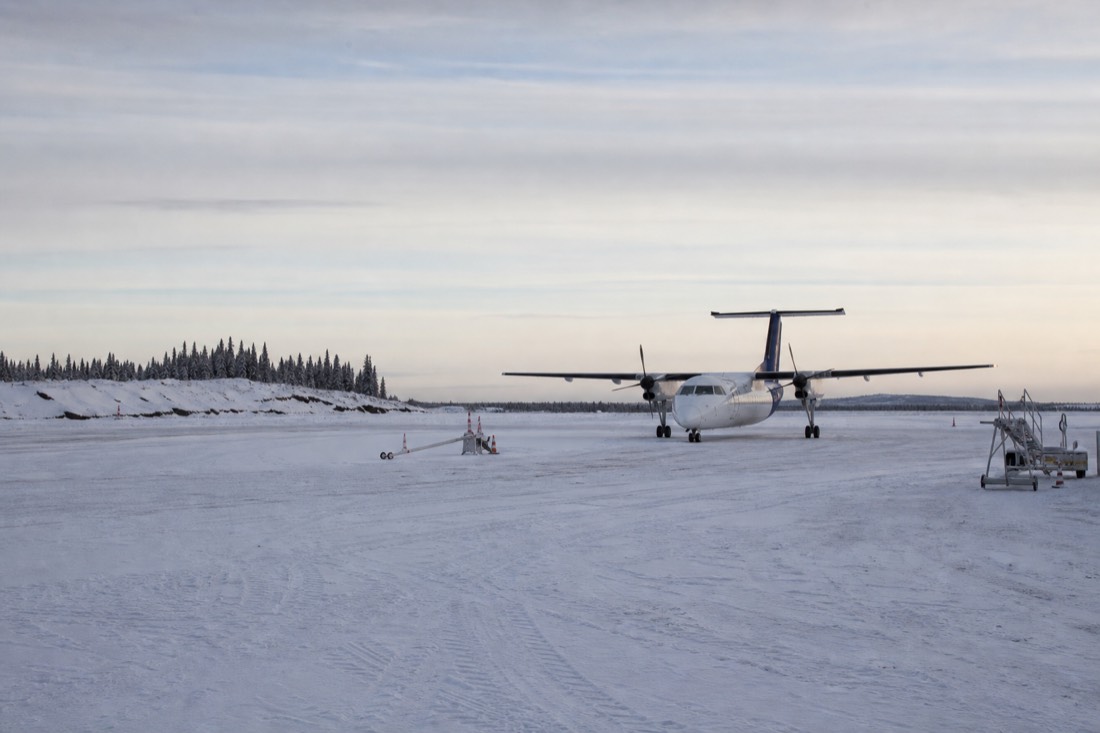
Air access is simpler than the latitude suggests. Air Canada, WestJet, Canadian North, and Air North serve the city, and NWT Tourism's air travel page lists the current routes, with Ottawa and Toronto among the seasonal additions. Full arrival logistics live in the getting to Yellowknife guide, and the accommodation trade-offs, downtown versus Old Town and what aurora pickups mean for your address, are in where to stay in Yellowknife.
Build the trip around the nights, protect your mornings, and give the sky three or four honest chances. Do that inside the season windows and the 98% figure stops being a marketing line and becomes your actual experience: somewhere around night two or three, the cloud parts, someone in the van shouts, and the whole late-night schedule pays for itself in about ninety seconds.