Where to Stay in Yellowknife for the Northern Lights
Your hotel matters here for one reason most visitors get backwards. It is your pickup point, not your viewing platform. Stay central, eat well, and let the tours drive you to dark sky.
 Written with Thomas Beaulieu, Yellowknife tour guide & northern lights specialist
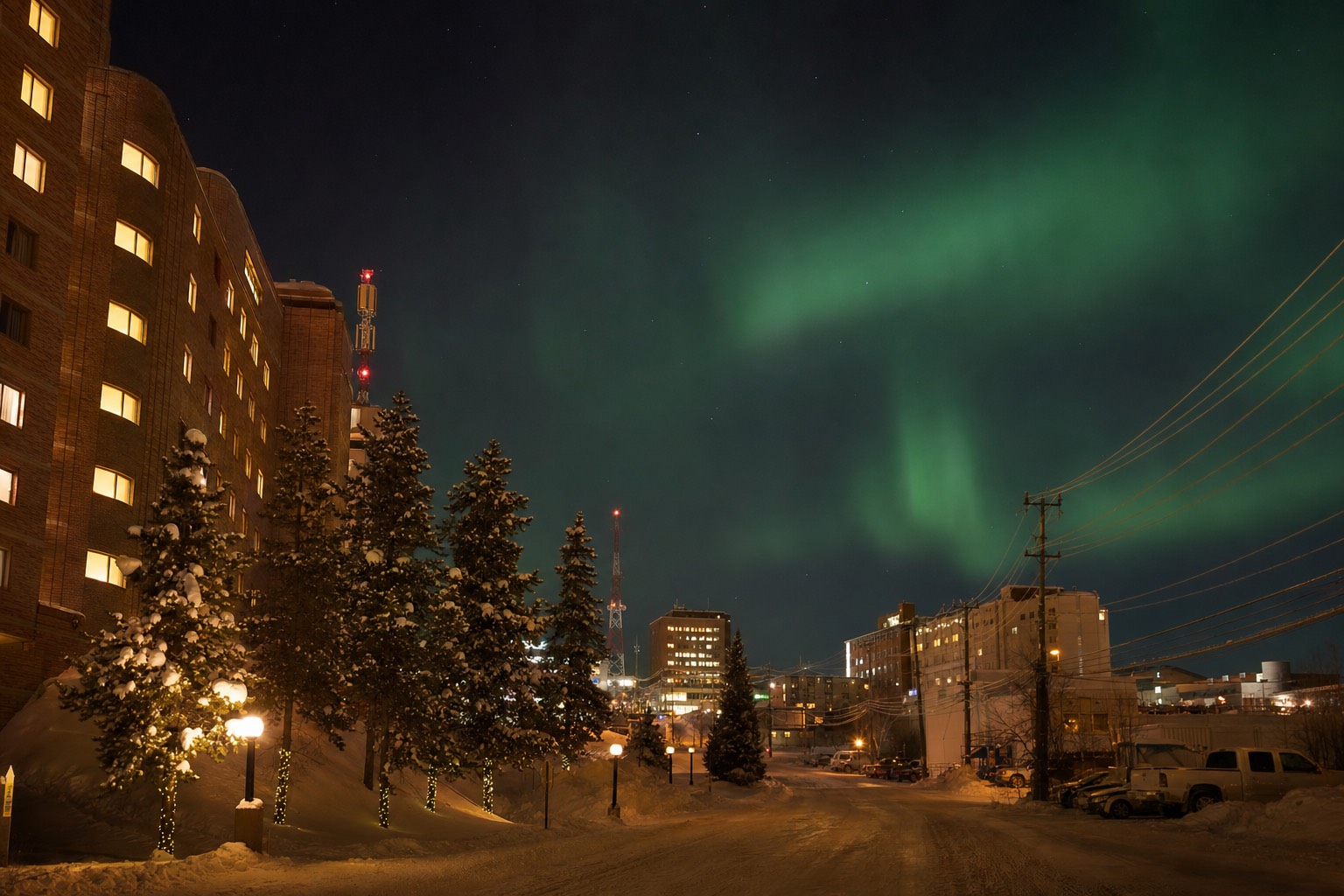
Short answer
Stay central in downtown Yellowknife. Every aurora tour picks up from hotels and B&Bs in town, so your room works as a pickup point rather than a viewing spot. City glow blocks all but the strongest displays anyway, and the tours drive you out past it to dark sky.
Quarter to ten on a January night, and I am standing in a downtown hotel lobby counting parkas. This is where every aurora night in Yellowknife actually starts. Not on a balcony, not at a window seat, but at a lobby door with a heated van idling outside. Once you see the trip that way, the where-to-stay question gets much simpler than the booking sites make it look.
Where is the best place to stay to see the northern lights?
Stay central, in downtown Yellowknife. Every aurora tour we cover picks up from hotels and B&Bs in town, so your room is a pickup point rather than a viewing platform. The vans drive you out beyond the streetlights to dark sky, which means a convenient lobby beats an expensive view every single time.
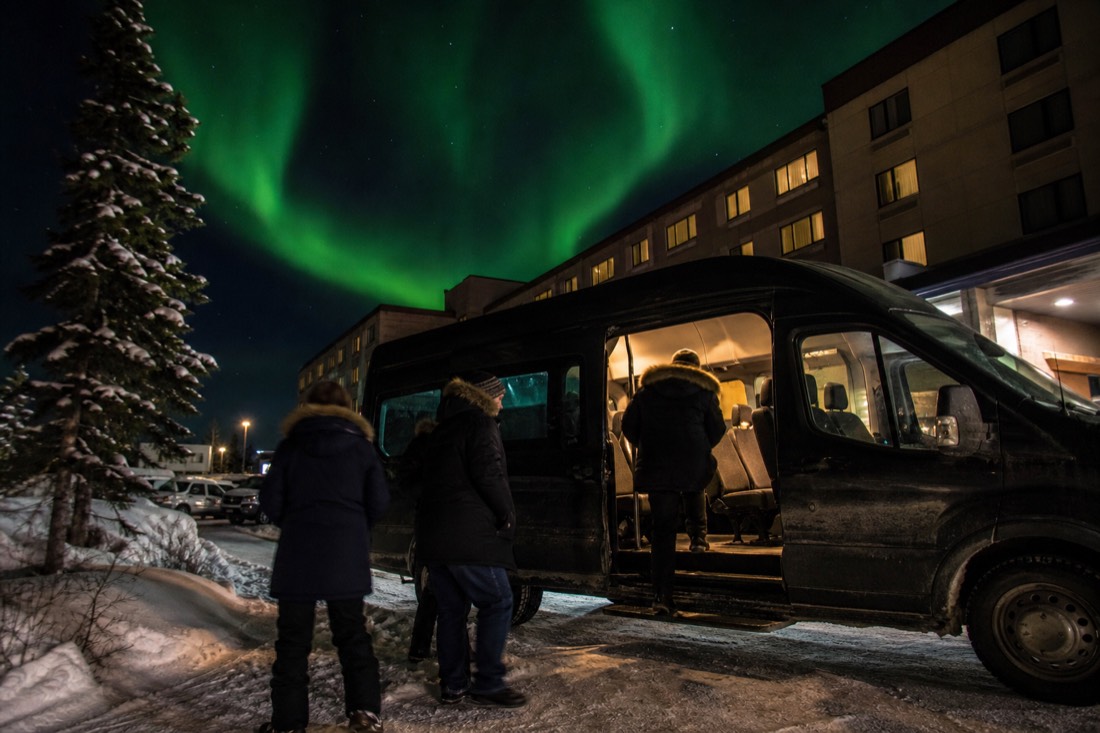
The northern lights tours that run out of town all work the same way. A van collects you in the late evening, drives beyond the city, and brings you back in the small hours. The flagship hunting tour moves between three viewpoints over about four hours with a photographer along. The lodge option parks you at a heated base near Madeline Lake with games and WiFi while you wait for the sky. Both start and end at your accommodation, so the only thing your hotel choice really controls is how smooth those two moments are, plus how easily you can feed yourself in between.
That flips the usual logic. In most destinations you pay for location relative to the sights. Here the sight lives out past the streetlights, and the operator handles the drive. What you want from your bed is simpler: a central address the drivers know, warm food within a short walk, and a lobby you can wait in without freezing.
Why not just book an "aurora view" room downtown?
Because city glow washes out everything except the strongest displays. Yellowknife's reputation, aurora on up to 240 nights a year, is built on the dark sky around the city, not the sky over the main street. The tours exist precisely to move you past that glow, so paying extra for a downtown view buys very little.
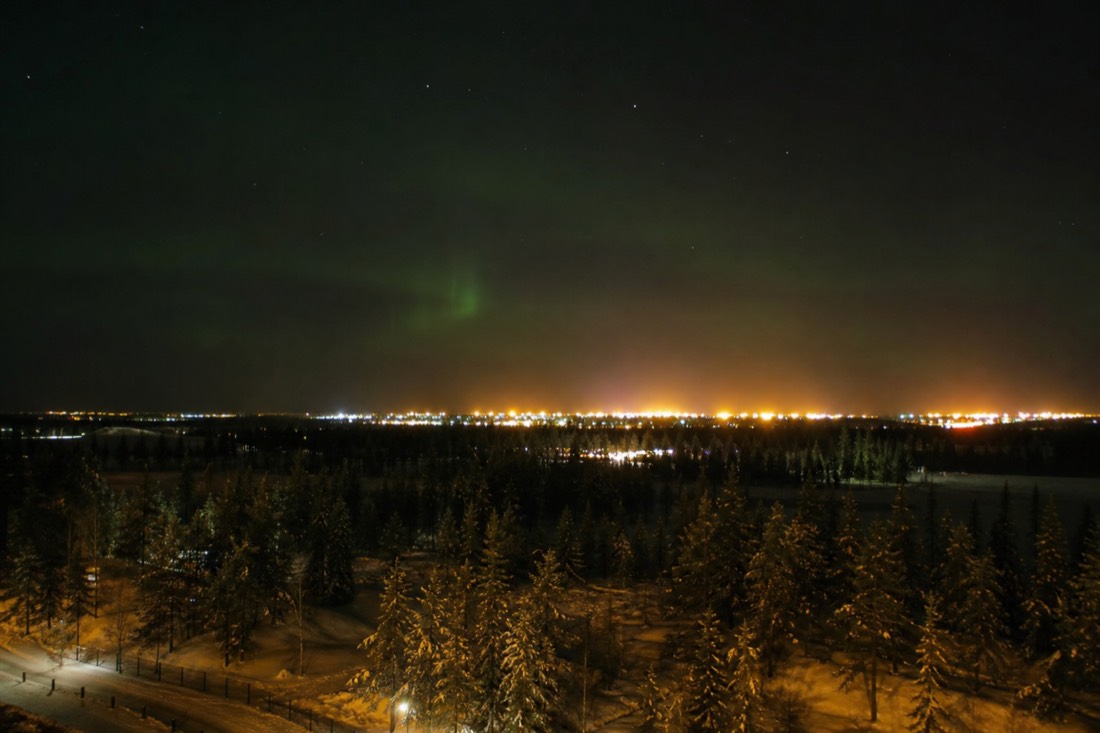
The numbers behind that reputation are real. NWT Tourism puts the aurora overhead up to 240 nights a year, and one of the reasons is minimal light pollution outside the small city. Note the wording: outside. Inside town, streetlights and building glow sit exactly where the lower arc of a display would be. On a huge night you will see colour from a downtown parking lot, and I have watched guests photograph it from the middle of the street. On an ordinary good night, the kind that makes up most of the season, the show is clear from a dark lakeshore and nearly invisible from a lit block.
Yellowknife also does not need a big solar storm. Low Kp is enough here because the city sits directly under the auroral oval, so most watchable nights are moderate ones, and moderate displays are precisely the ones the city glow eats. Save the view-room money. Spend it on a second night out with a tour instead, because the odds stack fast: the territory's own figure is a 98 percent chance of seeing the lights at least once across three nights in season.
Downtown or Old Town: which side of town fits your trip?
Downtown gives you the hotels, the restaurant blocks, and the pickup routes every driver knows. Old Town, down toward the lake, gives you gold-rush character, the Bush Pilots Monument, and houseboat views, with smaller B&B-style stays. First trips usually work best downtown; Old Town rewards photographers and return visitors.
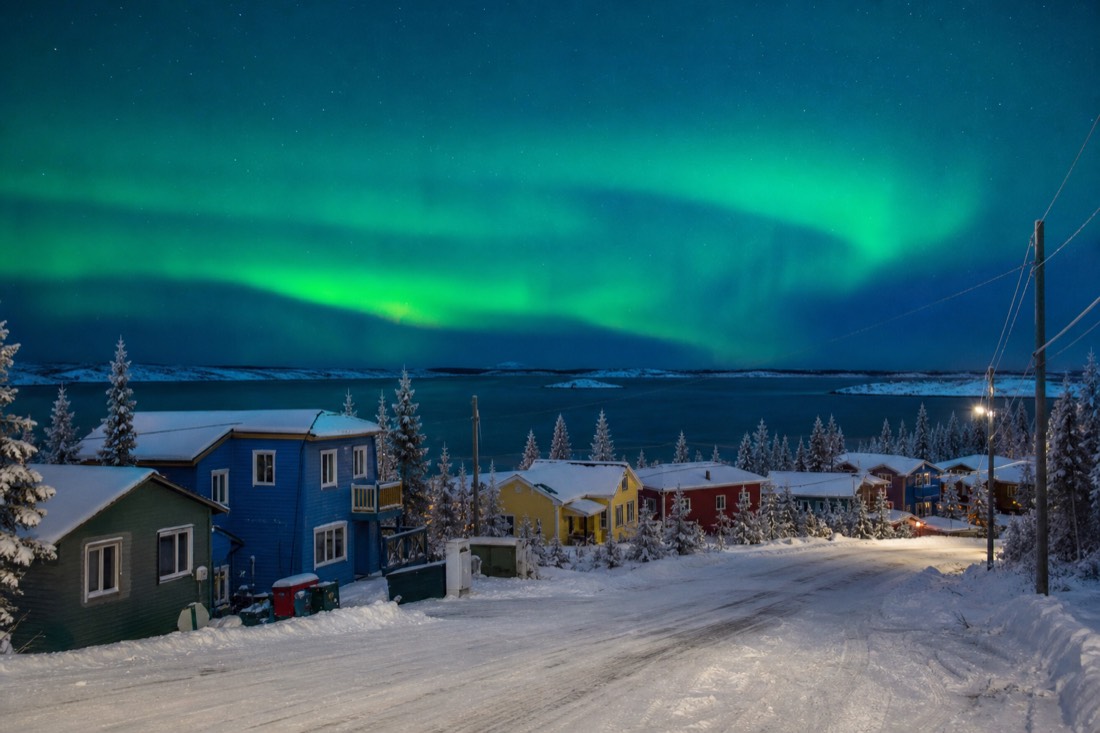
They are two different towns wearing one name. Downtown is the practical capital: government buildings, a compact grid of hotels and restaurants, everything reachable on foot in a few minutes. Old Town is the 1930s original down on the rocks of Yellowknife Bay, all bush-plane history and stubborn character, with Ragged Ass Road and the Bush Pilots Monument a short stroll apart and roughly 50 houseboats frozen into the bay below the lookout.
| Downtown | Old Town | |
|---|---|---|
| Character | Working capital, compact hotel grid | Gold-rush original on the bay, artistic and quirky |
| Stays | Full-service hotels, some B&Bs | Small B&Bs and character stays |
| Food within a walk | Best selection in the territory | A few beloved spots, thinner choice |
| Aurora pickups | At the door, on every route | Still served, occasionally a short wait |
| Best for | First visits, short trips, deep winter | Photographers, longer stays, second visits |
Tour vans serve both, so this is a character call rather than a logistics one. My honest steer for a first aurora trip in deep winter: downtown, because at minus 25 the distance between your door and your dinner starts to matter more than charm does.
How do aurora tour pickups actually work?
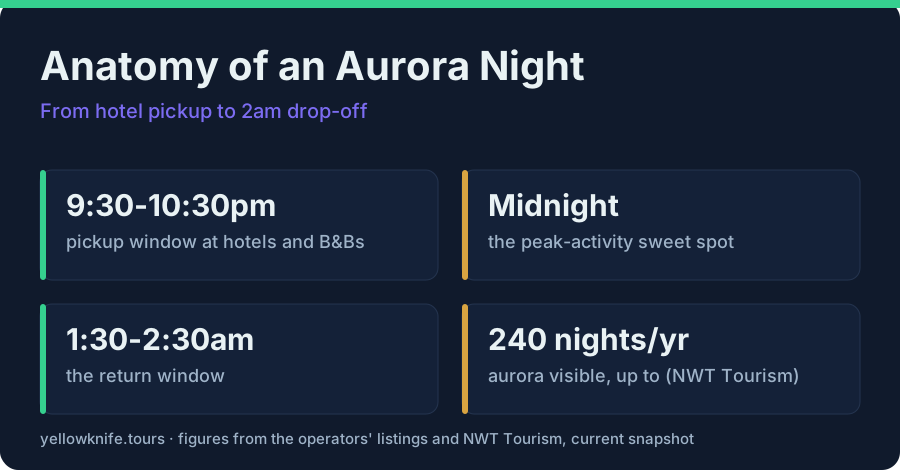
Vans collect guests from hotels and B&Bs across town starting around 9:30 to 10:30pm, drive out to dark viewing spots, and return you between about 1:30 and 2:30am. Several listings also name the Chateau Nova as a meeting point, so central addresses keep the routine simple on both ends of the night.
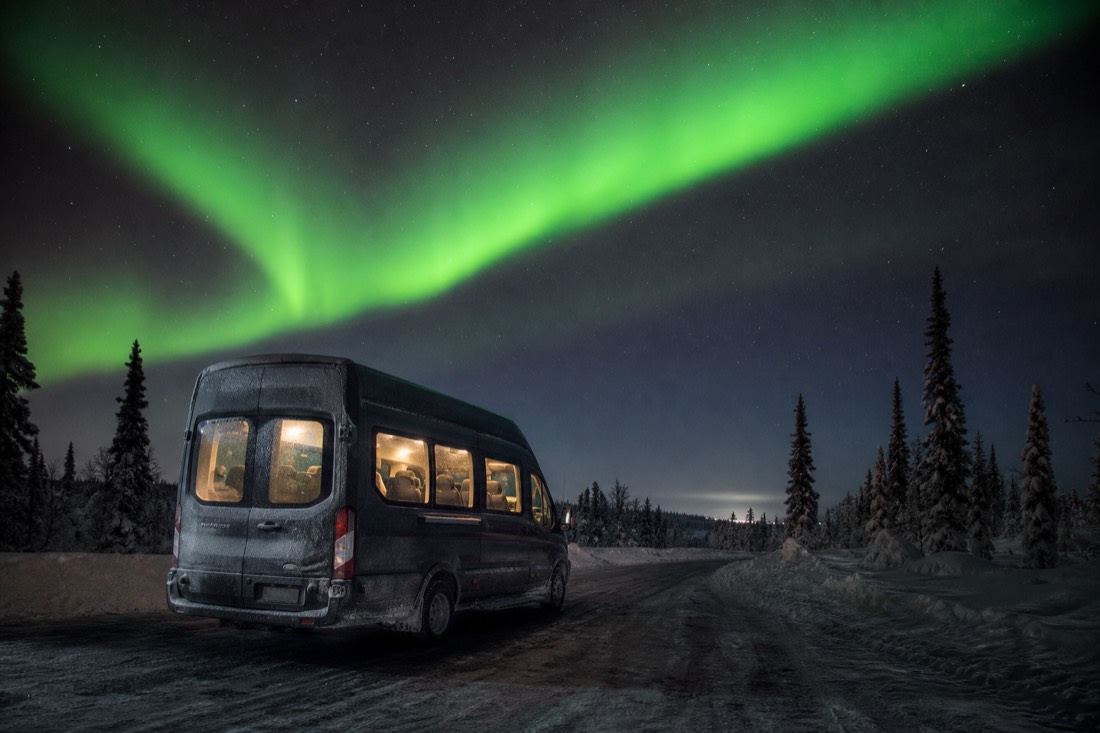
The rhythm of an aurora night is late by design, because activity tends to peak near local midnight. Here is the shape of it:
| Time | What happens |
|---|---|
| 9:30-10:30pm | Pickup at your hotel or B&B, or meet at a listed point such as the Chateau Nova |
| Around 11pm | Arrive at dark sky, first viewpoint or the lodge |
| Near midnight | The statistical sweet spot for activity |
| 1:30-2:30am | Drop-off back at your accommodation |
A few practical notes from years of running this loop. Confirm your pickup point when you book, because a handful of listings use the Chateau Nova as a common meeting spot rather than door-to-door collection, and it helps to know which you are getting. B&Bs are on the routes too, so a small guesthouse does not cost you the ride. And build the late return into your plans: an aurora night ends at 2am, so the next morning is for sleeping, not a 9am dog-sled start. If the lodge style suits you better than hopping between viewpoints, compare the options on the aurora tour lineup and check live availability and prices for the heated-lodge night on Viator while dates are open.
Why does staying near food matter at minus 25?
Because deep winter shrinks your walking range. January highs average around minus 21.6C with nights near minus 29C, and at those temperatures a three-block walk to dinner is fine while a thirty-minute one is a chore. A central room puts restaurants, gear rental, and your pickup inside the same few warm-walkable blocks.
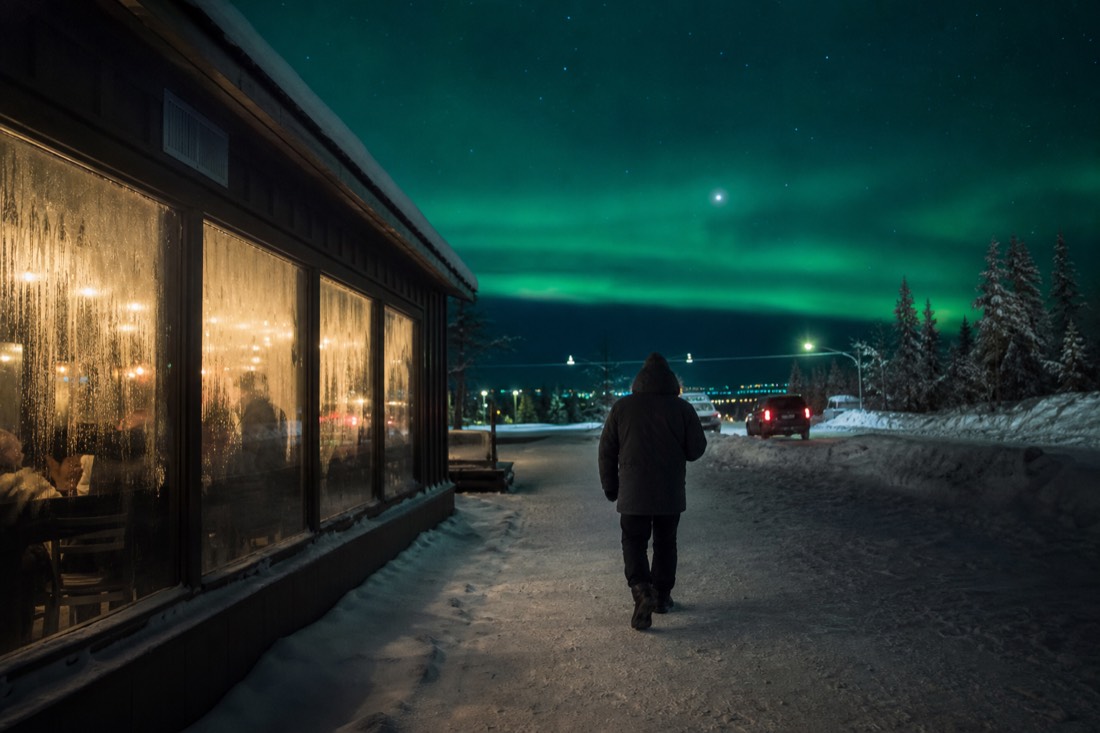
People underestimate this until the first evening. The cold here is dry and entirely manageable in the right layers, and the city's own weather and aurora page is upfront about what winter brings. But there is a real difference between dressing for a tour, where the operator supplies heated vans and often rents you arctic gear, and dressing for errands. Yellowknife has recorded minus 51.2C without wind chill, back in 1947, and while a normal January evening is nowhere near that, minus 29 is routine and it edits your plans for you.
So think in blocks, not neighbourhoods. Can you get from your door to a hot dinner, then back to the lobby for a 10pm pickup, without a taxi? Downtown, the answer is yes on every count. That matters most on tour nights, when dinner has to land between the daytime activity and the evening collection. My guests who stay central eat better, rush less, and show up warm. The full clothing system is its own topic, covered in what to wear in a Yellowknife winter, and if you want to know how the cold actually feels on skin, read what minus 30 feels like before you pack.
Which stay style fits which traveler?
Match the stay to the trip. Central hotels suit first-timers and short aurora trips. B&Bs suit travelers who want hosts and character without losing the pickup. The two-night cabin package replaces the hotel question entirely for those nights, and Old Town suits photographers and repeat visitors chasing atmosphere over convenience.
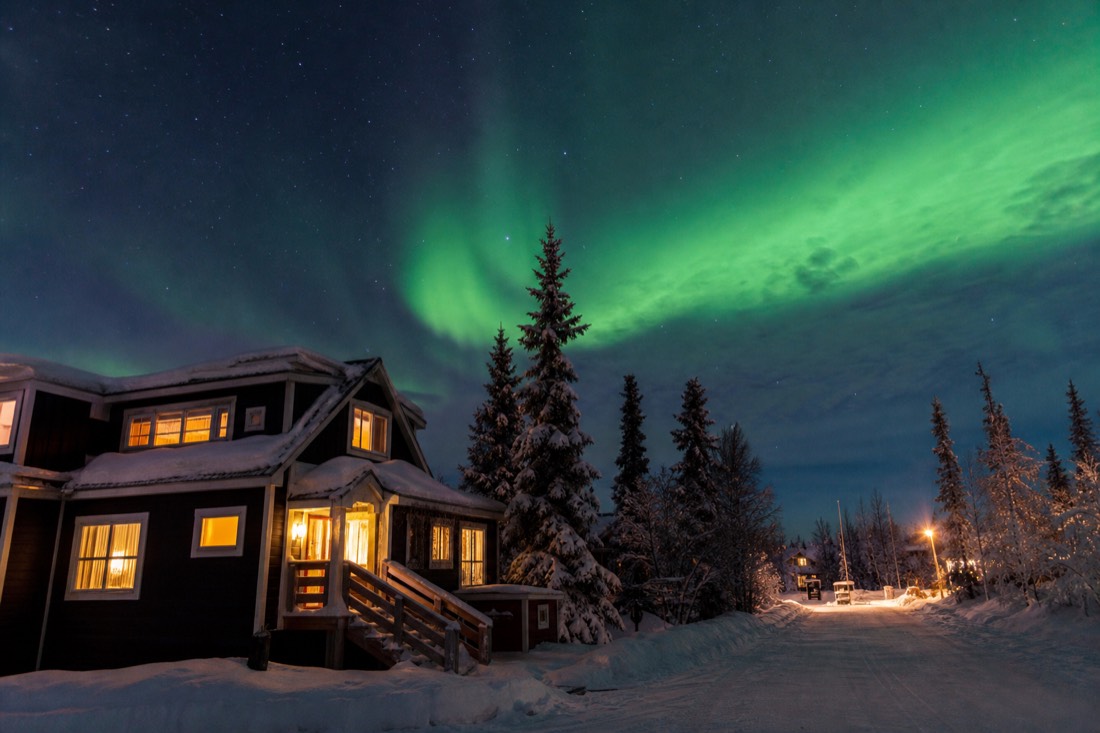
Two names help you orient the map without any ranking implied. The Chateau Nova shows up in tour listings as a common meeting point, and The Explorer Hotel is a well-known downtown hotel; both sit in the central zone this guide keeps pointing at. Beyond that, choose by trip shape:
| Stay style | Best for | The trade-off |
|---|---|---|
| Central downtown hotel | First aurora trips, 3-4 night stays, deep winter | Least character, easiest everything |
| In-town B&B | Travelers who want hosts, breakfast, local talk | Fewer rooms, book earlier |
| 2-night cabin or glass tipi package | Removing all logistics for two nights, airport transfers included | Hotel not included beyond the package nights |
| Old Town character stay | Photographers, second visits, longer trips | Thinner food options, short ride to downtown |
The cabin line deserves a note: one bookable package puts you outside town in a cabin or glass tipi for two nights with airport and hotel transfers handled, which quietly answers both this guide's question and the one in getting to Yellowknife for those dates. However you split the nights, three of them is the number that moves your odds, which is where the aurora itinerary guide picks up.
Which are the best hotels in Yellowknife for an aurora trip?
The shortlist is short, because the city is. Six bookable properties cover almost every aurora trip: The Explorer as the full-service downtown landmark, the Chateau Nova and Capital Suites in the central zone, the Quality Inn and Days Inn on the budget tier, and the Super 8 out by the airport.
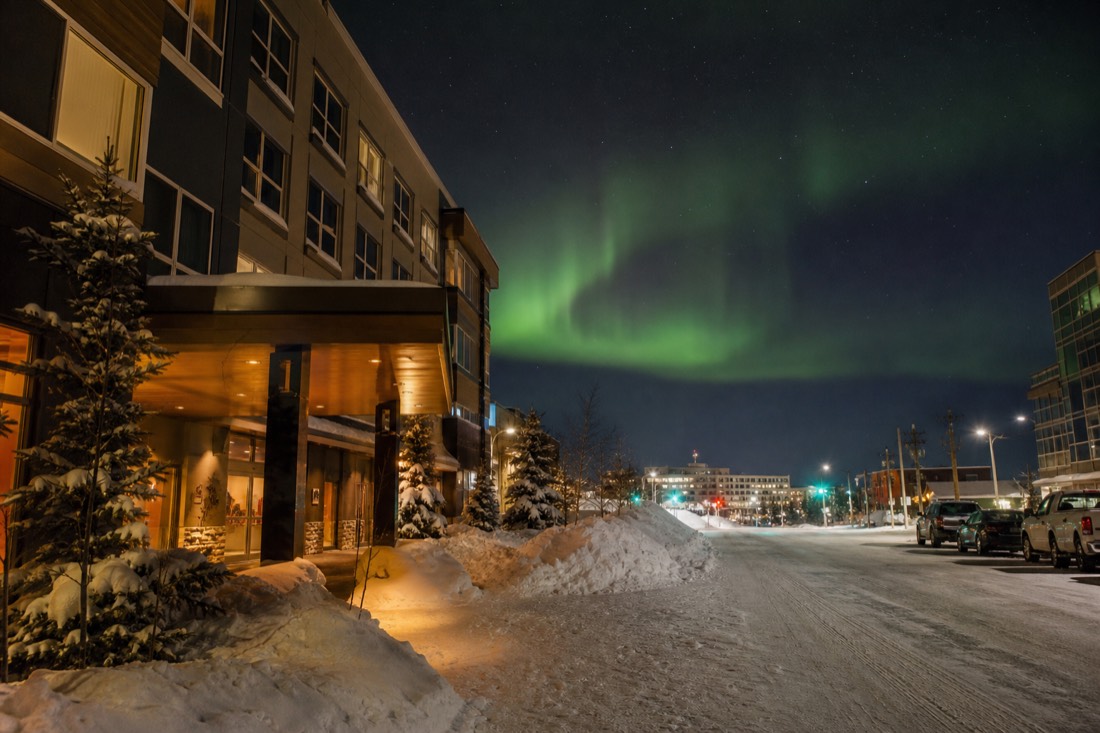
What makes a hotel good here is not the window. It is how little friction sits between your bed and a 10pm lobby call, and how far you have to walk for dinner beforehand. Rates move hard by season, and aurora dates are the ones that move most, so the number you actually care about is the live one on the booking site rather than anything printed on a page like this.
| Property | Type | Where it sits | Suits |
|---|---|---|---|
| The Explorer Hotel | Full-service downtown landmark | Downtown, looking over Old Town and Back Bay | First trips, guests who want the whole trip under one roof |
| Chateau Nova Yellowknife | Full-service hotel | Northeast of the downtown core | Sleeping above a named tour meeting point |
| Capital Suites Yellowknife | Apartment-style suites | City centre, walkable | Families, longer stays, anyone who wants a kitchen |
| Quality Inn & Suites | Mid-range chain | Middle of town, attached to Centre Square Mall | Central nights without the landmark price tier |
| Days Inn Yellowknife | Budget chain with suites | Town centre, toward the Old Town road | Short trips where the room is only for sleeping |
| Super 8 Yellowknife | Budget chain, breakfast included | Out by the airport, not a downtown walk | Early flights, drivers, the cheapest nights |
The Explorer is the landmark: full service, an airport shuttle, views over Old Town and Back Bay, and a lobby that doubles as an aurora-tour pickup point.
The Explorer Hotel Check rates ›
The Chateau Nova sits northeast of the core with its own shuttle, and since several tours name it as a meeting point, sleeping upstairs makes the 10pm start painless.
Chateau Nova Yellowknife Check rates ›
Capital Suites is the apartment-style option in the city centre, the practical pick for families and longer stays that want a kitchen after a 2am aurora return.
Capital Suites Yellowknife Check rates ›
On the budget tier, the Quality Inn & Suites connects to the Centre Square Mall in the middle of town, which keeps you inside the walkable blocks, and the Days Inn keeps suites near the centre.
Quality Inn & Suites Yellowknife Check rates ›
Days Inn by Wyndham Yellowknife Check rates ›
The Super 8 is the outlier of the six. It sits out by the airport with breakfast included, which suits a 6am departure and suits almost nothing else, because every dinner and every gear rental turns into a ride.
Super 8 by Wyndham Yellowknife Check rates ›
Arrival is where the differences show up first: Capital Suites and the Quality Inn & Suites are among the properties that run their own airport shuttle, so confirm yours when you book, and the rest of the landing routine is laid out in the Yellowknife airport guide.
Why does The Explorer Hotel come up in every Yellowknife search?
Because it is the best-known hotel in town and a working part of the aurora routine, not because anyone crowned it. The Explorer is downtown, full service, runs an airport shuttle, looks out over Old Town and Back Bay, and turns up as a pickup point on tour listings. Familiarity does the rest.
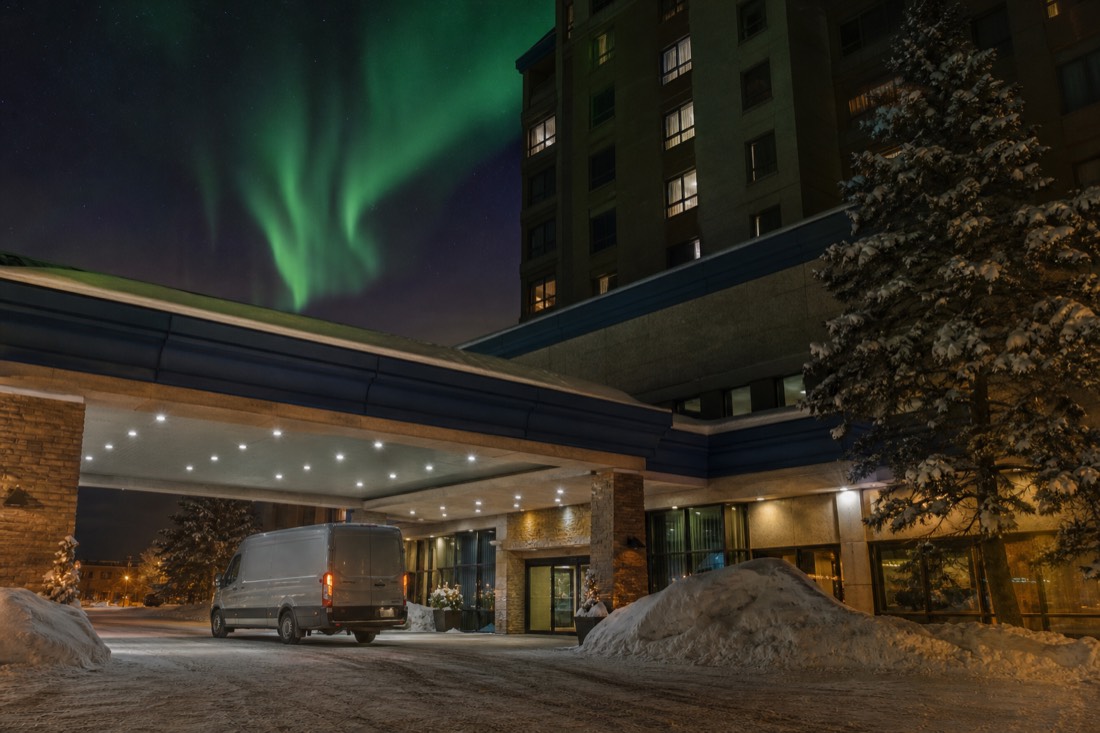
I am not going to review it for you. A guide grading the hotel he collects guests from is worth roughly nothing, and I have no interest in inventing opinions about the beds. What I can tell you is what I watch happen: a large share of first-time aurora visitors book here, the drivers know the door without asking, and I have never had someone miss a pickup because they could not explain where they were staying. In a city of 20,340 people, a landmark address is a genuinely useful thing to hold.
The flip side is worth saying out loud. Being the name everyone types means it is also the first place everyone tries, so on peak aurora dates the question is availability rather than preference. Nothing about that changes the sky. If it is full, any of the central options above puts you on the same van at the same hour, and the display you drive out to will not know which lobby you came from. Live rates and open dates sit on the booking site; in February they change fast.
The Explorer Hotel Check rates ›
Book the bed last, honestly. Fix your dates first with the best time to see the lights, lock the tours, then take any warm central room that fits the budget. The sky will not know the difference, and after a 2am drop-off, neither will you.