What to Wear in Yellowknife in Winter (Layer by Layer)
January highs average -21.6C here, with a whole-day mean near -25.5C, and the aurora asks you to stand still at midnight. The right layers make that easy. The wrong ones end your night in the van.
 Written with Thomas Beaulieu, Yellowknife tour guide & northern lights specialist
Short answer
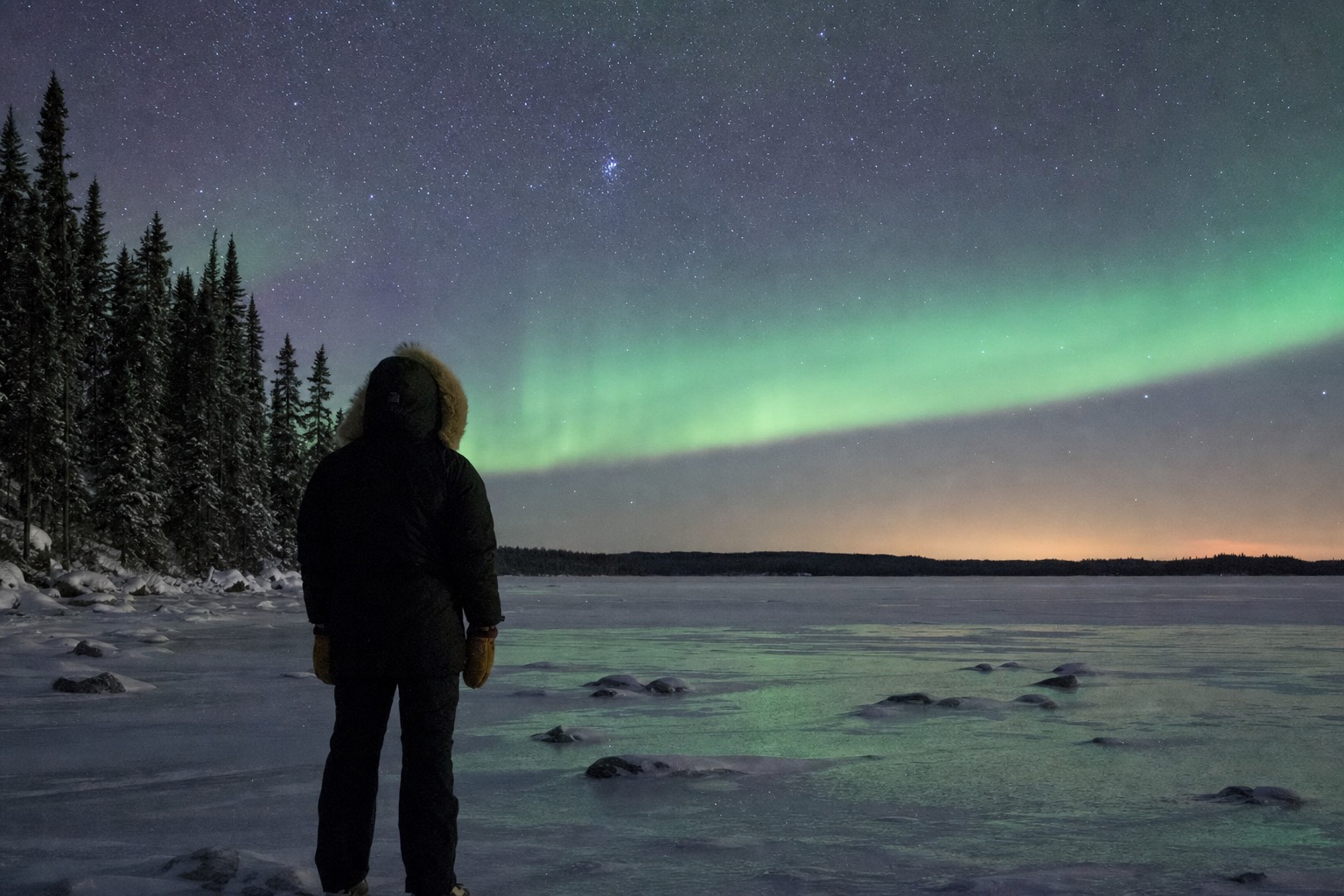
Build layers head to toe: thermal base, fleece or down mid, windproof insulated shell, insulated boots, mitts over gloves. Do not bring cotton, thin gloves, or fashion boots. Winter clothing rental exists in town from several operators, with parka, pants, boots and mitts in a full kit, so you do not have to buy any of it.
The first thing I check when guests climb into the van is not their camera. It is their boots. I can tell within five seconds who is going to be out under the aurora at 1am grinning, and who is going to be knocking on the van door at 12:15 doing the frozen-toes dance. The difference is never toughness. It is always clothing, and clothing is completely solvable before you ever leave home, or within an hour of landing here.
How cold does Yellowknife actually get in winter?
Cold enough to demand respect and planning. January, the coldest month, means a daily average of -25.5C, highs near -21.6C and nights near -29.4C. December runs a -21.8C mean, February -22.7C. Nights below -20 are routine, -30 happens, and the record without wind chill is -51.2C from 1947.
Those are Environment Canada climate normals, not scare stories, and the record comes from archive data that Cabin Radio pulled apart in a piece on the city's cold history. Nobody is handing you a -51 night these days, but the working range you should dress for looks like this:
| Number | Value | What it means for you |
|---|---|---|
| January daily mean | Near -25.5C | The whole-day picture, and the number to dress for |
| January average high | About -21.6C | Even the warm part of the day sits deep below freezing |
| January average nighttime low | About -29.4C | Aurora hours are the coldest hours |
| December daily mean | About -21.8C | The season opens cold, not mild |
| February daily mean | About -22.7C | Barely a step back from January |
| Routine Dec-Mar nights | Below -20, with -30 possible | Every viewing night needs the full system |
| All-time record, no wind chill | -51.2C (1947) | The ceiling of what this climate can do |
One figure gets misquoted constantly, including by people packing for the trip: -21.6C is January's average daytime HIGH, not its daily average. The daily average is -25.5C, and if you dress for -21 you have underdressed by four degrees before the sun even goes down. December and February sit close behind at -21.8C and -22.7C, so there is no soft shoulder inside the aurora-winter window. The month-by-month reality is broken out in Yellowknife in January and Yellowknife in December, both of which pair the temperature with how little daylight you get.
The part that surprises people is not the number, it is the stillness. Aurora viewing means standing on a lake or a roadside for long stretches, generating no heat, often between 10pm and 2am when the lows arrive. That is a completely different problem from walking around a ski town at noon, and it is why I wrote a whole piece on what -30 actually feels like. For the deeper climate picture beyond clothing, see how cold does it get in Yellowknife, and for current conditions before you fly, the city's own weather and aurora page is the one to bookmark.
What layers do you need, head to toe?
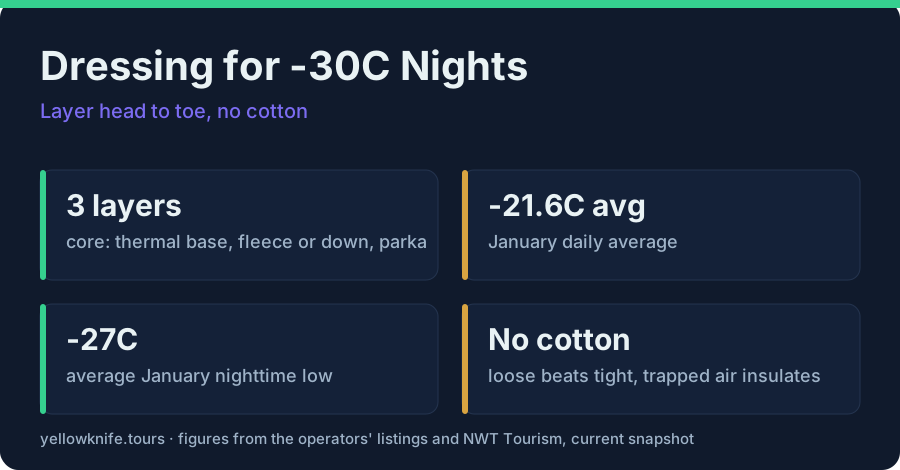
Three layers on the core, two everywhere else, nothing cotton. Thermal base wicks, fleece or down insulates, and a windproof insulated shell seals it. Insulated boots rated for deep cold and mitts over thin liner gloves finish the system. Every piece must fit loosely enough to trap air.
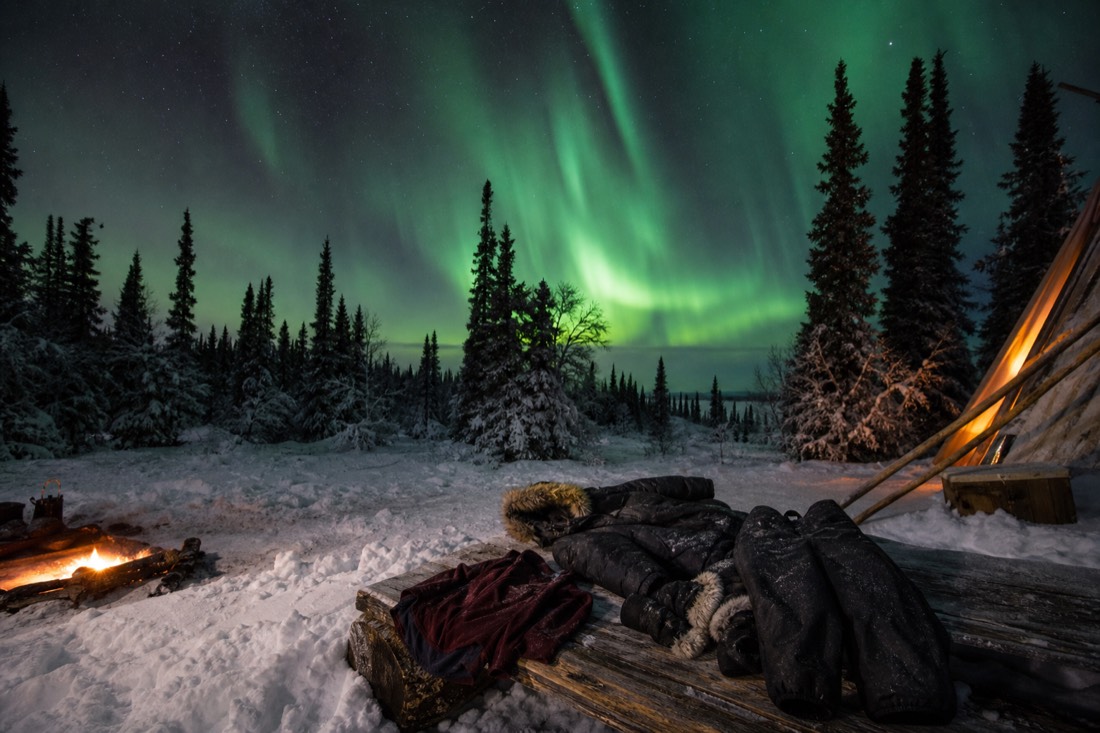
Here is the full system, top to bottom. It is boring, proven, and it works at -30:
| Zone | Layer 1 | Layer 2 | Layer 3 |
|---|---|---|---|
| Head | Beanie or toque pulled low | Parka hood up, fur trim breaks wind | Neck gaiter or balaclava over nose |
| Core | Thermal base top (merino or synthetic) | Fleece or light down | Knee-length insulated parka, windproof |
| Hands | Thin liner gloves for camera work | Insulated mitts over the liners | Chemical hand warmers in the mitts |
| Legs | Thermal base bottoms | Fleece pants or lined jeans (never plain) | Insulated snow pants, windproof |
| Feet | Thin sock liner | Heavy wool socks, one pair, not two | Insulated winter boots, roomy fit |
Two mechanics make or break this. First, air is the actual insulator, so tight clothing fails: two crushed sock pairs are colder than one lofted pair in a roomy boot. Second, moisture is the enemy, which is why cotton is banned from every layer. Sweat into a cotton shirt on the walk out of the hotel and it will refrigerate you for the rest of the night.
The mitts-over-liners trick matters more here than almost anywhere, because aurora nights are camera nights. Liners let you work the settings for thirty seconds, then the mitts go back on. Photographers who bring only thin gloves stop shooting by midnight.
Can you rent winter clothing in Yellowknife instead of buying it?
Yes. Winter clothing rental is available in town from several operators, and a full kit means the four bulky pieces: parka, insulated pants, boots and mitts. For a short aurora trip that beats buying. Stock, sizes and prices change by operator and by season, so confirm the kit when you book.
Run the math before you buy a -40 parka you will wear for four nights. A serious arctic kit costs real money and eats half a suitcase, while rental kits in town are sized to you on arrival and handed back on departure. The operators know exactly what the lake demands at 1am, which is more than most gear-shop staff at home can say.
Two honest caveats, because I would rather you plan around them than discover them. First, which places rent, what they have in your size and what they charge all move from season to season, so treat rental as something to confirm at booking rather than a guarantee waiting for you at the airport. The visitors I meet in a December van are the ones most likely to have arrived underdressed, usually because the trip was decided quickly and the gear question got left until landing. Second, build the pickup into your schedule. If your flight lands in the evening and your first aurora tour leaves at 9:30pm the same night, you have left yourself no window to get fitted, and that first night is exactly the one you do not want to spend in borrowed hotel blankets.
The tours themselves carry part of the load. Aurora vans are heated between viewpoints, ice fishing happens inside heated huts on Great Slave Lake, and the lodge option has a warm building steps from the viewing area. If you want the gear problem solved entirely for one activity, the beginner-friendly ride is the clean answer: it includes heated handlebars and winter gear rental, so check live availability and prices on Viator, and browse the rest of the winter lineup to see which tours bundle warmth into the ticket. That ride is the most-reviewed tour in the city at 4.9 across 407 reviews, and two hours is exactly as long as beginners want to be on a machine at -25.
Should you rent, buy, or bring the gear you already own?
Rent the bulky four, pack the small stuff from home, and buy only if you keep coming back to real cold. Parka, snow pants, boots and mitts are the pieces worth renting: they swallow suitcase space and rarely earn their keep at home. Base layers, wool socks and a toque weigh nothing and are yours already.
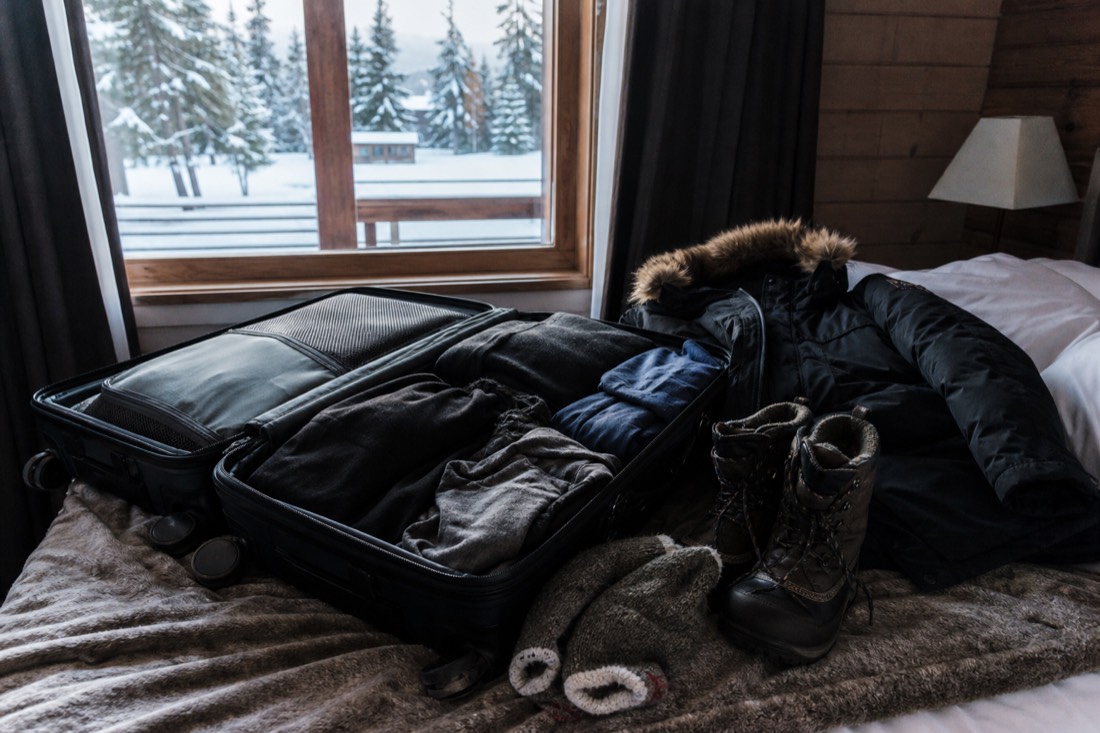
The decision is not really rent versus buy. It is three options, and the right mix depends on how long you are here and what is already in your closet. Since I cannot quote you a rental price that will still be true next season, here is the comparison in the currency that actually decides it: suitcase space, errands, and the risk of being cold at midnight.
| Trip length | The call that usually wins | What it actually costs you |
|---|---|---|
| 2 to 3 nights, aurora only | Rent the full kit | One errand on arrival day, and gear that has to go back on time |
| 4 to 7 nights, mixed activities | Rent the outer pieces, pack your own base layers and socks | Two systems to keep track of, but the bulky half never enters your suitcase |
| 8 nights or more | Renting still usually wins; buying only pays if you plan to return north | A longer rental, or real money for a coat that fits one climate |
| Any length, if you already own true cold-weather kit | Bring it, then fill the gaps in town | Half a suitcase, plus the risk your gear is rated for -10 rather than -30 |
That last row is where most mistakes live. Ski gear is the usual culprit: a resort jacket is built for a moving body at -5, not a standing one at -29.4C, and the same goes for boots that feel warm on a chairlift and go numb on lake ice within twenty minutes. Look at what your gear is actually rated for, not how warm it feels at home in the hallway. If it does not say deep cold, it is not deep-cold gear.
| Item | Rent it | Buy it | Bring your own if |
|---|---|---|---|
| Knee-length insulated parka | Almost always on a short trip: the bulkiest, priciest piece | You will genuinely wear a -30 coat at home | Yours is rated for deep cold, not city winter |
| Insulated snow pants | Almost always: nobody flies with these for four nights | You ski or work outdoors in real cold | Yours are insulated and windproof, not shell-only |
| Insulated winter boots | Almost always: heavy in a bag, and roomy fit matters more than brand | You face this cold every year | Yours are rated well below -20 and take a thick sock |
| Insulated mitts | Included in a full kit | Small, cheap, reusable anywhere cold | You own mitts, not thin gloves |
| Thermal base layers | Not worth renting | Useful on any cold trip you ever take | Almost always: they pack flat and weigh nothing |
| Wool socks, toque, balaclava, liner gloves | Not worth renting | Cheap and small enough to just own | Always: bring these from home, whatever else you do |
The clean version, if you want one line to act on: rent the outside, own the inside. Nobody regrets arriving with their own wool socks, and plenty of people who bought a -40 parka for one aurora trip now have it hanging in a closet in a much warmer city.
What should you wear for each activity?
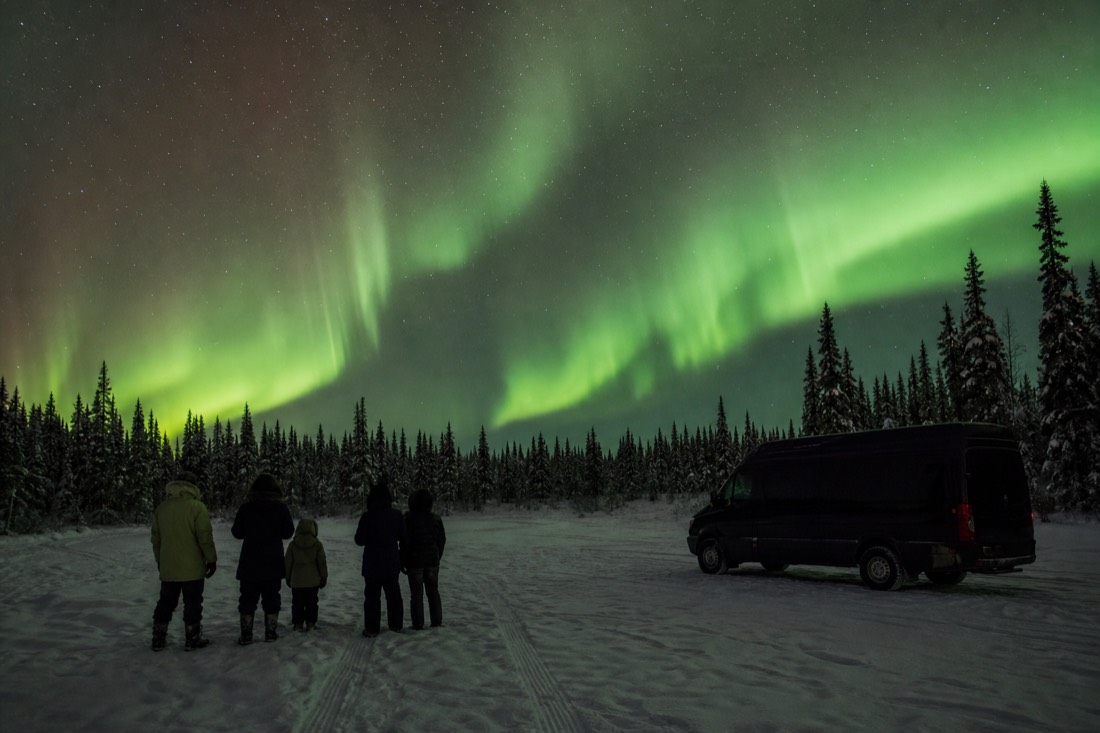
Match the layers to how much heat you generate and how much wind you take. Aurora viewing is the coldest job because you stand still at the coldest hour. Snowmobiling adds wind that multiplies the cold. Dog sledding mixes effort and stillness. Heated-hut fishing is the easy one.
| Activity | The cold problem | Dress level |
|---|---|---|
| Aurora viewing | Standing still, midnight to 2am lows | Maximum: full system, warmers in mitts and boots |
| Snowmobiling | Moving air at speed strips heat fast | Maximum plus full face coverage; gear rental and heated handlebars included on the tour |
| Dog sledding | Riding is still, helping the team warms you | Full system, goggles useful behind the dogs |
| Ice fishing | Heated hut, short walks on the ice | Moderate: full system worn loose, shed layers inside |
| City and culture tour | Warm vehicle, short outdoor stops | Light-full: parka and boots, mitts optional |
Aurora nights top the table for a reason. The pickup runs 9:30 to 10:30pm and the van returns between 1:30 and 2:30am, which parks you outdoors precisely across the nightly minimum. Dress for the forecast low, then assume standing still makes it feel colder. The riding tours have their own quirks, and the write-ups from the trail cover them: the wind-chill reality of the sled runs is in dog sledding, what it's really like, and if you drive across the bay yourself, the Dettah ice road post explains why a warm car is not a substitute for warm boots.
Timing changes the math too. March runs the same activities in noticeably kinder temperatures than January, one more reason it wins the best month debate, and the full daytime menu is laid out in things to do in a Yellowknife winter.
What should you leave at home?
Cotton anything, thin gloves, and fashion boots. Those three items end more aurora nights early than the cold itself does. Add tight jeans, single heavy socks worn doubled, and metal jewelry you touch with bare skin. If a piece of clothing works for a rainy city winter, assume it does not work here.
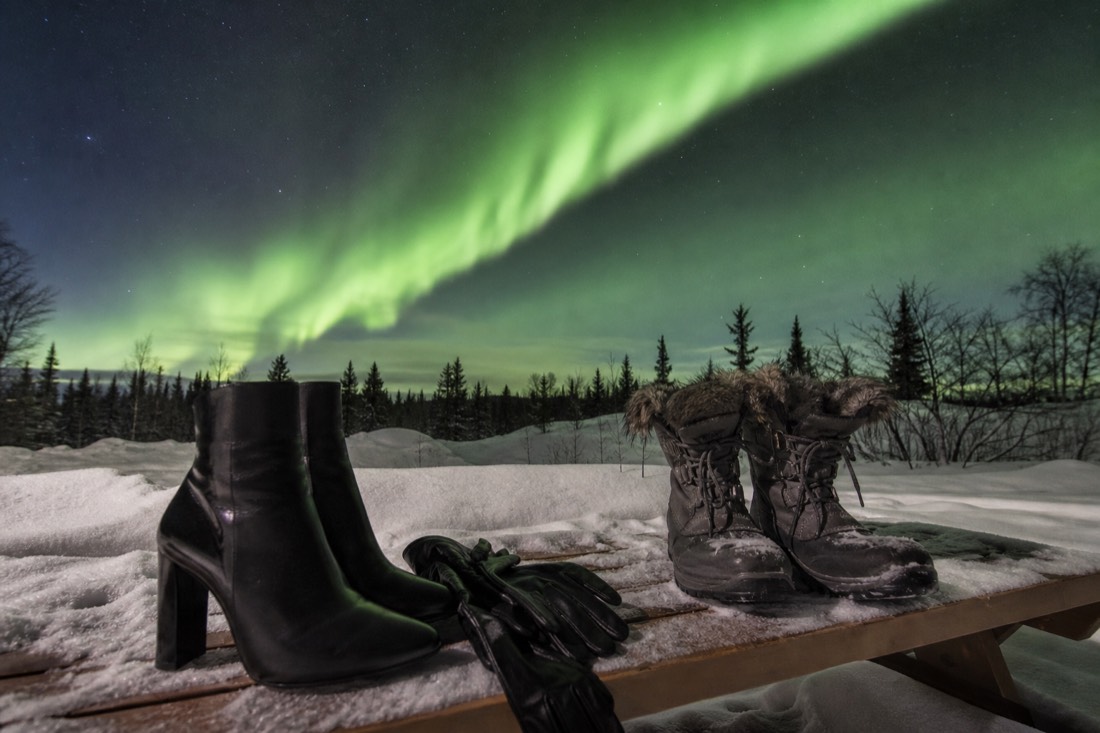
The pattern behind the banned list is the same physics as the layering table, just inverted. Cotton holds moisture against your skin. Thin gloves and fashion boots have no loft, so there is no trapped air to warm. Tight jeans crush what little insulation they have and let the wind through besides. Every one of these items feels fine for the walk from the hotel to the van, which is exactly how they sneak onto the trip, and none of them survives forty minutes of standing on lake ice at midnight.
| Do not bring | Why it fails | Bring instead |
|---|---|---|
| Cotton base layers or socks | Holds sweat, then chills you | Merino or synthetic thermals |
| Thin leather or knit gloves | No loft, no wind resistance | Liner gloves under insulated mitts |
| Fashion or rain boots | No insulation, tight fit kills circulation | Insulated winter boots, roomy |
| Tight jeans as an outer layer | Wind cuts straight through | Insulated snow pants over a base |
| Two pairs of heavy socks | Crushed loft, cut circulation | One liner plus one wool pair |
Get the system right and the cold flips from threat to backdrop. Some of my favourite nights on the lake have been the -30 ones: the air goes glass-still, the snow squeaks like styrofoam, and the sky above the northern lights tours crowd is so clear the aurora seems close enough to touch. The people grinning through all of it are not tougher than you. They just have better socks.