Yellowknife vs Fairbanks for the Northern Lights (An Honest Comparison)
Both cities sit under the auroral oval and both are legitimate places to see the lights. The honest differences are structural, and they decide which one fits your trip.
 Written with Thomas Beaulieu, Yellowknife tour guide & northern lights specialist
Short answer
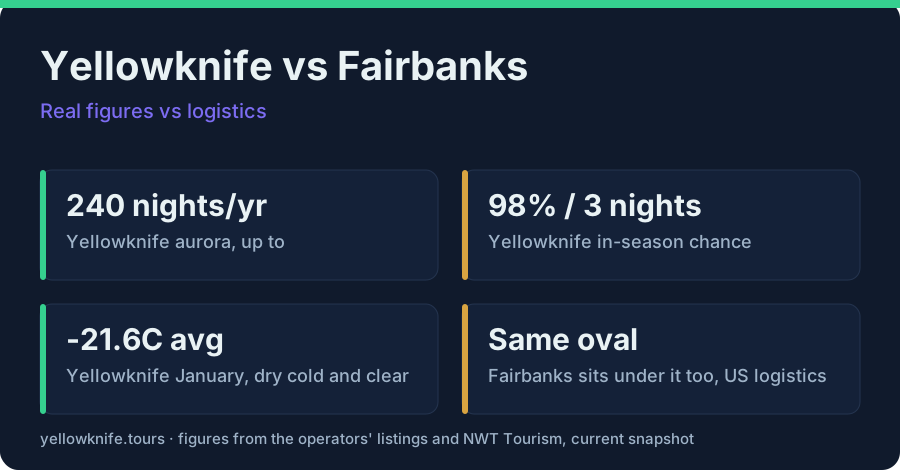
Both are genuine aurora capitals. Yellowknife has the stronger published numbers, aurora visible up to 240 nights a year and a 98% chance of at least one sighting over three nights in season, plus flat lake-plain horizons and dry winters. Fairbanks wins on US logistics. Either city rewards a stay of three nights or more.
Guests ask me this one on almost every drive out the Ingraham Trail, usually somewhere between the second viewpoint and the thermos of hot chocolate. They had two tabs open at home, Yellowknife and Fairbanks, and they want to know if they picked right. I guide here, not in Alaska, so I will keep this fair: both cities deserve their reputations. The differences that matter are structural, not marketing, and they are worth understanding before you book flights.
Is Yellowknife or Fairbanks better for the northern lights?
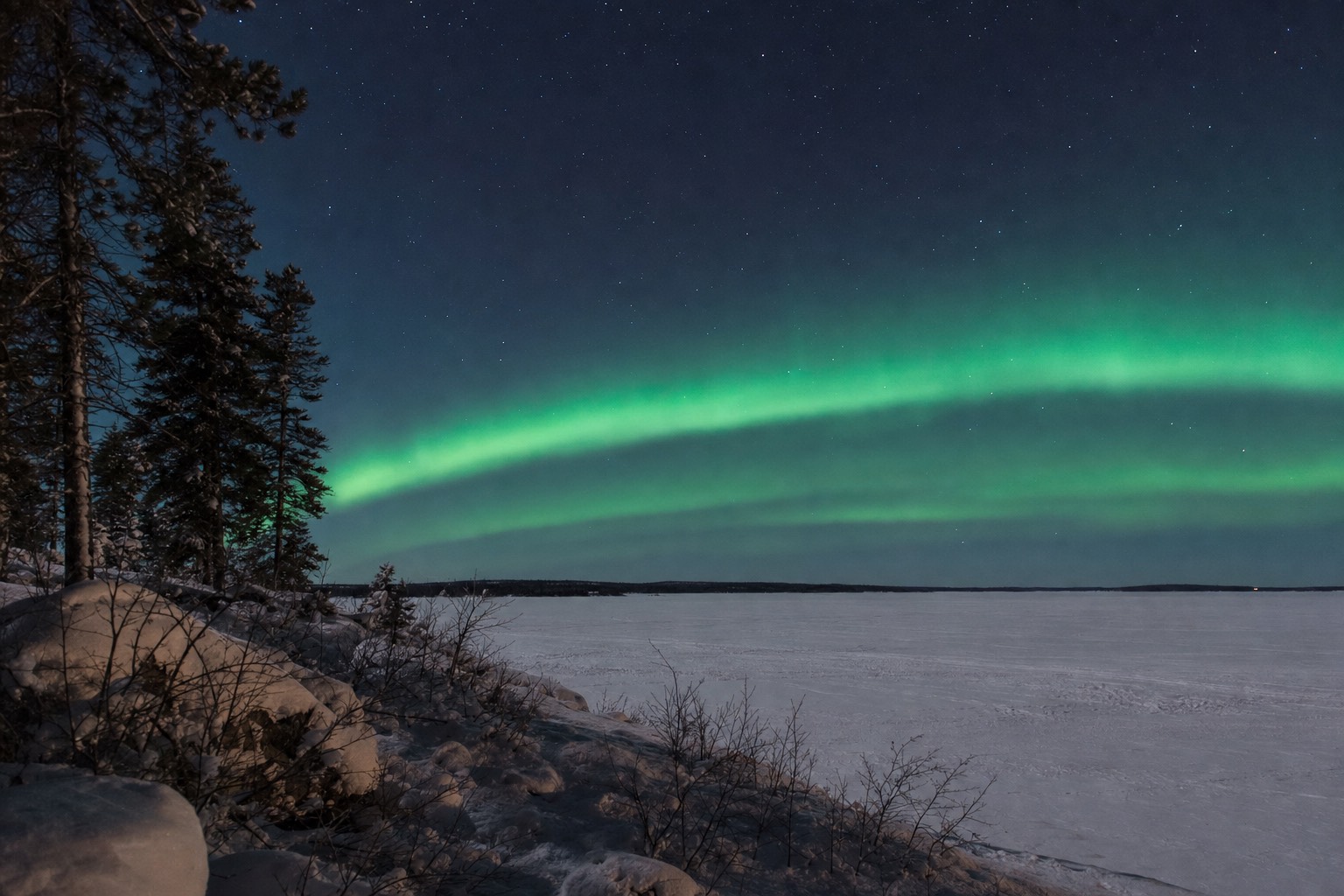
Neither city is a mistake. Both sit under the auroral oval, the ring where displays concentrate, and both have real aurora industries. Yellowknife's edge is measurable: up to 240 viewing nights a year, a 98% chance over three nights in season, and flat, dry terrain. Fairbanks' edge is logistical, especially for Americans.
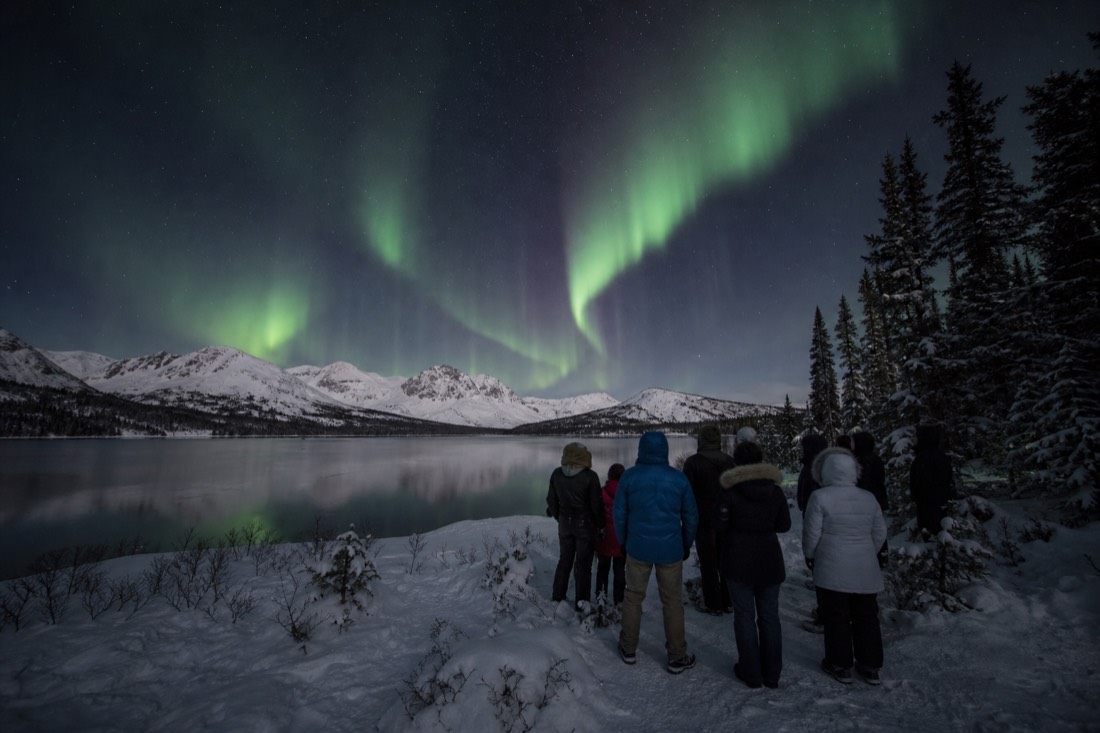
Start with what the two places share, because it is a lot. Both sit far enough north that the aurora appears on ordinary nights, not just during big solar storms. Both have cold, dark winters, airports with daily jet service, and operators who have been running lights trips for decades. Nobody flies home from either city feeling cheated by geography.
The structural picture, before any verdicts. Where I describe Fairbanks, I stay qualitative on purpose: I will not invent numbers for a city I do not guide in.
| Structural factor | Yellowknife | Fairbanks |
|---|---|---|
| Position | Directly under the auroral oval | Under the same oval, in interior Alaska |
| Terrain around town | Flat rock and lake plain, open horizons | Rolling boreal hills |
| Winter climate | Dry deep cold, high share of clear nights | Cold interior winters |
| City scale | Small capital, dark sky minutes out | Larger city, more urban spread |
| Getting in | Direct flights from Edmonton, Calgary, Vancouver | US domestic routings, no passport for Americans |
The split comes in the details. NWT Tourism publishes the figures for my side of the border: aurora visible up to 240 nights a year over Yellowknife, against roughly 50 nights a year in the high arctic further north, where the oval actually passes overhead less often. Fairbanks does not need me to invent numbers for it, and I will not. It is Alaska's interior aurora hub, positioned well under the same oval, and it earns its visitors. The rest of this guide walks through where each city genuinely pulls ahead.
How strong are Yellowknife's aurora numbers, really?
Strong enough that they get quoted worldwide. NWT Tourism's published figures: aurora visible up to 240 nights per year, and a 98% chance of seeing it at least once across a three-night stay in season. Low activity is enough here. One flagship-tour review describes a good show on a night forecast at Kp 0.0.
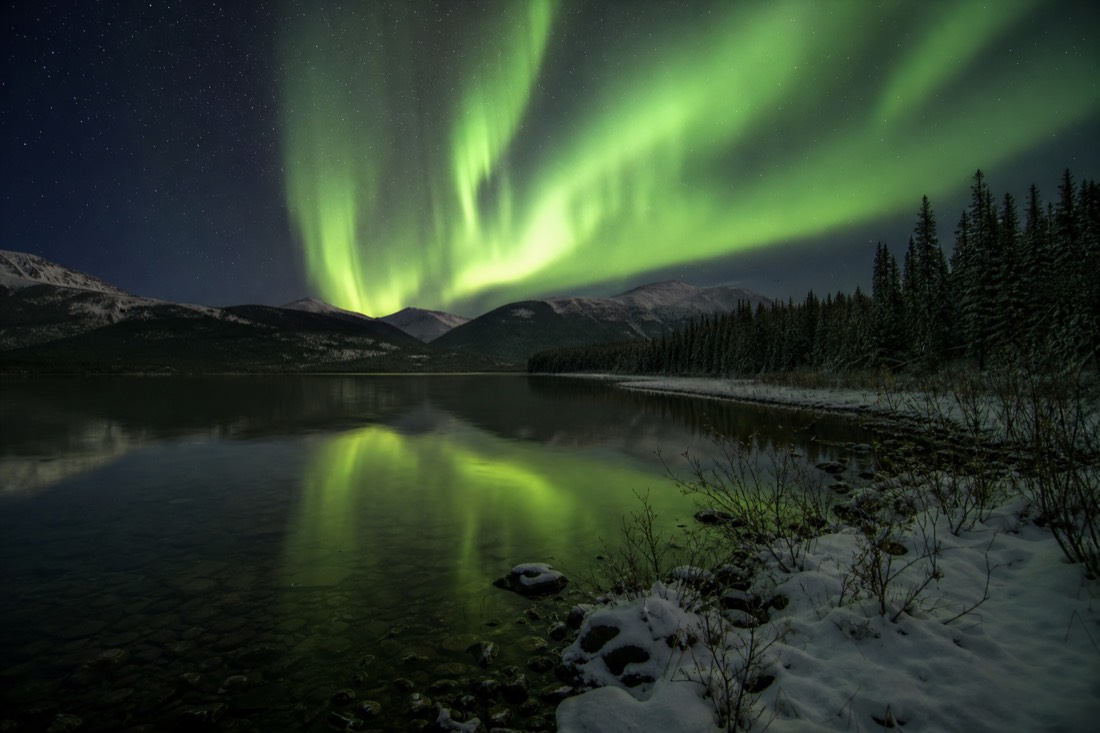
The 240-nights figure is the one that travels. Travel + Leisure cites it too, and it holds up because of what sits underneath it: Yellowknife is directly beneath the auroral oval, so the lights come to us on quiet nights. You do not need a solar storm. When a big Kp storm does hit, it mostly pushes the oval south toward people who normally never see it, while we carry on as usual.
Here is the Yellowknife side of the ledger in one place. These are the published and on-file figures I stand behind.
| Yellowknife aurora fact | Figure |
|---|---|
| Nights per year aurora can be visible | Up to 240 |
| Chance of at least one sighting in a 3-night stay (in season) | 98% |
| Autumn season | Mid-August to early October |
| Winter season | Mid-November to early April |
| No-aurora window (midnight sun) | Roughly mid-April to late July |
| Activity needed for a show | Low Kp is enough under the oval |
Timing matters more than city choice, honestly. The odds above hold in season, and the best time to see the northern lights in Yellowknife breaks the two windows down month by month. The deeper math behind that 98% is in my guide to the chances of seeing the northern lights in Yellowknife.
What does Fairbanks offer that Yellowknife does not?
Logistics, mostly, and they are real. Fairbanks is a larger city inside the United States, so Americans fly domestic, need no passport, and often find cheaper or easier routings. Alaska's interior also stacks side-trips around an aurora holiday. None of that changes the sky, but it can change the budget.
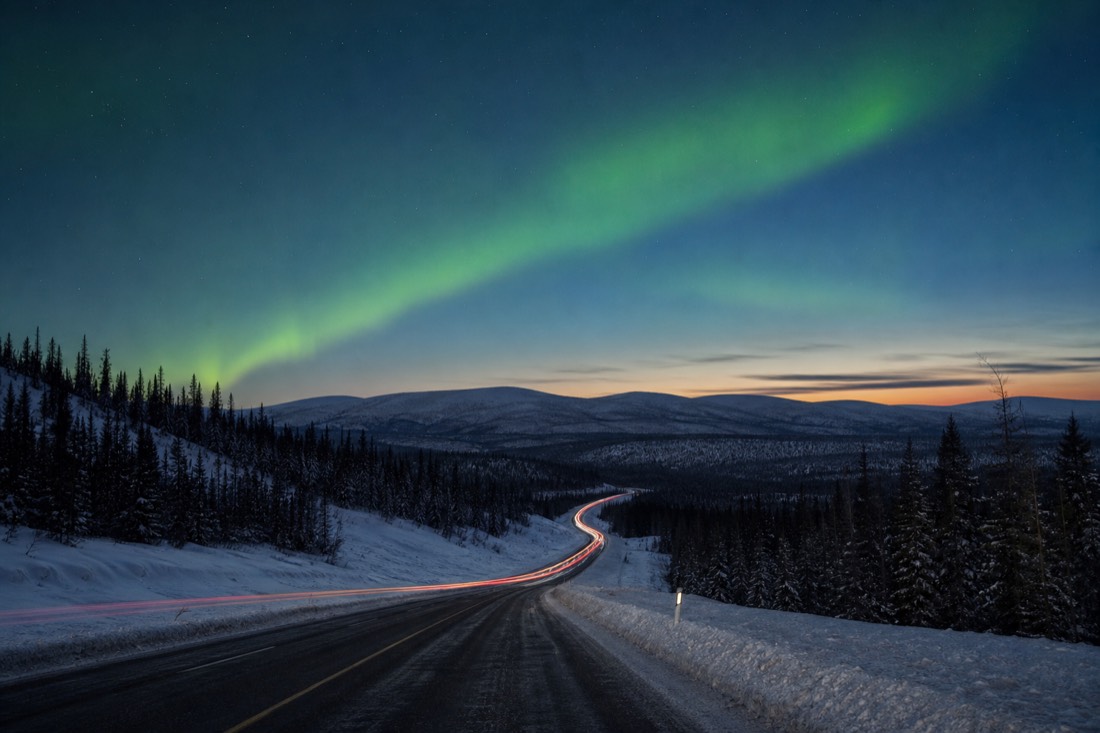
I would be a poor guide if I pretended the border does not exist. For a traveler starting in Denver or Atlanta, Fairbanks is a domestic itinerary end to end. No passport, no customs line, and a bigger menu of connecting flights. For families juggling documents for four people, that alone can settle the argument.
Fairbanks is also simply a bigger place than Yellowknife, with more of everything a larger city carries: hotels, restaurants, car rental, and a wider spread of winter activities across Alaska's interior. Travelers who want to fold the aurora into a longer Alaska trip have plenty to fold it into.
The terrain is the quiet difference nobody mentions in brochures. The Fairbanks area sits among the rolling hills of the Alaskan interior, so viewing spots often involve elevation and picking your sightline. Yellowknife sits on the flat rock and lake plain around Great Slave Lake. When the aurora runs low along the horizon, and early in the evening it often does, a dead-flat horizon in every direction is not a small thing. It is the difference between watching a full arc build from the ground up and waiting for it to clear a ridgeline.
Does weather actually differ between the two cities?
Yellowknife's winters are very cold and notably dry, which is exactly what you want: cold, stable air and a high share of clear nights. January highs average around -21.6C with nights near -29C, and the tours run anyway, in heated vans with arctic gear available to rent in town.
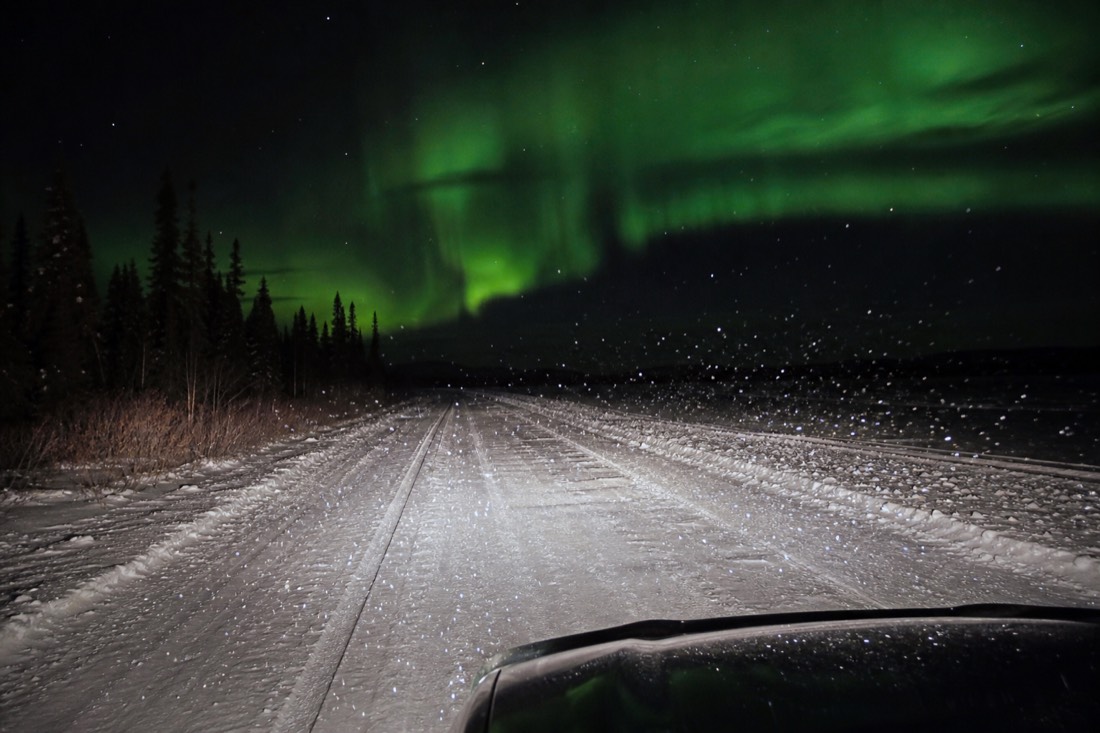
Cloud is the real enemy of an aurora trip, not cold. Yellowknife's climate deals you a favourable hand: relatively low precipitation, long stretches of hard clear sky in the deep winter, and minimal light pollution the moment you leave our small city. The cold is serious, the all-time record here is -51.2C from 1947, but operators are built for it. Heated vehicles, heated huts, parka and boot rentals from several outfits in town. I wrote up what minus 30 actually feels like for anyone bracing themselves.
One more thing working in everyone's favour right now, on both sides of the border: the sun. Solar cycle 25 most likely peaked around October 2024, and the years just after a solar maximum still deliver strong aurora activity, so 2026 remains inside the high-activity window. That lifts Fairbanks and Yellowknife alike.
Which city should you pick for your trip?
Pick by traveler type, not by hype. US-based travelers optimizing cost and simplicity have a real case for Fairbanks. International travelers, aurora-first travelers, and anyone who wants published odds, flat horizons and a compact tour scene with hotel pickup should book Yellowknife. Both reward three or more nights.
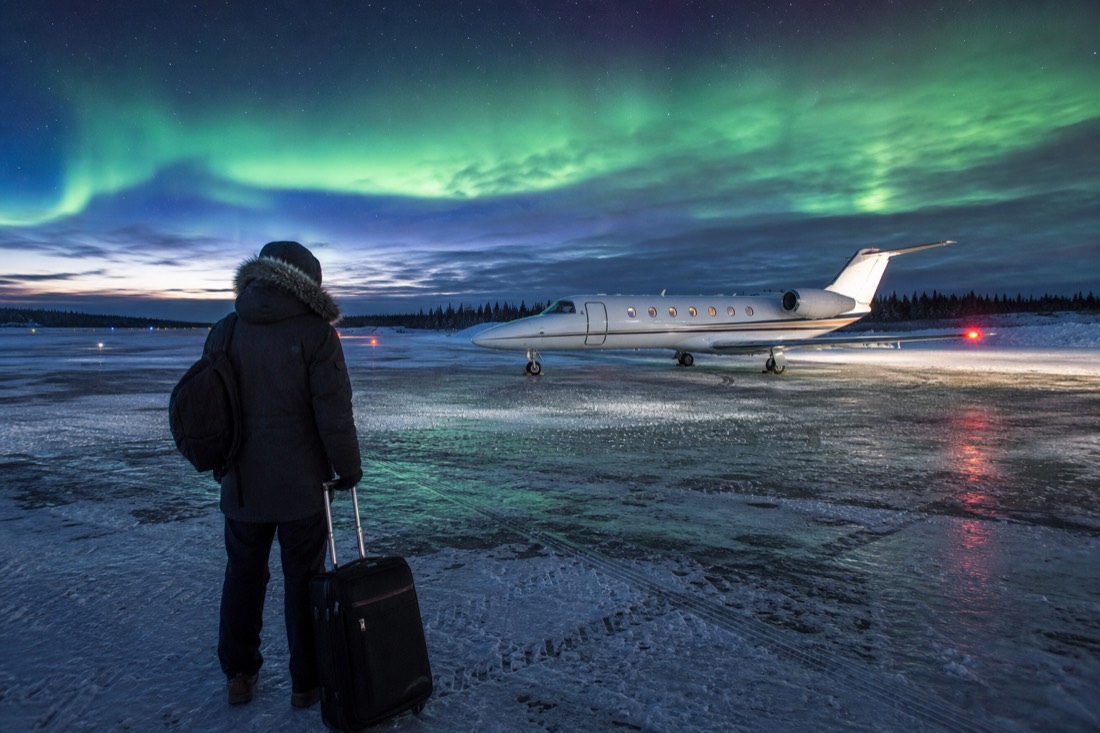
Here is the decision table I sketch on napkins for undecided friends.
| You are... | Lean toward | Why |
|---|---|---|
| US-based, budget-first, passport hassle matters | Fairbanks | Domestic flights, no passport, more routing options |
| Flying in from Europe, Asia or Australia | Yellowknife | Either way you clear customs; go where the published odds are strongest |
| Aurora-first, everything else secondary | Yellowknife | 240 nights/yr, 98% over 3 nights, flat horizons, low Kp is enough |
| Building a longer multi-stop Alaska holiday | Fairbanks | A bigger state menu to attach the lights to |
| Short trip, no rental car, want pickup at the door | Yellowknife | Compact aurora industry built around hotel-pickup night tours |
| Photographer chasing full horizon-to-horizon arcs | Yellowknife | Lake-plain flatness in every direction |
That compact-industry point deserves a sentence more. Yellowknife's aurora scene is dense and walkable-small: operators pick up at the downtown hotels between about 9:30 and 10:30pm, drive to dark sky, and have you back around 1:30 to 2:30am, with peak activity near local midnight. Browse the northern lights tours to compare formats, or go straight to the flagship hunt and check live availability and prices on Viator, small groups of 16, three viewpoints a night, a photographer on board, and the photos are free.
Getting here is simpler than most people expect: direct flights reach Yellowknife from Edmonton, Calgary and Vancouver, with seasonal routes beyond, and the full rundown is in getting to Yellowknife.
Do you really win either way if you stay three nights or more?
Yes, and I mean that without hedging. Aurora success is mostly a numbers game: nights under the oval multiplied by clear-sky chances. Three or more nights in either city in season puts the math firmly on your side. In Yellowknife that math has a published name, the 98% figure.
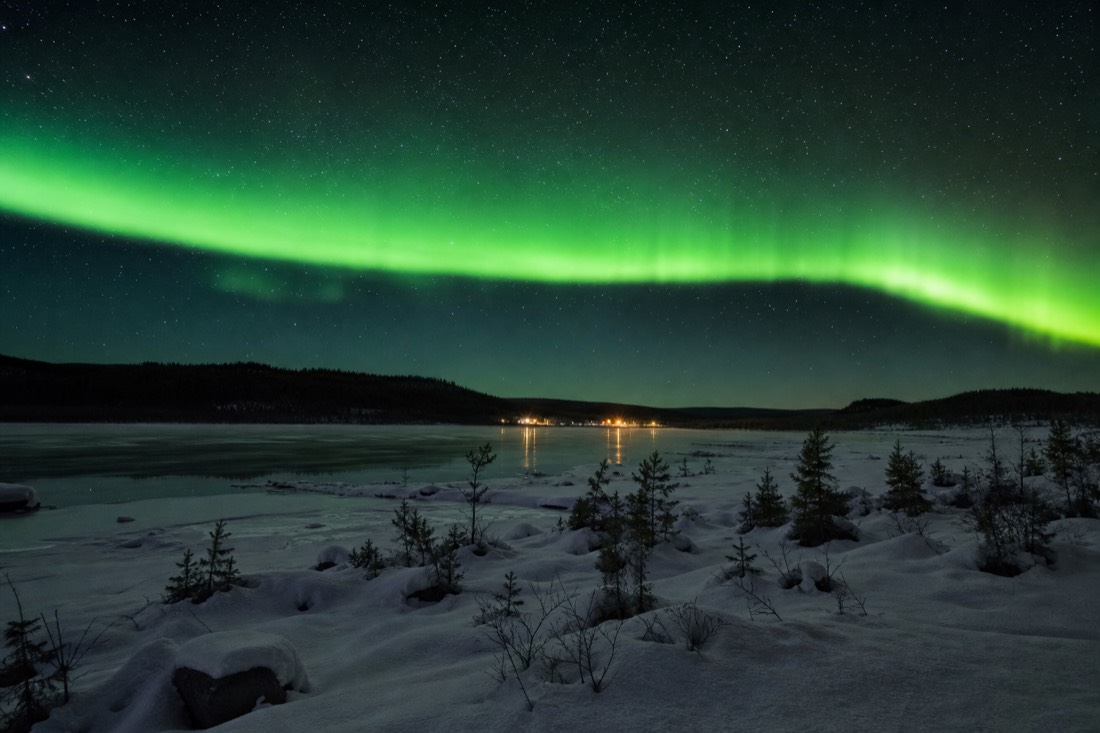
The travelers who go home disappointed are almost always the one-night gamblers, in any aurora city on earth. Give the sky three chances and it nearly always pays at least once. Give it four and you start getting greedy about which show was best.
If Fairbanks fits your logistics, book it with my blessing and pack warm. If the numbers pulled you my way, start with the season windows, then decide between a hunt, a lodge or a camp. And if you are still weighing Canadian options against each other, the same honest treatment of our other northern neighbour is in Yellowknife vs Whitehorse, and the camp-versus-chase question gets its own page in Aurora Village vs aurora hunting tours.