Do You Need a Tour to See the Northern Lights in Yellowknife?
No, you do not strictly need one, and I say that as a man who guides aurora tours for a living. Here is the honest breakdown of when DIY works and when a tour earns its price.
 Written with Thomas Beaulieu, Yellowknife tour guide & northern lights specialist
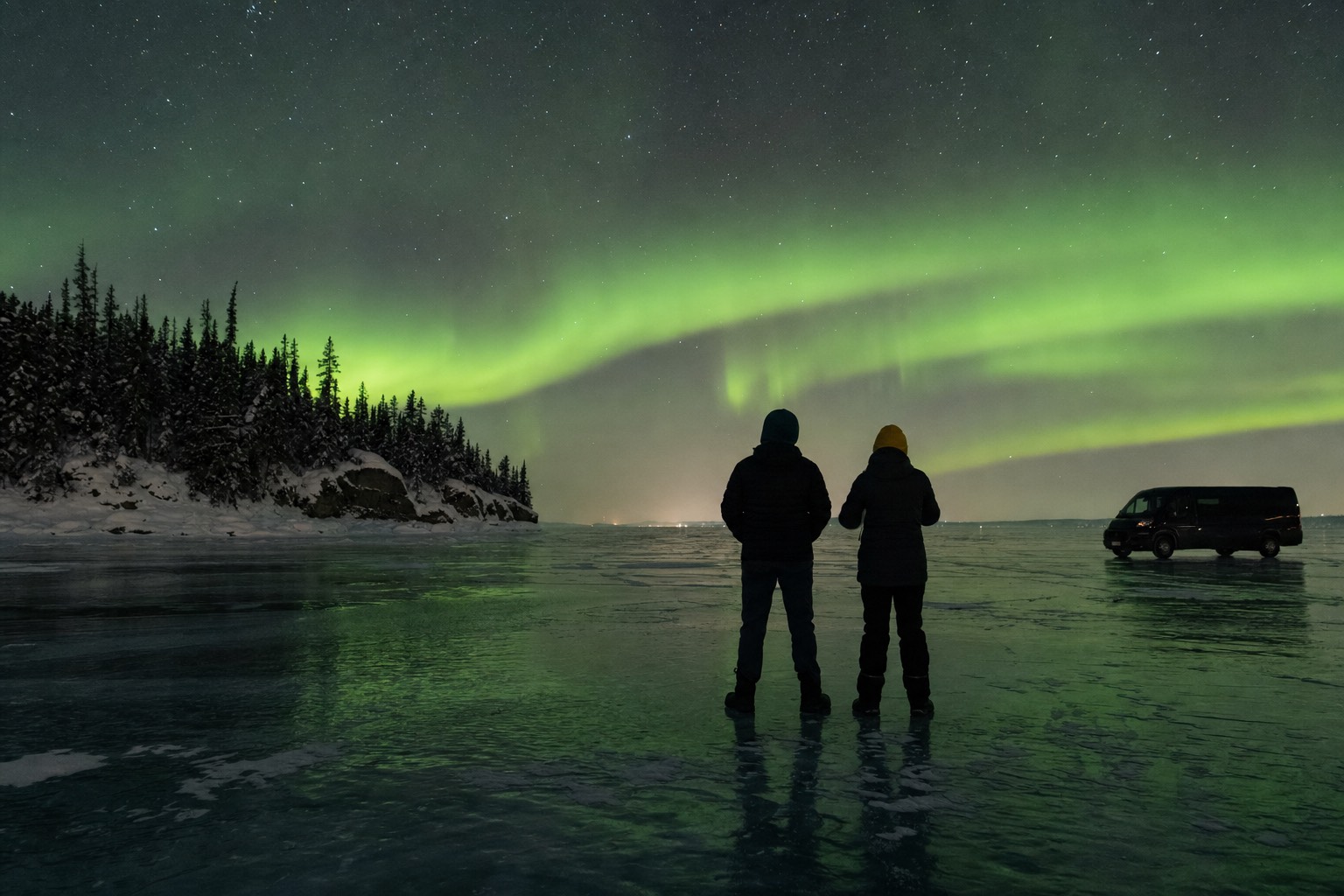
Short answer
No. On a clear, active night you can see the aurora from dark spots a short walk or taxi ride from town. A tour wins when clouds move in, when the cold bites over a four-hour watch, when you want professional photos, or when a short trip means every single night has to count.
A guest asked me this at pickup last winter, half apologizing, as if the question might offend me. It does not. The honest answer is the reason people trust the rest of what I tell them: no, you do not need a tour to see the northern lights in Yellowknife. The city sits directly under the auroral oval. On a clear, active night, the sky performs for everyone, free of charge. What a tour sells is not access to the aurora. It sells mobility, warmth, and a better version of the night, and some nights those are the difference between a show and a shrug.
Do you actually need a tour to see the aurora here?
No. Yellowknife sits under the auroral oval with lights visible up to 240 nights a year, and on a clear active night you can watch them from dark spots minutes from downtown. A tour is not required for the sighting. It becomes valuable when clouds, cold, photography, or a short stay raise the stakes.
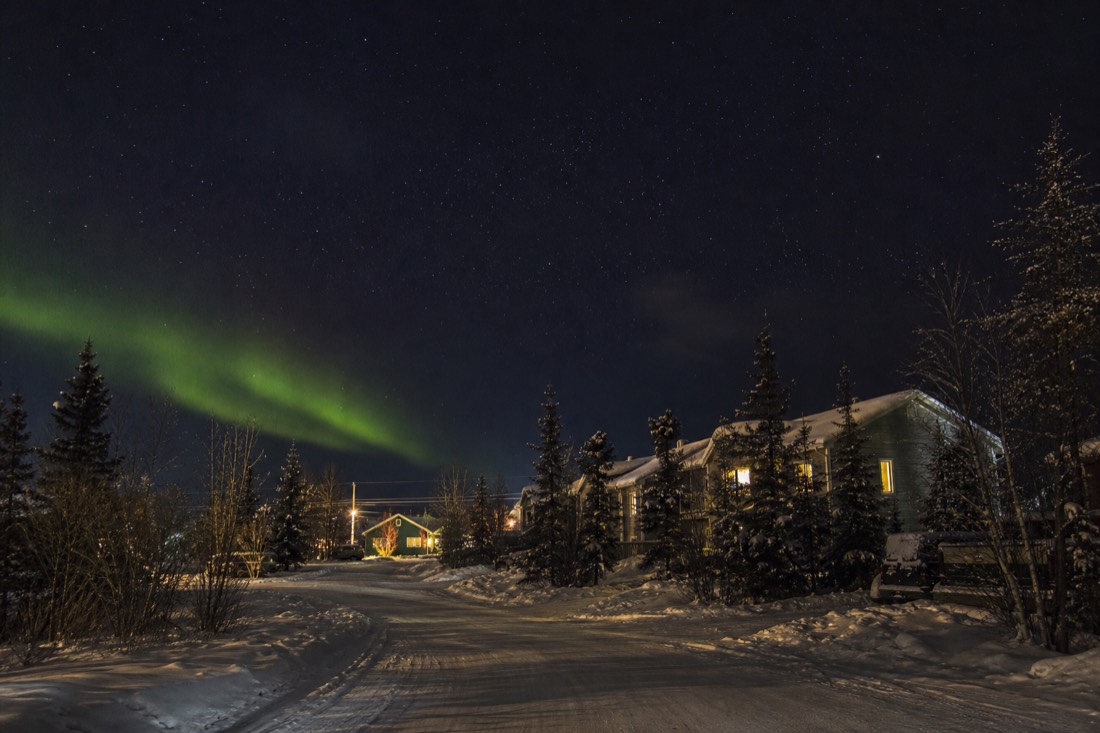
The geography does most of the work. NWT Tourism's own numbers put the aurora overhead up to 240 nights a year, with a 98% chance of at least one sighting over three nights in season. The city is small and the darkness starts fast at its edges, so you do not need a wilderness expedition to escape the streetlights. The city itself publishes viewing advice on its weather and aurora page, which tells you how normal DIY viewing is here. Locals watch from their driveways.
So why does an entire tour industry exist in a town where the sky is free? Because "can see them on a clear active night" hides two big conditions, clear and active, and because standing outside from 10pm to 2am in January is a skill of its own. The rest of this guide takes those apart honestly.
Where can you see the northern lights on your own near town?
Anywhere dark with an open northern horizon. Practical DIY spots include the shoreline areas around Old Town and Yellowknife Bay, away from direct streetlights, or a short taxi or rental-car hop out of the downtown glow. The farther you get from the city's light dome, the lower and fainter the displays you can still catch.
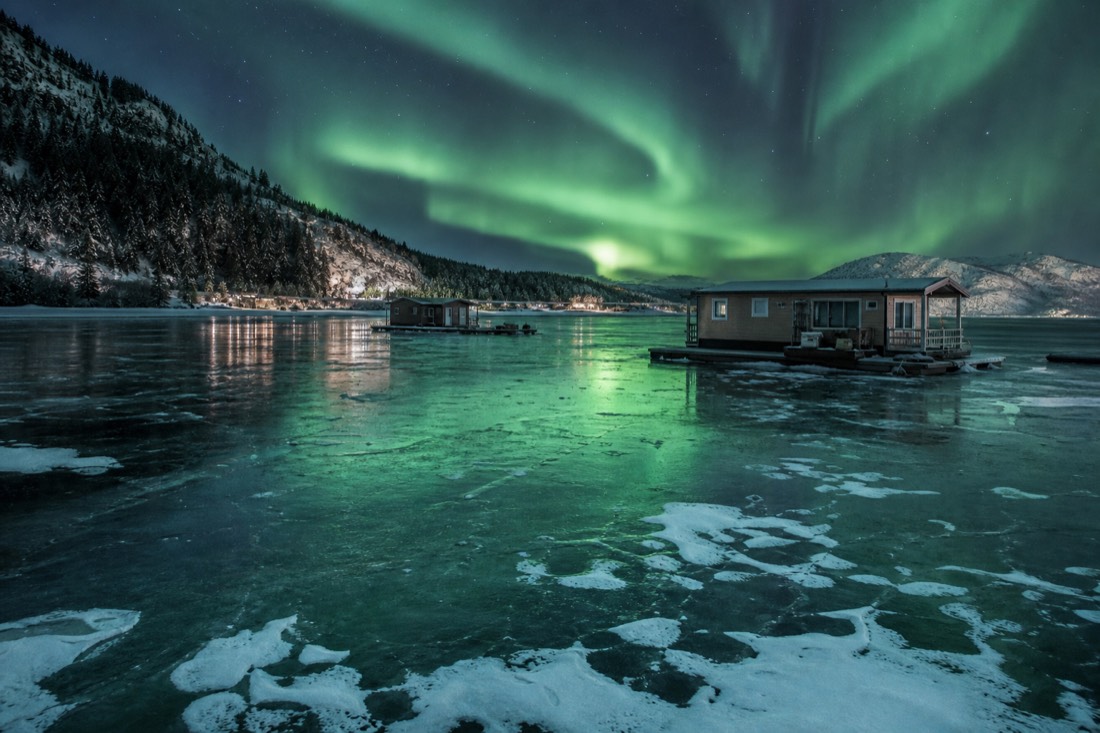
The trick is the horizon. Yellowknife's blessing is flat land in every direction, so a lakeshore gives you the whole sky. The Old Town shoreline by the houseboats works on strong nights. So does any pullout a few minutes beyond the last streetlight. On a big display none of this matters much, the lights will sit straight overhead and even downtown sees them. On a faint night, the difference between town glow and true darkness decides whether you see a show or a grey smudge your camera insists is green.
Timing is the other half of DIY. Peak activity clusters near local midnight, which is why tour pickups run 9:30 to 10:30pm and returns land between 1:30 and 2:30am. Copy that schedule. Guests who "had a quick look at 9 and went to bed" are the saddest emails I get. And check the calendar first: from mid-April to late July the midnight sun keeps the sky bright, about 20 hours of daylight around the June solstice, with twilight through the rest of the night, and nobody sees aurora, guided or not. The best-time guide breaks the two viewing seasons down month by month.
If you do go the DIY route, sort this list before dark. It is the pre-flight check I would run for a friend.
| DIY item to sort by 10pm | Why it matters |
|---|---|
| A dark spot with an open northern horizon | Faint displays vanish inside the town's light dome |
| Transport out AND back | Taxis are easy to book at 10pm, harder at 1:30am |
| Full winter layers, nothing cotton | Standing still is far colder than walking in the same air |
| A warm refuge within reach | Car, lobby, or home; you need somewhere to thaw on a schedule |
| Spare phone battery kept warm | Cold drains batteries fast, and your camera dies with them |
| The ice rule | Stand on lake ice only where locals already walk and drive |
When does a tour genuinely win the night?
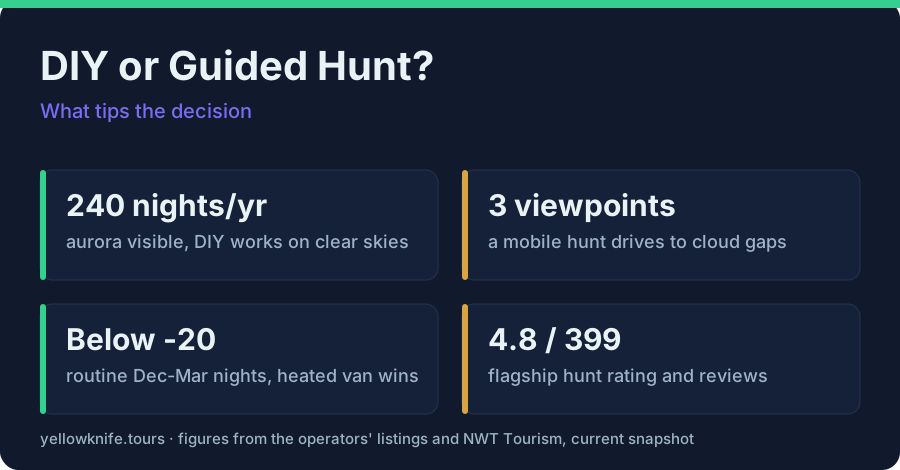
Four cases: cloudy or patchy skies, where a hunting tour drives to gaps you cannot find on foot; deep cold, where heated vans make a four-hour watch bearable; photography, since the flagship hunt includes a pro shooting free photos; and short trips, where paying for the best possible odds on two or three nights is rational.
| Your situation | Honest verdict |
|---|---|
| Clear forecast, active sky, you have a car | DIY works beautifully, save the money |
| Cloudy or patchy forecast | Tour; the hunt drives to the gaps |
| Deep-winter cold and a 4-hour watch | Tour, or DIY in short bursts with a warm car |
| You want real photos of yourselves under the lights | Tour; the flagship includes a pro and free photos |
| Two or three nights in town, no rental | Tour on night one at minimum |
| Four-plus nights, flexible evenings | Mix both; tour first, DIY after |
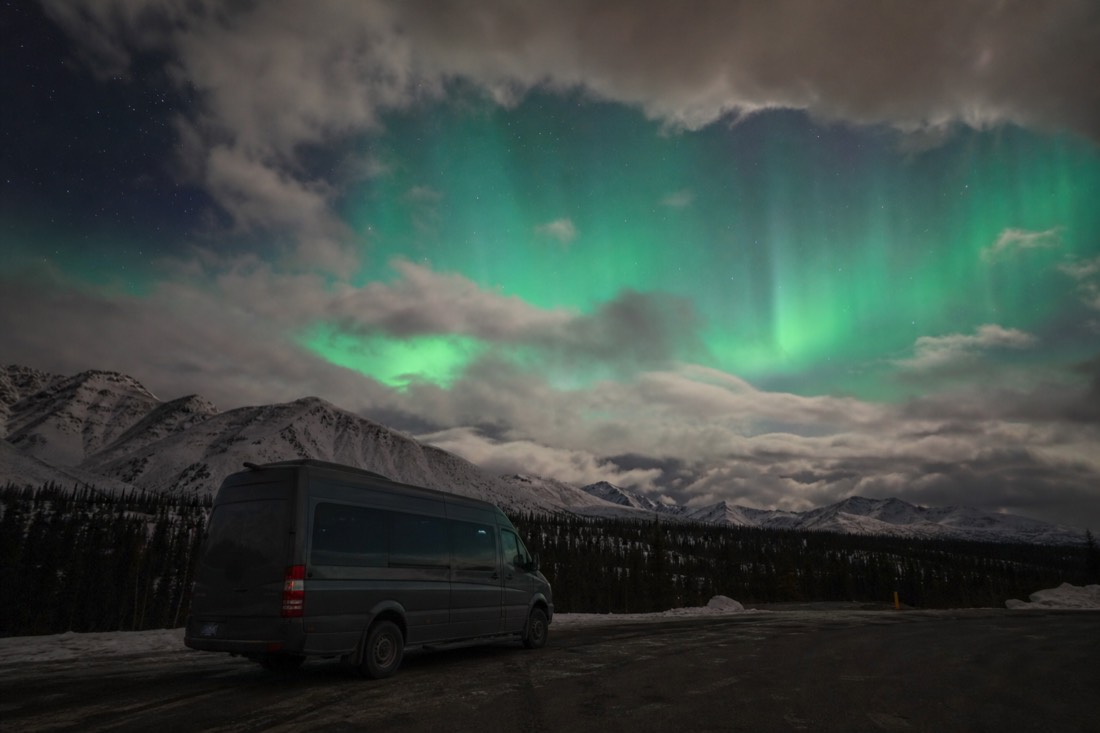
Cloud is the honest enemy in Yellowknife, not the aurora. The lights are up there 240 nights a year; the question is whether you can see through the weather. A DIY viewer is anchored to wherever they stand. A hunting tour reads the cloud map at 9pm and drives, sometimes a long way, to the clear gap. That mobility is the single biggest thing you are buying. On mixed-sky nights it routinely turns a bust into a show.
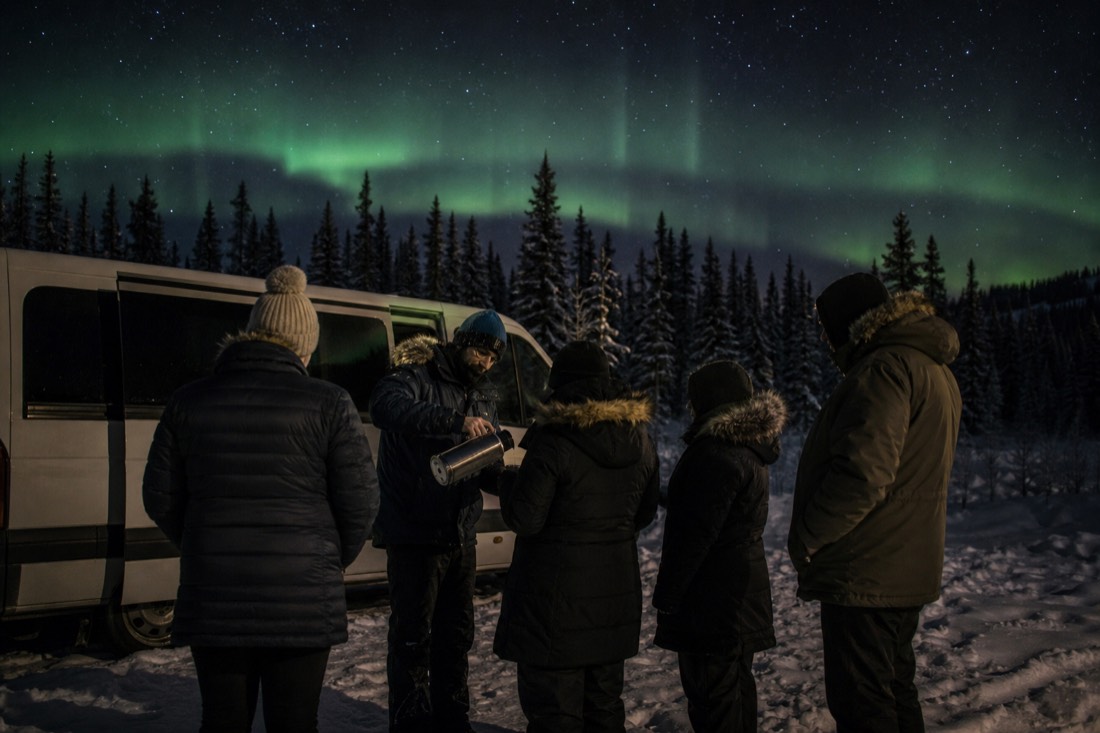
Then there is the standing. Four hours outside in a Dec-to-March night, when below minus 20 is routine, is not a romantic experience without backup. Tours cycle you between the sky and a heated van, pour hot drinks, and on the flagship trip hand out cookies while the photographer works. Which is the fourth case: real aurora photos of you need a tripod, manual settings, and someone who does this nightly. The flagship hunt includes those photos free, and its 4.8 rating across 399 reviews is largely those pictures coming home. If your window is short, compare the northern lights tour options and check live availability and prices on Viator before your nights are spoken for.
How do DIY and a guided hunt actually compare?
DIY costs nothing, works beautifully on clear active nights, and suits long stays with a rental car. A guided hunt adds cloud-chasing mobility, warmth, gear, photos, and local judgment, which matters most on marginal nights and short trips. Most guests who stay four or more nights end up doing both.
| Factor | On your own | Guided hunt |
|---|---|---|
| Cost | Free, or taxi/rental fuel | Tour price per person |
| Cloudy night | Stuck with your patch of sky | Drives to clear gaps, three viewpoints on the flagship |
| Warmth | Whatever you brought | Heated van, hot drinks, cookies |
| Photos | Your phone, usually disappointing | Pro photographer, free photos included on the flagship |
| Timing knowledge | Your own forecast reading | Guide calls the night, peak near local midnight |
| Transport | Need a car or taxi both ways | Hotel pickup around 9:30 to 10:30pm, drop-off by 2:30am |
| Best for | Long stays, clear forecasts, night owls with cars | Short stays, mixed weather, photography, no rental car |
One honest note on the tour side: hunts are four hours and end deep in the night, so they cost you the next morning. Plan the following day soft. My write-up of what an aurora hunt is really like walks through the full night hour by hour.
Is it safe to chase the aurora on your own in winter?
Mostly yes, with two rules. Respect the cold: dress for hours, not minutes, because standing still at minus 25 drains you faster than walking. And treat lake ice with humility: step onto it only where locals and vehicles already do, like the established ice roads, never onto unknown ice alone at night.
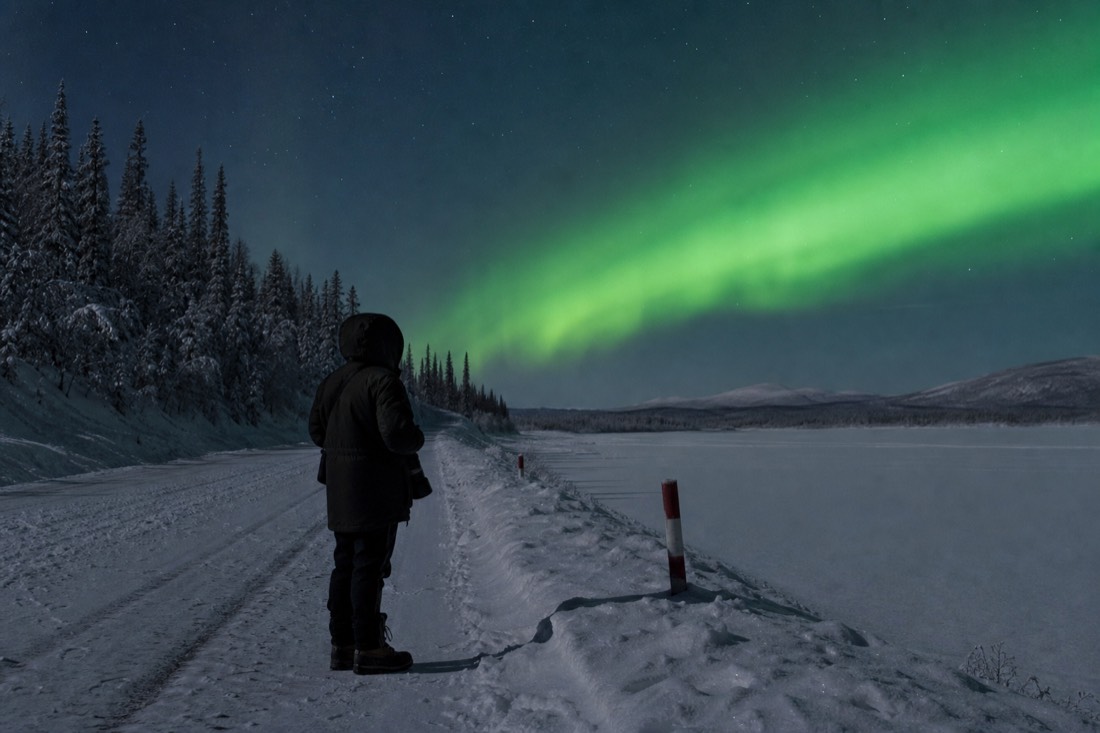
The cold risk is boring and real. Aurora watching is standing still, and standing still is how minus 25 gets through good clothing in under an hour. Layer like a local, cover every strip of skin, and go back inside or into the car on a timer, not when you "feel cold", because by then you are behind. Several operators in town rent full arctic sets, parka through boots, if your own gear is a maybe. My what to wear in a Yellowknife winter guide has the exact layer list I give guests.
Ice is the sharper edge. Great Slave Lake freezes hard, and by midwinter the Dettah ice road carries regular cars across roughly 6 to 6.5 kilometres of the bay. That road, and the well-used areas near shore where you can see locals walking and driving, are the sensible places for a visitor to stand on ice. Early season, late season, river mouths, and dark unknown ice are not. Guides know the safe ice because we are on it nightly; alone at 1am is the wrong time to guess.
What do you actually need to run an aurora night on your own?
A vehicle you can still start at 2am, a dark spot with an open northern horizon, clothing rated for hours rather than minutes, a cloud forecast you check before you commit, and the willingness to stay out past midnight. Nothing exotic on that list. Every item is a real cost or a real effort.
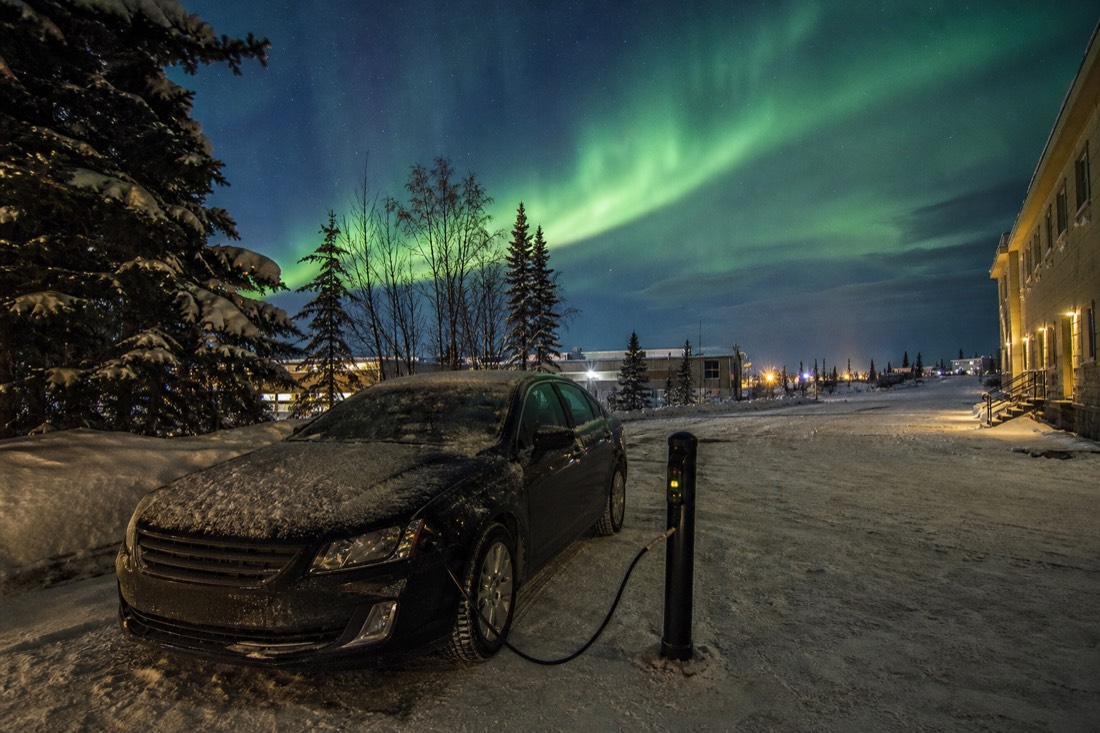
Start with the car, because the rest of the night hangs off it. Budget, Hertz and National keep desks at the airport, which sits about 5 km from downtown, under a ten minute drive. Winter rentals here come winterised with a plug-in block heater, and you are expected to use it. Plugging in overnight is ordinary practice in this town, and the airport's own energized stalls in Lot B run $12 a day. A car is what turns you from someone standing in one fixed spot into someone who can move when the sky closes over. Most visitors skip it, since every tour includes hotel pickup and downtown is walkable, so read my do you need a car in Yellowknife guide before you book one out of habit.
| What a DIY aurora night needs | The Yellowknife reality |
|---|---|
| A winter vehicle | Budget, Hertz and National rent at the airport, about 5 km from downtown |
| Somewhere to plug it in | Winter rentals carry block heaters; energized airport stalls in Lot B cost $12 a day |
| Dark sky with a north horizon | Lakeshore pullouts start within minutes of the last streetlight |
| A darkness window | About 12 hours of true astronomical darkness in January, about 5 hours 20 minutes in mid-September |
| Cold you can stand still in | January averages a high of -21.6C, a daily mean near -25.5C and lows around -29.4C |
| Clothing for that cold | Full arctic layers; several operators in town rent parka, pants, boots and mitts |
| A late schedule | Activity clusters near local midnight, roughly 10pm to 2am |
The second requirement is a forecast habit, and most first-timers get it backwards. Cloud cover, not geomagnetic activity, is the thing that most often decides whether a visitor here sees anything. Yellowknife already sits under the auroral oval, so a modest Kp of 1 to 3 under a clear sky is frequently enough, while southern Canada waits for Kp 5 and up. Check the sky forecast first. The dependable space-weather product is the 30 minute nowcast; one to three day solar wind outlooks are only moderate, and the 27 day tables show recurring patterns rather than specific nights. The Yellowknife aurora forecast guide names the exact sources I use before a shift.
Then there is the question of where the car actually takes you, which is a shorter list than people expect from a map of the north.
| Where a self-driver can go | Distance | Season | What to know |
|---|---|---|---|
| Old Town and Yellowknife Bay shoreline | Minutes from downtown | Whole dark season | Closest open horizon, some town glow |
| Ingraham Trail, Highway 4 | About 70 km, dead end | Plowed all winter | Lake pullouts at Prosperous, Madeline, Prelude and Tibbitt |
| Dettah ice road | About 6.5 km across the bay | Late December to mid-April | Public road, regular cars, low posted limits, pull fully out of the lane |
| Tibbitt to Contwoyto winter road | Industry route | Winter | Private diamond mine supply road, not open to visitors |
What goes wrong on a do-it-yourself aurora night?
Usually not the aurora. It is cloud parked over the single pullout you picked, cold that ends the watch an hour early, dead batteries, a phone that cannot photograph the sky, unknown ice in the dark, and a drive home at 2am on a night you never planned to be awake for.
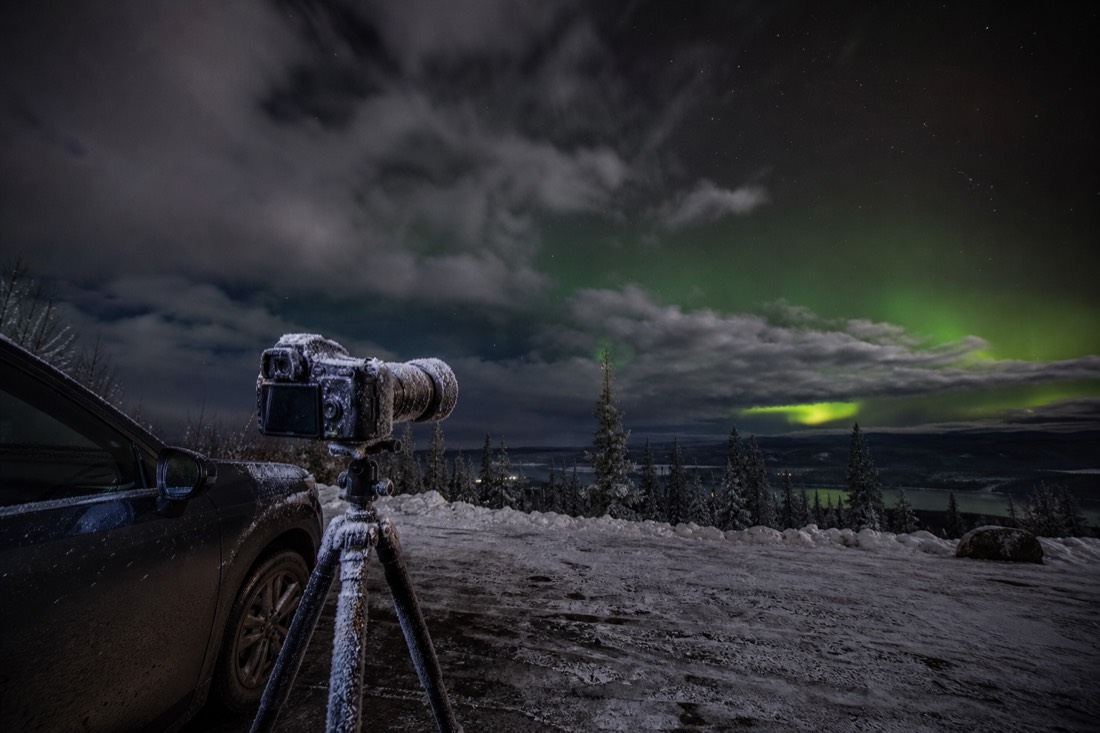
The failure I see most often is stationary cloud. A visitor drives fifteen minutes out, finds a pullout, and stays there because it took effort to get there. Cloud is local and it moves, so the sky forty kilometres up the Ingraham Trail can be open while your pullout stays grey all night. Fixing that on your own means deciding in advance on two or three fallback spots and being willing to abandon a good parking place at 11:30pm, which sounds easy and almost nobody does it.
The second failure is thermal. Watching aurora is standing still, and standing still is how a January night at -29.4C gets through clothing that felt fine walking from the hotel. Guests who underestimate this go home at 11pm, which is right before the best hours. Keep the engine running with somewhere warm to sit, set a timer for thaw breaks instead of waiting until you feel cold, and read how cold it really gets here before you decide your ski jacket will do.
| What goes wrong | Why it happens here | What actually fixes it |
|---|---|---|
| Cloud sits over your spot | Cloud, not Kp, decides most sightings in Yellowknife | Two or three fallback pullouts and the will to move |
| You quit at 11pm | Peak activity clusters near local midnight | Commit to the 10pm to 2am window |
| The cold ends the night | January lows average about -29.4C, and standing still is colder than walking | A warm vehicle in reach, timed thaw breaks, rented arctic gear if yours is thin |
| Batteries die | Deep cold drains camera and phone batteries fast | Spares kept warm against your body |
| The photos come back empty | Phone auto mode cannot expose an aurora | Tripod, manual, wide aperture, ISO 800-3200, 5 to 15 second exposures |
| A bright moon flattens the show | Moonlight washes out faint displays, mostly in photos | Favour low moon illumination; a strong display beats the moon anyway |
| Unknown ice in the dark | Early and late season ice is the real hazard, not midwinter road ice | Follow the city's ice safety guidance and stay where locals already drive and walk |
| The 2am drive home | The window ends deep in the night | Keep the drive short, or let someone else do it |
Ice deserves the last word here because it is the one mistake with no second attempt. The Dettah ice road is a maintained public road with posted limits, and the well-used shoreline areas are fine. Unknown ice, river mouths, and anything in November or late April are not, and a headlamp tells you nothing about thickness. If you want the ice road experience with none of the guessing, I wrote up driving the Dettah ice road separately.
Who genuinely should skip the tour?
Four groups, honestly. Long-stay visitors with a rental car and flexible evenings. Autumn travellers, who face nights near 4C instead of -29C. Experienced night photographers who already own the tripod and the technique. And repeat visitors who learned the roads on an earlier trip.
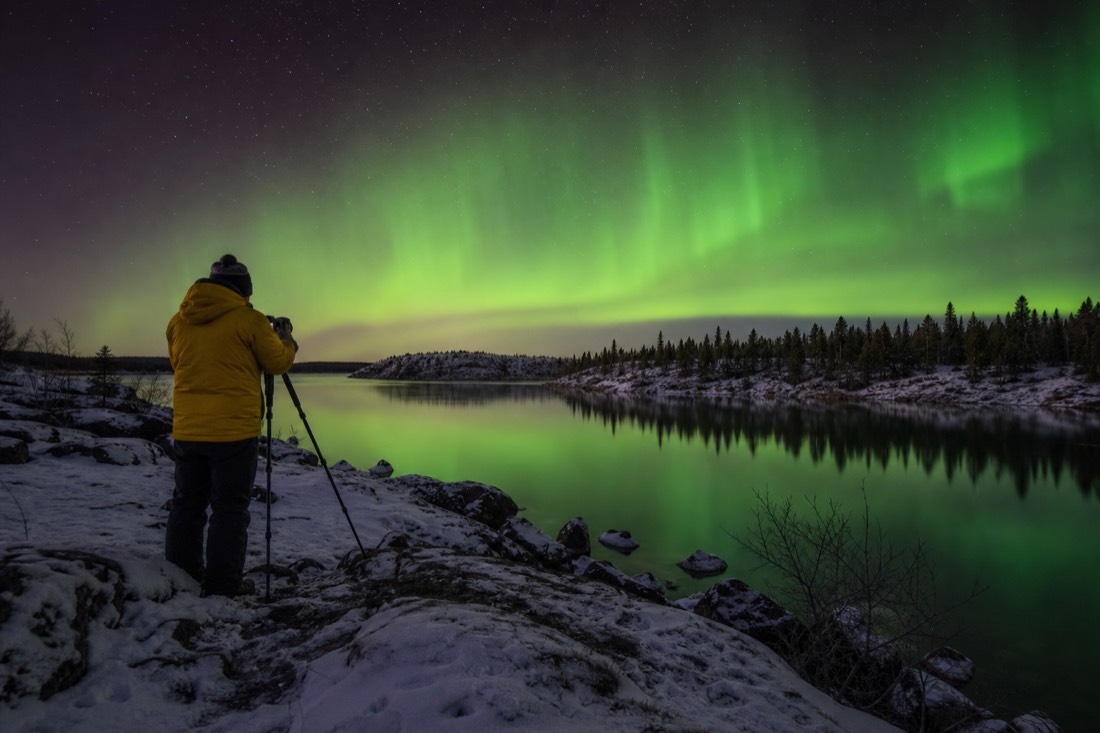
I have talked people out of booking. Guiding here since 2022, with more than a thousand travellers through the van, I can tell within a minute of conversation when someone is about to pay for something they already have. A photographer travelling with a tripod and a fast wide lens does not need my colleague to take pictures of them. A couple staying nine nights with a car has enough clear-sky chances that spending on all of them makes no sense.
Autumn is the strongest honest case. True darkness comes back to Yellowknife in the last days of August, only minutes at first and growing quickly through September, and mid-September nights average about 4.2C with highs near 10.9C. That is a jacket, not a survival system. The aurora reflects off open lake water instead of ice, and standing outside for three hours costs you nothing but sleep. Nobody needs a heated van in September.
| If this is you | My honest verdict |
|---|---|
| Nine nights, rental car, no fixed plans | Skip it, or take one night guided for the local knowledge and DIY the rest |
| Travelling in late August or September | DIY is genuinely comfortable at 4C, over open water |
| You shoot manual on a tripod already | You are paying for a photographer you do not need |
| Second or third visit, roads already known | You have the tour's main asset, which is knowing where to go |
| Two or three nights, no car, midwinter | Do not skip it; this is the case the tour was built for |
| Cloudy forecast for your whole window | Do not skip it; mobility is the only real answer to cloud |
None of that is a sales concession dressed up as honesty. It is the same advice I give at pickup when someone asks whether they wasted their money, and the answer is sometimes yes. The people who benefit most are the ones with the least slack: short windows, no car, deep cold, and one shot at a photo they will keep. If that is you, the three aurora trips below are the ones I stand behind.
What would I do in your position?
Stay three or more nights, book a hunting tour for the first night, then go DIY once you have seen how the night works. First-night tours give you the guide's crash course, the photos, and the best odds while your window is widest. After that, a clear forecast plus a dark shoreline costs you nothing.
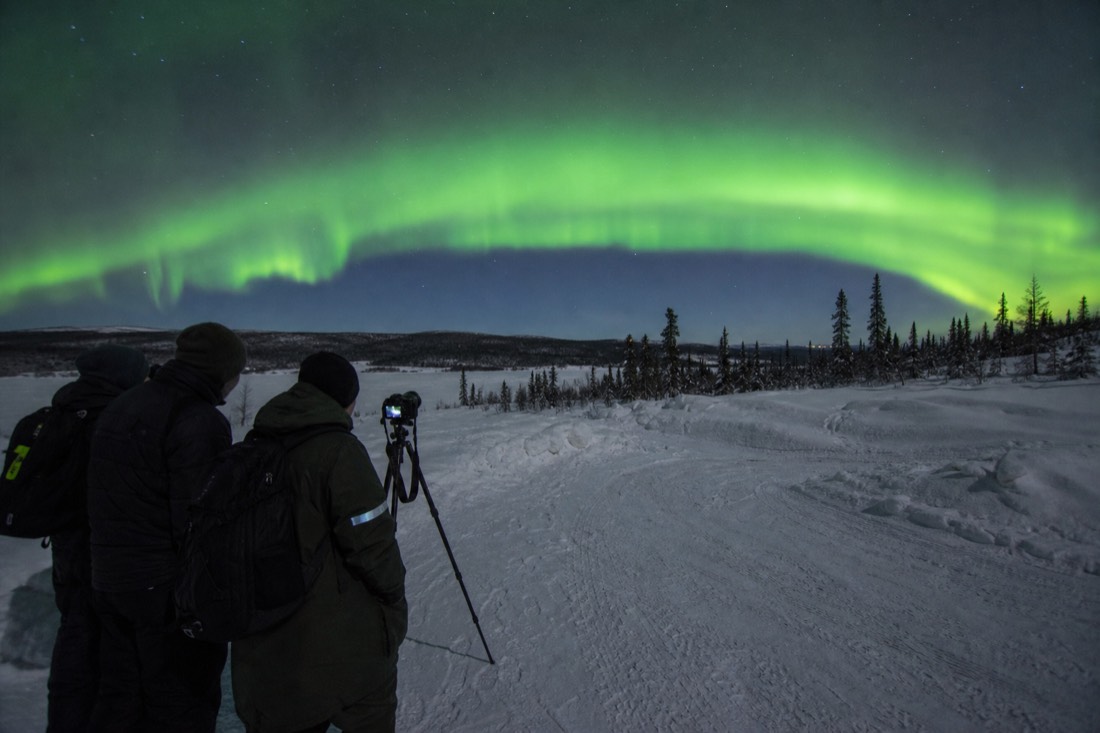
That first-night-tour strategy is what I would do in any aurora city where I did not know the roads. It front-loads your odds, hands you a night of local knowledge to reuse, and if the sky goes huge on night three while you stand alone on the shore with hot chocolate, you will feel like you earned it. For the numbers behind all of this, the chances of seeing the lights guide runs the full probability math for your trip length.